
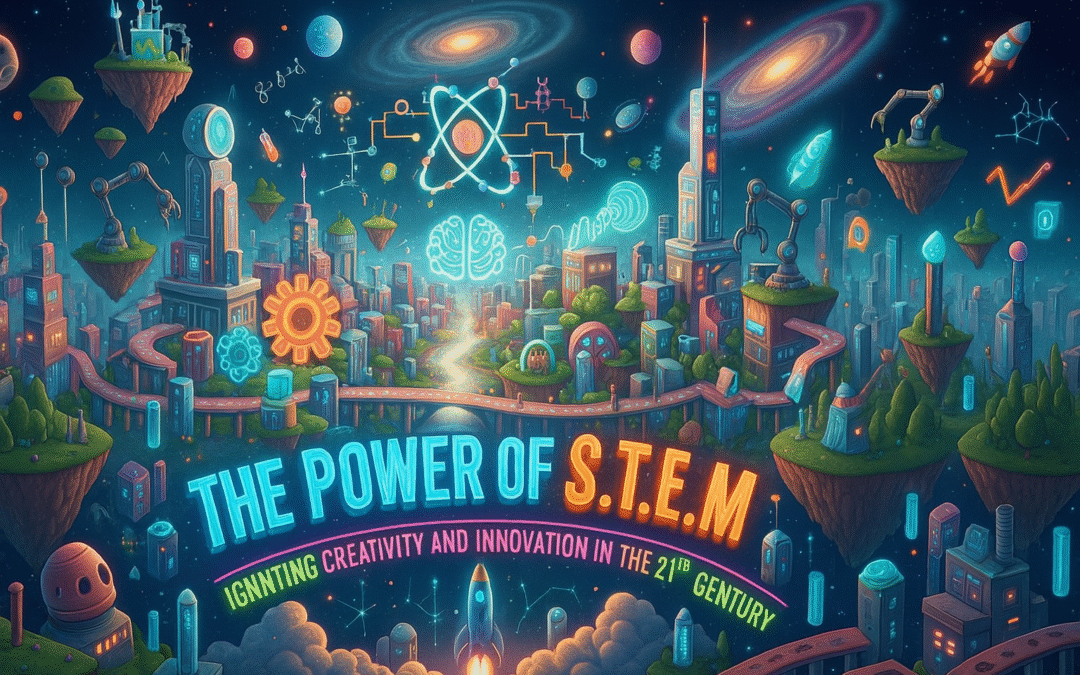
Introduction: Welcome to the Brave New World of STEM and STEAM
Imagine a world where scientists and artists collaborate to fight climate change, where engineers design buildings inspired by music, and where kids solve real-world problems with both analytical rigor and bursts of imaginative flair. Welcome to the exhilarating intersection of STEM and STEAM education, a place bursting with ideas, invention, and opportunity.
But what exactly are these acronyms? At their core, STEM stands for Science, Technology, Engineering, and Mathematics, disciplines often heralded as the foundation for economic progress and innovation. Lately, education visionaries have supercharged this formula by adding the A for Arts, morphing STEM into STEAM and infusing the technical with the creative.
This isn’t just an academic shuffle—it’s a reimagining of how we prepare the next generation, blending logic and artistry, code and canvas, circuits and sonnets. In this upbeat exploration, we’ll unlock the evolution, importance, and real-world impact of both STEM and STEAM. Buckle up: we’re about to embark on a journey where molecules meet melodies!
The Definitions: What Are STEM and STEAM?
What Is STEM?
STEM is the powerhouse quartet of Science, Technology, Engineering, and Mathematics. It’s more than a list of subjects—it’s a way of teaching, thinking, and creating that knits together these disciplines to solve real-world challenges.
- Science helps us understand the universe, from atoms to galaxies.
- Technology turns scientific knowledge into nifty gadgets and digital tools.
- Engineering brings ideas to life—think bridges, rockets, and roller coasters.
- Mathematics is the language of patterns, precision, and problem solving.
STEM learning is intentionally interdisciplinary, focusing on rigorous academics and hands-on inquiry. It is designed to foster critical thinking, creativity, and collaboration, producing a workforce that’s ready for future jobs—many of which don’t even exist yet.
What Is STEAM?
Enter STEAM: Science, Technology, Engineering, Arts, and Mathematics. STEAM elevates the original formula by weaving in the arts—visual arts, music, drama, design, and more.
Why the “A”? The arts inject the vital ingredients of creativity, empathy, and cultural awareness into the blueprint of innovation. From designing user-friendly tech to telling stories with data, the A ensures that technical skills are complemented by imagination and human insight.
In short, STEAM learning breaks down barriers between disciplines. It transforms classrooms into buzzing studios where students not only ace equations but also choreograph, illustrate, and communicate their discoveries in phenomenal ways.
Historical Evolution: How STEM and STEAM Came to Be
A Brief History of STEM Education
The seeds of STEM were sown in the fertile ground of the 20th century’s technological revolutions. The Sputnik moment in 1957, where the Soviet Union launched the first satellite, jolted the United States—and the world—into action. This singular event catalyzed massive investment and educational reform, birthing a keen focus on science and math literacy.
Key milestones include:
- 1958: The National Defense Education Act fuels math and science education in the U.S.
- Post-1960s: The space race, moon landing, and computer revolution push technical disciplines to new heights.
- 2001: The term STEM is coined by the National Science Foundation, emphasizing cross-disciplinary, real-world approaches.
Internationally, STEM reform gained traction across continents—from Asia to Europe and Africa—with countries updating curricula and launching specialized schools focused on developing well-rounded, tech-savvy citizens.
The Rise of STEAM: When Arts Entered the Equation
Yet, as STEM education became more widespread, educators realized something was missing: the creative spark. Enter STEAM.
The movement to incorporate the arts began gaining momentum in the early 21st century. Visionaries like John Maeda, then-president of the Rhode Island School of Design (RISD), were pivotal in promoting the explicit integration of art and design into the STEM model. By 2009, the term STEAM had entered the mainstream.
Advocates argued that the world’s thorniest problems—climate change, poverty, rapid urbanization—require not only scientific rigor but also creative, empathetic, and culturally aware solutions.
States like California, Ohio, and South Carolina developed new policies and frameworks for STEAM in schools, and organizations worldwide began launching STEAM initiatives, certifying schools, and supporting integrated curricula.
Why Are STEM and STEAM So Crucial in Modern Education?
The Importance of STEM: Future-Proofing Minds
STEM isn’t just about turning kids into scientists or coders. At its core, STEM education empowers students to think critically, solve real-life problems, and collaborate across boundaries. Here’s why it’s indispensable:
- Career Readiness: The future workforce is STEM-powered. From renewable energy techs to AI developers, STEM roles are among the fastest-growing and most lucrative. The Bureau of Labor Statistics projects STEM job growth to outpace non-STEM by a factor of 3:1 in the coming decade, with median salaries nearly twice as high as other fields.
- Innovation Driver: The gadgets and breakthroughs we now take for granted—smartphones, vaccines, electric vehicles—were sparked by STEM minds.
- 21st-Century Skills: STEM intro-duces “soft” skills alongside technical ones—creativity, teamwork, adaptability—making graduates more versatile and employable.
- Global Citizenship: Science and technology hold the keys to tackling big, hairy problems like pandemics, climate change, and cybersecurity threats. STEM literacy enables informed citizenship in our complex, data-driven world.
The Extra Value of STEAM: Color, Context, and Creativity
STEAM goes a step further, showing that imagination and innovation are two sides of the same coin. The addition of the arts brings a host of transformative benefits:
- Boosts Engagement: When students see connections between disciplines, learning comes alive. The arts make abstract concepts tangible—imagine painting the Fibonacci sequence or choreographing a weather pattern.
- Encourages Diversity: Artistic frameworks appeal to a wider variety of learners, helping to close participation gaps—especially for underrepresented groups in STEM.
- Strengthens Innovation: Inventors like Leonardo da Vinci didn’t pigeonhole themselves. Modern breakthroughs—like bio-inspired design, virtual reality art, or eco-friendly architecture—require multi-talented teams that “speak” both engineering and art.
- Fosters Emotional Intelligence: The arts cultivate empathy, cultural literacy, and communication skills essential for leadership in any field.
From Classroom to Career: The Transformative Impact of STEM and STEAM
On Education
STEM and STEAM are revolutionizing how teachers teach and how students learn. Forget rote memorization: project-based, inquiry-driven lessons immerse students in meaningful, real-world scenarios.
- Project Examples: Building weather stations from recycled materials, coding storybook animations, constructing musical instruments to explore acoustics.
- Cross-Disciplinary Learning: Middle and high schoolers design energy-efficient buildings or create art-driven math tessellations, merging geometry with design skills.
On Industry and Innovation
The most sought-after jobs—and industries experiencing explosive growth—live at the intersection of STEM and creativity:
| STEM/STEAM Field | Emerging Careers | STEAM Angle |
|---|---|---|
| Artificial Intelligence | AI Engineers, Data Scientists | Algorithmic Art, Ethical Aesthetics |
| Biotechnology | Genomic Researchers, Bioengineers | Bio-inspired Art, Medical Illustration |
| Green Energy | Solar/Wind Engineers, Environmental Analysts | Sustainable Design, Eco-Art |
| Digital Media | Game Developers, VR/AR Creators | Interactive Art, Digital Storytelling |
| Architecture/Design | Urban Planners, Civil Engineers | Smart Cities, Eco-Architecture |
STEAM-driven sectors—from game design to environmental art—empower professionals to craft experiences that are both technically sound and emotionally resonant.
Societal and Cultural Ripples
- Bridging Gender and Diversity Gaps: Targeted STEM and STEAM outreach inspires girls and underrepresented minorities to pursue technical careers, tackling persistent workforce disparities.
- Civic Participation: A STEM-literate public debates and shapes policy on everything from climate resilience to privacy in the age of AI.
- Cultural Flourishing: STEAM brings together humanistic insight and scientific expertise, ensuring that innovation serves people, communities, and cultures—not just the bottom line.
Real-Life Stories and Anecdotes: STEM and STEAM in Action
Where do STEM and STEAM truly shine? In stories of grit, innovation, and empowerment.
Women Pioneers in STEM
- Katherine Johnson, the mathematician at NASA whose calculations powered the success of John Glenn’s space flight, broke down prejudices and paved paths for countless women and minorities.
- Ada Lovelace, the Victorian-era visionary, is now celebrated as the world’s first computer programmer—a coder before coding was even a thing.
STEM Adventures and STEAM Inspirations
The Society of Women Engineers’ “HER Stories” blog captures journeys of diverse women who have built fulfilling STEM careers by following curiosity and creative problem solving—like aerospace engineer Tabitha Crocker, who turned tornado survival into an engineering passion, and Pamela Cosman, who merges engineering, academia, and children’s literature.
In classrooms, students tackle wild projects:
- Storybook Coding: Young students code animated stories, blending narrative skills with logical thinking—sparking both literacy and digital savvy.
- Eco-Friendly Urban Planning: High schoolers use GIS software to map neighborhoods and propose greener, more inclusive city layouts.
- STEAM Weather Labs: Multi-grade students plant community gardens, build weather sensors, and create botanical art, seeing science and art as extensions of each other.
STEAM Case Studies: Innovation in Action
Districts like Philadelphia Public Schools have gained national recognition for after-school STEAM programs. By fusing arts with STEM, they boost social-emotional learning, critical thinking, and student engagement—especially for students from underrepresented backgrounds. Elsewhere, K-12 classrooms across the US, Europe, and Asia have adopted hands-on, project-based STEAM activities—from 3D printing sustainable architecture to creating immersive VR simulations of climate change.
Who’s Making it Happen? Key Initiatives and Organizations
Powerhouse Organizations Propelling STEM and STEAM
- National Science Foundation (NSF): The NSF funds a multitude of STEM and STEAM research, curriculum innovation, and graduate fellowships. Programs like Innovations in Graduate Education and I-Corps connect students with research and entrepreneurship opportunities.
- Rhode Island School of Design (RISD): An early and vocal leader of STEAM, RISD has influenced policy and curriculum nationwide, running dual-degree programs and research labs fusing art and science.
- Society of Women Engineers (SWE): SWE’s K-12 and collegiate programs champion inclusion for women and girls in STEM, offering mentorship, scholarships, and storytelling campaigns.
- TeachEngineering.org and NASA for Educators: Free lesson plans and resources make high-quality STEM/STEAM learning accessible at every grade level.
Major Initiatives and Global Momentum
- Project Mc2: A mainstream STEAM-focused television show and toy line encouraging girls to design, invent, and experiment.
- Georgia Tech’s GoSTEAM: Integrates art and music into STEM for K–12 learners, supported by dynamic university-industry collaborations.
- Global STEAM Integration: Countries like South Korea, Finland, and Singapore have adapted national curricula to infuse arts into STEM education, recognizing its role in fostering 21st-century skills.
Cutting-Edge Trends: Where Are STEM and STEAM Heading?
Emerging Fields and New Skills
The future is bursting with promise—here’s what’s trending:
- AI and Extended Reality (XR): Artificial intelligence, virtual reality (VR), and augmented reality (AR) are revolutionizing both what we teach and how we teach it. From VR anatomy labs to AR chemistry simulations, immersive tech is making STEM/STEAM more tangible, fun, and accessible.
- Interdisciplinary Design Thinking: Curricula increasingly champion design thinking—an approach that values empathy, prototyping, and creativity, merging STEAM with hands-on problem-solving for wicked global challenges.
- Career Pathways: New hybrid roles blend STEM expertise with creative problem-solving and communication—think bioinformatic artists, green UX designers, and communication specialists for complex science.
Data Spotlight: Growth and Opportunity
- The STEM workforce now constitutes nearly one-quarter of the U.S. labor force, and is expected to grow by 7% in the next decade, versus only 2% for non-STEM jobs. The median salary for STEM roles is over $100,000, compared to about half that for non-STEM jobs.
- Over 3.5 million STEM jobs are projected to be unfilled by the end of 2025, making early STEM/STEAM engagement a national priority.
- STEAM careers, such as digital design and user interface development, UX research, and media production, are outpacing growth in many traditional science fields.
Making STEM and STEAM Accessible, Engaging, and Fun
Top Strategies to Spark Interest
If you want to ignite a passion for STEM and STEAM in your blog readers, learners, or children, here’s what works:
- Hands-On, Project-Based Learning: Give students real-world problems, from building wind turbines to designing social media campaigns for wildlife conservation.
- Cross-Disciplinary Collaboration: Blend subjects and encourage teamwork—let kids choreograph math dances or build engineering solutions for art installations.
- Role Models and Storytelling: Share the journeys of real STEM/STEAM trailblazers—astronauts, codebreakers, artists-turned-engineers.
- Digital Tools and Gamification: Use apps, simulations, and coding games to turn abstract concepts into interactive adventures.
- Mentorship and Community: Connect learners with mentors and communities who share interests—from clubs to global online forums.
Science Capital and Equity
Building “science capital” means equipping everyone—not just future scientists—with the toolkits, confidence, and connections to participate in STEM conversations and careers. This means creating learning environments that are welcoming, accessible, and relevant to diverse audiences. The drive for equity in STEM and STEAM ensures that all students, regardless of gender, race, or income, are empowered to innovate and lead.
Anecdotes That Inspire
Picture this: A fourth-grade teacher in Seattle uses STEAM lessons to turn her reluctant students into creative problem-solvers who actually look forward to science days. In Pennsylvania, high school students design and 3D-print prosthetic limbs, then decorate them with custom artwork for children in need.
Or consider the Philadelphia School District’s STEAM After-School Enrichment program—winner of national accolades—where students master literacy alongside STEM by writing, illustrating, and performing their own theater productions about ancient civilizations.
Is it any surprise that STEAM classrooms are frequently the most memorable place in school for students? These stories—and thousands like them around the world—showcase the profound impact that inspired, integrative education has on confidence, curiosity, and career trajectories.
Conclusion: STEM and STEAM as Engines of Imagination and Progress
The worlds of STEM and STEAM are not in competition—they are complementary pathways that empower individuals and societies to thrive in complexity and uncertainty. As we face global challenges and wild opportunities, the hybrid skills of scientific rigor and creative adaptability will define both our progress and our joy.
Nurturing curiosity, innovation, and empathy is no longer optional. It’s a cornerstone for building a future where everyone—regardless of background—can imagine, create, and solve the biggest challenges of our times.
Whether you’re a parent, educator, policymaker, or lifelong learner, you hold the keys to unlocking the next generation’s potential. Encourage experimentation, celebrate mistakes, and champion creativity. In the vast, colorful world of STEM and STEAM, the journey is just as exciting as the discoveries waiting around the bend.
System Ent Corp Sponsored Spotify Music Playlists:
https://systementcorp.com/matchfy
Other Websites:
https://discord.gg/eyeofunity
https://opensea.io/eyeofunity/galleries
https://rarible.com/eyeofunity
https://magiceden.io/u/eyeofunity
https://suno.com/@eyeofunity
https://oncyber.io/eyeofunity
https://meteyeverse.com
https://00arcade.com
https://0arcade.com