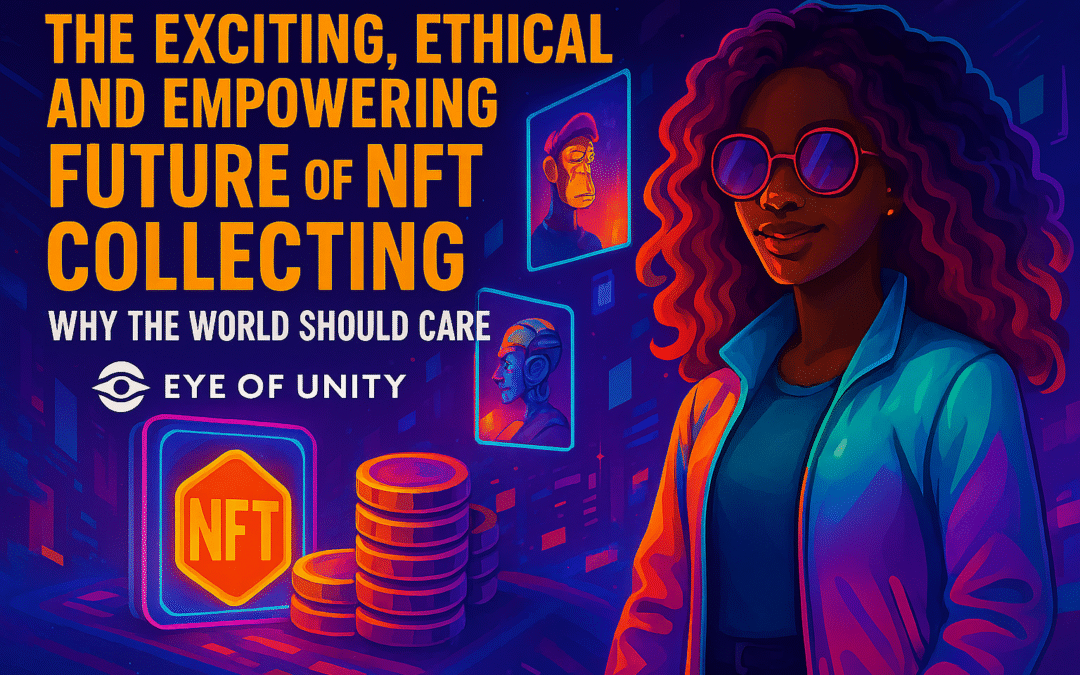
Welcome to the Next Wave of Collecting: NFTs as a Force for Good
There’s a new revolution at play in the world of collecting. Forget stuffy attics filled with baseball cards, dusty stamps, and rare coins tucked in velvet-lined boxes. The age of NFTs – Non-Fungible Tokens – is here, and it’s not only making collecting cooler, more interactive, and infinitely more global, but it’s also paving the way for a more ethical, economically just, and sustainable future. Whether you’re a lifelong collector, a digital native, a passionate creator, or simply a curious onlooker, this article is here to show you why getting into NFT collecting isn’t just the next big thing — it’s the future. And yes: it might just be the most ethical economic shift in collectibles of our lifetime.
What Are NFTs? More Than Just Digital Art
Imagine owning a piece of digital history: a viral meme, a unique artwork, a rare sports highlight, or even your favorite musician’s new single. With NFTs, you can do just that — and what you own is uniquely yours, stored securely and transparently on the blockchain. Unlike cryptocurrencies or traditional money (which are fungible—one coin can always be swapped for another of the same value), an NFT is a one-of-a-kind digital asset. Its uniqueness, traceable provenance, and embedded intellectual property rights set it apart. Why does this matter? Because collecting now goes beyond the physical — it’s become global, digital, and inclusive.
NFTs have already created ripples in pop culture: think Beeple’s $69 million digital collage auctioned at Christie’s, Twitter founder Jack Dorsey’s first tweet going under the digital hammer for $2.9 million, and the pixel-art sensation of CryptoPunks breaking the billion-dollar mark. But NFTs are more than mind-blowing price tags. They’re tools for empowerment, transparency, and economic transformation, reshaping every corner of collectibles, including art, games, fashion, sports, real estate, and even music.
Why NFTs Represent a New Ethical Economic Model for Collectibles
1. Cutting Out the Middleman and Empowering Creators
Let’s face it: traditional collectibles markets have been built on exclusivity, intermediaries, and gatekeepers. Who hasn’t heard stories of artists receiving pennies while major galleries, publishers, or auction houses walk away with the lion’s share? NFTs flip this script by allowing creators to mint, market, and sell directly to fans — no middleman, no excessive fees. Not only does this mean better pay for creators, but it also allows for the inclusion of programmable royalties. Imagine an artist getting paid—not only on the first sale, but every single time their NFT trades hands, forever.
“NFTs should be celebrated for the power and freedom they place in the creator’s hands: never have artists been able to sell to such a wide market without giving up control over their work.”
For instance, Rarible, SuperRare, and Foundation are platforms where artists can set royalties of 5–15% on each future resale. This feature alone is a radical improvement over the old system, where creators would often see nothing after that first sale.
2. Ownership and Authenticity: Power to the Collector
Every collector fights the curse of counterfeit—be it fake sneakers, reprinted baseball cards, or misattributed art. Enter the blockchain: NFT ownership and provenance are public, tamper-proof, and traceable. You can see the entire history of each item—from creator to current owner—totally transparent and permanent. This revolutionizes trust in collecting. No more scammy sellers or doubts about authenticity. Platforms like OpenSea, Rarible, SuperRare, and Zora provide rich provenance data, while standards like ERC-721 and ERC-1155 make it easy to verify legit ownership across the NFT universe.
As more collectibles (think luxury watches, rare sneakers, high-end fashion) get linked to NFTs, blockchain authentication is becoming the gold standard for trust—benefiting both collectors and brands.
3. Global Access and Community: Collecting Without Borders
NFTs have democratized collecting like never before. No need to be in a major city or buy at elite auctions. As long as you have an internet connection and a blockchain wallet, anyone, anywhere can collect, trade, and showcase digital assets. From young artists in the Philippines to music fans in Kenya, NFTs have leveled the playing field.
Online communities built around NFT projects, such as Bored Apes Yacht Club, CryptoPunks, or even NBA Top Shot, transcend nationality, language, or location—bringing together millions to collect, collaborate, and innovate.
A Sustainable Spin: NFTs and the Battle Against Waste
Let’s get real: physical collectibles leave a serious mark on our environment. Manufacturing, shipping, packaging, retail, and storage all generate pollution, carbon emissions, and mountains of waste. NFTs, being digital, offer an eco-friendly alternative — particularly when paired with next-generation blockchain technology.
A Brief History of NFT Sustainability Critiques
NFTs have received criticism for carbon emissions tied to blockchain operations, especially on Proof-of-Work (PoW) blockchains like legacy Ethereum or Bitcoin. But that’s rapidly changing. The 2022 “Ethereum Merge” was a landmark: Ethereum switched from energy-hungry PoW to a much greener Proof-of-Stake (PoS), slashing its energy usage by over 99%. Other eco-friendly platforms, such as Tezos, Solana, Algorand, Polygon, and Flow, have been built from the ground up to be fast, efficient, and eco-conscious, requiring only the energy of a few Google searches per transaction.
Eco-Friendly NFT Marketplaces and Innovations
- Tezos: Minting an NFT on Tezos reportedly has the same carbon impact as sending a regular email. Marketplaces like Objkt, Kalamint, and MinterPop highlight their “clean NFT” status, supporting artists and collectors who demand earth-friendly practices.
- Carbon Offsets: Major marketplaces and creators use carbon offsetting for NFT emissions. Projects like Moss’s MCO₂ token, SuperRare’s offset initiatives, and collaborations with organizations like Open Earth Foundation make NFT collecting a positive force for sustainability.
- Layer-2 Solutions: New Layers (Polygon, Arbitrum, Optimism, Immutable X) take most transactions “off-chain,” reducing fees and environmental impact even more.
The result: Collecting NFTs is quickly becoming one of the lowest-impact forms of collecting, outpacing traditional art, trading cards, or luxury goods. The digital creative economy means less stuff, less shipping, and less waste—with infinitely more room for innovation, inclusion, and creativity.
Real-World Case Studies: NFTs as Ethical and Economic Powerhouses
Empowering Youth and Emerging Artists
NFTs aren’t just for the rich and famous. They have sparked extraordinary success stories for young and emerging artists. Teenage creators like Jaiden Stipp, FEWOCiOUS, Erin Beesley, Benyamin Ahmed, and Nyla Hayes have collectively brought in six- and seven-figure sums by minting and selling their digital art as NFTs. This is unprecedented in the history of collectibles, where breaking in previously required luck, connections, or lots of capital.
Supporting Social Good and Charitable Causes
NFTs are now one of the most innovative tools for philanthropy and social impact. From Beeple and Jack Butcher’s “Care Package” campaign raising hundreds of thousands for Afghan families in need, to projects linking sales to endangered species protection, environmental conservation, or mental health advocacy, NFTs are gamifying and amplifying charitable giving.
How it works:
- Artists or organizations mint special NFTs and auction them for charity.
- Proceeds go directly (via blockchain smart contract) to the intended cause—transparent, auditable, and instantaneous.
- Donors receive a collectible, status symbol, or even ongoing community benefits, incentivizing further involvement.
The result: NFTs are making giving cool. Donors and collectors get digital proof of impact, aligning their collecting habits with real-world outcomes.
Innovating Business Models: Royalties, Revenue Sharing, and Entry Barriers
NFTs enable revolutionary revenue models. Artists, brands, game creators, musicians, and businesses can embed royalties directly into their NFTs. Whenever the asset changes hands, the original creator receives a programmed percentage—automatically, globally, and forever. This perpetual revenue stream is nearly unheard-of in the physical world, where resale profits are rarely shared with the original creator.
Some creators are experimenting with models like “token-gated” content (exclusive access for NFT holders), community revenue sharing, or offering unique real-world experiences through digital ownership.
NFT Market Trends: The Numbers Behind the Movement
The data tells a story of unstoppable growth and diversification. Far from being a fleeting fad, the global NFT market is maturing into a vast, nuanced ecosystem.
| Metric | 2021 | 2024 | 2025 (projected) |
|---|---|---|---|
| NFT Global Market Size | $41B | $36–49B | $61–104B |
| Total NFT Wallets (active) | 1.2M | 9M+ | 12M+ |
| Monthly NFT Sales Volume | $7.9B | $7–8B | $8.2B+ |
| NFT Marketplaces | 50+ | 112+ | 120+ |
| % Art NFTs | 21% | 22% | 21–24% |
| % Gaming NFTs | 27% | 38% | 38%+ |
| Music NFT Revenue | – | $500M+ | $520M+ |
| Fashion/Luxury NFTs | – | $0.8B | $0.9B+ |
| Carbon Credit NFTs | – | $200M | $300M+ |
| Royalties Enforced | – | 80% | >80% |
| Avg. NFT Sale Price | – | $940 | $940 |
| Institutional NFT Investments | – | $7B+ | $8B+ |
| NFT-related Job Growth YoY | – | +48% | +48% |
| NFT Lending & Fractional/DAOs | – | $2.3B | $2.3B+ |
Source: Coinlaw, Cointelegraph, NFT Collectibles Market 2025, [see references for links].
These stats point toward a future where NFT collecting is mainstream, global, multi-generational, and backed by a robust infrastructure of sustainable platforms, responsible regulations, and endless innovation.
Platforms, Practices, and Governance: Doing NFTs the Right Way
NFT platforms are not created equal. In 2025, choice of marketplace, blockchain, and governance model can make a huge difference in the ethics and economic empowerment of collecting.
Leading NFT Platforms with Ethical Practices
- OpenSea: The largest general marketplace, with strong provenance tools, identity verification, and growing focus on eco-friendly Layer-2 integrations.
- Magic Eden: Major platform on Solana, with extremely low fees, rapid transactions, and art/gaming focus.
- Objkt, Teia, Kalamint (Tezos): Prioritizing energy efficiency, low fees, and easy artist onboarding—making NFTs greener and more accessible.
- Rarible, SuperRare, Foundation, Zora: Creator-centric marketplaces offering royalties, community curation, and open protocol innovation.
| Platform | Blockchain | Key Features | Monthly Users | Ecological Focus |
|---|---|---|---|---|
| OpenSea | Ethereum/Polygon | General, cross-chain | 2.4M | Moderate (uses L2 and ETH PoS) |
| Magic Eden | Solana, Ethereum | Gaming & collectibles | 1.5M | High (Solana PoH/PoS) |
| Objkt, Teia | Tezos | Art, low-fee, eco | 300–500K | Very high |
| Rarible | Multi-chain | Royalties, community | 350K+ | Medium/High |
| Zora | Ethereum Layer 2 | Open protocol, zero/low fees | 250K+ | High (Optimism/others) |
These marketplaces offer artist verification, built-in royalties, identity protection, and anti-fraud tools, setting ethical standards across the web3 space.
Sustainability and Social Good: Green NFT Initiatives
- The FEN Project: Global digital art “clean NFT” drop that raised funds for eco-activism while using the low-energy Tezos blockchain.
- Digital Art for Climate, Wildcards, Ocean Cleanup: NFT campaigns supporting environmental conservation, endangered species, and carbon credit tracking.
- Aorist, ECO NFT: Marketplaces where each sale donates to forest restoration or renewable energy projects, linking art with impact.
Regulating for Good: Legal and Policy Advances
NFTs flourished in the wild west of unregulated digital commerce, leading to some scams and hype. But 2023–2025 has seen enormous policy progress:
- Europe’s MiCA Framework: The Markets in Crypto-Assets Regulation provides clarity, user protection, and anti-money-laundering rules for NFTs and their marketplaces, specifying that unique art and collectibles are generally exempt but fractionalized or financial NFTs may be regulated. This boosts investor trust and attracts more ethical innovation.
- US, Japan, Korea: Growing clarity on royalties, security/capital gains treatment, and consumer protection; with mandatory KYC and AML for major platforms.
- ESG Practices: Over 30% of new NFT buyers cite eco-friendliness or social responsibility as a major driver for their choices.
The Road Ahead: Expert Voices and Future Outlook
Industry leaders, regulators, and creators are united in their assertion: NFTs are not just “digital Beanie Babies.” They are the bedrock of a new, fairer, greener, more creator-centric economy, evolving rapidly as blockchain scales, platforms embrace sustainability, and communities take the reins.
Expert Opinions
- Devin Finzer (OpenSea CEO): “The days of pure collectible NFTs without tangible utility or community engagement are over. The future belongs to projects that reward holders with real benefits—access, rewards, governance, and social impact.”
- Yat Siu (Animoca Brands): “NFTs will be a $1 trillion market, integrating gaming, digital identity, and social coordination on a scale never before seen.”
- Sarah Kim (CryptoThink): “NFTs now represent the future of ownership and digital interaction,” where “the market’s maturation has filtered out bad actors, leaving space for genuine innovation.”
- Daphne Illingworth (Angry Bears NFT): “NFT utility is everything—art, credentials, gaming, supply chains, and more. The most valuable NFTs are those embedded with real-world integrations.”
Future Trends to Watch
- Hybrid NFTs: Merging digital and physical (real sneakers, artwork, tickets paired with NFT authentication)
- Dynamic/AI NFTs: Art and collectibles that evolve with user interaction or real-world events
- DAOs and Governance: Community-owned projects, decision-making through NFT/token-holder votes
- NFTs in Metaverse and Real-World Assets: Virtual land, avatar skins, event tickets, and even real estate deeds go digital
- Institutional Growth: Banks and brands (Nike, Adidas, Starbucks, Gucci, Disney) deeply investing in NFT-based loyalty, authenticity, and customer engagement programs.
How to Get Involved: Tips for the NFT-Curious
Ready to take your first step in the world of NFTs? Here’s how to get started, ethically and responsibly:
- Do Your Homework: Learn the basics of NFTs, blockchain wallets, and marketplaces. Start with OpenSea, Objkt, or Magic Eden’s guide pages.
- Choose Your Blockchain Smartly: Prefer eco-conscious chains—Tezos, Solana, Polygon, or Ethereum Layer-2 for minimal environmental impact.
- Buy What You Love (or Believe In): Support artists and causes whose work and missions resonate with you. Look for clear provenance, royalty terms, and project transparency.
- Engage with the Community: Join Discords, Twitter Spaces, or Telegram groups. Many NFT owners are eager to share knowledge and help newcomers.
- Think Beyond Speculation: The thrill of flipping is real, but supporting creators, communities, and sustainable platforms pays off in deeper, long-lasting value.
- Prioritize Security: Use reputable wallets (e.g., MetaMask, Temple for Tezos), enable two-factor authentication, and beware phishing scams.
Conclusion: NFTs — The Ethical, Sustainable, and Empowering Future of Collecting
NFTs aren’t just the next trend in digital stuff. They are a movement—a transition to a fairer, creator-driven, less wasteful, and more inclusive global economy. By collecting NFTs, you become part of a community that values transparency, environmental responsibility, and social impact. You fuel a system where creators are paid for every ripple of influence their work makes, and where collectors gain access to a universe of authenticity, community, and innovation that simply wasn’t possible before.
So yes, NFTs can—and will—be the ethically superior future of collectibles. It’s time to get excited. The next legendary collectible, groundbreaking artwork, or world-changing project is just a mint away.
Join the NFT revolution—collect with purpose, and be part of the new digital ethics!
Want to dive deeper? Explore the following resources for expert insights and market trends:
- NFT Collecting Global Market Size and Trends
- Ethereum’s Green Transformation and PoS Impact
- NFTs for Charity and Social Good
- Tezos Clean NFT Platforms
- EU MiCA and NFT Regulation
- NFTs as an Economic and Social Paradigm
- NFT Marketplaces with Built-In Royalties
Ready to find your first NFT? The journey starts with an idea—let’s build a fairer, greener world together, one digital collectible at a time.
System Ent Corp Spotify Music Playlists:
https://systementcorp.com/matchfy
Other Websites:
https://discord.gg/4KeKwkqeeF
https://opensea.io/eyeofunity/galleries
https://rarible.com/eyeofunity
https://magiceden.io/u/eyeofunity
https://suno.com/@eyeofunity
https://oncyber.io/eyeofunity
https://meteyeverse.com
https://00arcade.com