An Upbeat Look at Presidential Leisure, Public Perception, and the Power of Fun in the Oval Office
Introduction: Could Fun Save the Country?
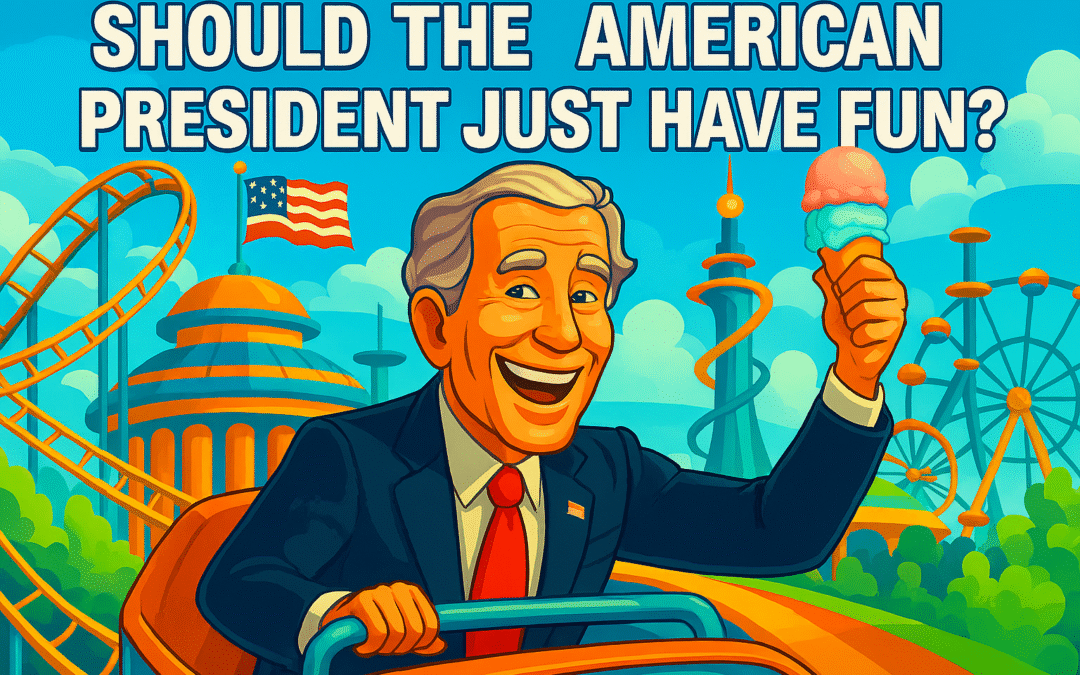
Between the weighty matters of nuclear codes, global crises, and the daily grind of high-stakes policy, one might assume the American president has little time for a hearty laugh, a sneaky scoop of ice cream, or a roll down the fairway. Yet, from fox-hunting Founding Fathers to ice-cream-loving Joe Biden, America’s presidents have always found ways—bold, quirky, and occasionally controversial—to have fun. But should the American president just have fun? Is it irreverent fantasy, or could presidential playfulness offer much-needed balance, relief, humanity, and—just possibly—a stronger democracy?
This article dives into the dazzling world of presidential pastimes, exploring how leisure shapes the presidency, impacts approval ratings, and influences the way history— and the public—judge the nation’s leader. So grab your favorite snack, sit back, and enjoy this light-hearted but thought-provoking ride through the playground of presidential fun.
Founding Fathers: Leisure in the Age of Revolution
The American presidency was invented by men who believed in the “pursuit of happiness”—their own as well as the nation’s. George Washington, often imagined as stoic and solemn, might surprise you: he was a party animal by 18th-century standards. His love for fox hunting, card games, and lively balls was widely known. Washington’s diaries reveal not a man haunted by the burdens of office, but someone who relished an occasional dance and rarely missed a horse race, fair, or game of billiards.
Thomas Jefferson, too, was a leisure connoisseur. Best known for his intellectual pursuits, Jefferson’s “garden book” was his pride—a mix of gardening experiments and philosophical musings. He saw horticulture as noble fun, hosting pea-growing competitions and keeping “fruitery” and vineyards bursting with rare specimens. Jefferson also experimented with wine, archaeology, and (rather less successfully) violin playing.
John Adams may have taken the longest presidential “vacation,” abandoning Philadelphia to care for his ailing wife for seven months. Critics joked he had abdicated; Adams, on the other hand, was unapologetic about his devotion to family and the restorative power of time away. Even James Madison, architect of the Constitution, slipped out of Washington in 1816 for a legendary four-month summer break—the longest in presidential history. The early presidency, it turns out, allowed for a healthy dose of R&R, complete with long absences and public skepticism.
What does this tell us about fun and the presidency? From the very start, personal leisure was seen as both natural and necessary—though always vulnerable to the charge that pleasure might undermine duty.
19th Century Pastimes: Wrestling and Nude River Swims
The 19th-century Oval Office was less about email pings and international summits, more about the rugged, quirky joys of American life. Enter John Quincy Adams, a president who believed in starting each day before dawn with a vigorous, nude swim in the Potomac. As legend has it, a daring female journalist once sat atop his clothes, refusing to budge until she got her exclusive interview. Whether historical fact or apocryphal TikTok lore, Adams’s aquatic routine endures as an early example of presidential self-care and eccentricity.
Abraham Lincoln, meanwhile, was the superstar wrestler of his day, winning all but one of his estimated 300 matches and earning a posthumous spot in the National Wrestling Hall of Fame. Lincoln’s wrestling prowess boosted his “rail-splitter” reputation—hardy, engaged, and relatable—long before approval ratings were a thing. His sense of humor is also legendary: “If I were two-faced, would I be wearing this one?” he once quipped to political rivals.
These stories may amuse, but they also humanize. They remind us that presidential fun is neither a modern invention nor a sign of unseriousness. For these leaders, physical vigor, quirky pastimes, and playful moments were central to both survival and leadership.
Theodore Roosevelt: The Strenuous Life, Between Bears and Boxing
No president embraced fun—strenuous, sometimes dangerous fun—quite like Theodore Roosevelt. Roosevelt’s outdoor pursuits were legendary: hunting big game, exploring the badlands, boxing in the White House (until a punch left him blind in one eye), and even trying out Japanese jiu-jitsu. For Roosevelt, such activities weren’t trivial distractions; they were vital elements of what he called the “strenuous life,” infusing the presidency with energy and purpose.
Roosevelt’s zest for adventure fueled one of America’s greatest legacies: conservation. During his presidency, he created the U.S. Forest Service, established five national parks, 18 national monuments, 51 bird reserves, and set aside some 230 million acres of public land. The story of the “Teddy Bear”—his refusal to shoot a captive bear—is the embodiment of how presidential fun, ethics, and public image can intertwine.
And, lest anyone question the presidential commitment to leisure, Roosevelt’s epic post-presidential African safari, commissioned by the Smithsonian, netted over 11,000 specimens for science and spectacle. Did he face criticism? Absolutely. “Why is he off hunting while America faces problems?” asked newspapers of the day. But the irony: Roosevelt’s most playful pursuits became cornerstones of national pride and environmental stewardship.
Quiet, Creative, and Quirky: Franklin D. Roosevelt’s Hobby (and Howell!)
Flash forward to the 20th century. Franklin D. Roosevelt faced the Great Depression and World War II—possibly the greatest stress cocktail for any president. How did FDR unwind? Every night, he would withdraw to his study and spend 30 minutes or more with his prized stamp collection. A self-taught philatelist since age eight, FDR found solace, mental rest, and creative inspiration in stamps, books, and ship models. “I owe my life to my hobbies—especially stamp collecting,” he once said.
More than just a coping mechanism, FDR’s hobbies helped project calm and foster approachability. Mid-crisis photos of him smiling over his collection offered the public reassurance that the president, too, found ways to relax and refocus. He even helped design several U.S. stamps. From collecting stamps to swimming (part of his polio rehabilitation), FDR’s fun wasn’t flashy—it was restorative, creative, and quietly vital.
Sporting Commanders: From Eisenhower’s Greens to JFK’s Sailboat
The Eisenhower Era: Par Golf and Artistic Retreats
Dwight D. Eisenhower may have been a five-star general, but he was also golf’s greatest White House advocate. Over his eight years as president, Ike played more than 800 rounds, installed a putting green outside the Oval Office, and used the course for diplomacy and casual “off-the-record” chats with world leaders.
Golf under Eisenhower wasn’t just a stress reliever—it was a cultural revolution. America’s golfing population doubled, inspired by Ike and his friend Arnold Palmer. Eisenhower viewed the greens as an extension of his leadership style: strategic, social, and, at times, a much-needed sanctuary. For good measure, he also took up oil painting, calling his modest works “daubs” that helped him decompress after tough days.
JFK: Sail, Speed-Read, Swing
John F. Kennedy was a man of many pastimes: sailing in Nantucket Sound (his favorite, the Victura, is now a museum treasure), golf (with a “lyrical” swing that masked back pain), and record-setting speed reading. JFK’s connection with the water was more than mere recreation—it was core to his identity and campaign image.
When he wasn’t on the boat, Kennedy was often devouring books at lightning speed, famously reading over 1,200 words per minute. He adored collecting model ships and scrimshaw, and kept quirky, nautical mementos on his desk. His charm, athletic prowess, and humor (how did he balance it all? “With difficulty,” he reportedly quipped) became a blueprint for the “playful but presidential” style.
Kennedy’s commitment to fun, though carefully managed in the public eye, projected a balance between modern sophistication and relatable fun, inspiring future presidents to cultivate signature pastimes of their own.
The Later 20th Century: Presidential Fun Gets Quirky
Johnson: Pranks by Amphicar
Lyndon B. Johnson’s larger-than-life personality spilled over to his quirky ranch life. LBJ delighted in pranking guests by driving his amphibious “Amphicar” into a lake, feigning a brake failure before the car floated to safety with terrified (then relieved) passengers. These “pranks” were vintage LBJ, blending mischief with displays of control.
LBJ also enjoyed driving at high speeds around his ranch, often while holding impromptu meetings. This blend of play and politics showed how the right kind of fun could put guests, aides, and even world leaders off-guard—and, perhaps, keep the president himself sane during the Vietnam era.
Nixon: Strikes, Keys, and the Power of Bowling Shoes
Richard Nixon, the “unfunny” president by some reckonings, was surprisingly devoted to bowling. Installing a private alley in the White House, Nixon reportedly scored respectably high, with a best-reported game of 229. For Nixon, bowling offered moments of escape from political tumult.
Less well known, Nixon was a skilled pianist—playing at the Grand Ole Opry, the Jack Paar Show, and composing original works. Yet, perhaps more than any predecessor, Nixon’s embrace of leisure was viewed with suspicion: was it escape, image-control, or just normal fun? The enigmatic answer: a bit of everything.
The Modern Era: Fitness, Fast Food, and Going Social
George W. Bush: Sweat, Paint, and the Warrior’s Ride
George W. Bush kept fit as a marathon runner (completing Houston’s in a blistering 3:44:52), a mountain biker, and later, as a painter. His 100K mountain bike charity rides for veterans became an annual highlight, blending physical challenge with public service.
After leaving office, Bush took up painting, debuting portraits of world leaders and wounded warriors. While art critics remain divided, the hobby gave Bush a new outlet for reflection—and a more human image.
Barack Obama: Basketball and Comic Books as Presidential Cool
Barack Obama, the “first social media president,” made basketball a pillar of his identity. The White House even boasted a full court, and Obama’s pick-up games—occasionally starring NBA players—provided photo ops and candid camaraderie.
Obama’s intellectual fun included voracious reading (his annual reading lists are awaited like Oscar nominations), and an affection for comic books—most notably Spider-Man and Conan the Barbarian. Obama’s appearance as a character in Marvel comics remains a playful monument to presidential pop culture. If being cool is fun, Obama made it presidential.
Joe Biden: Football, Cars, and Ice Cream
Joe Biden’s “just folks” fun is legendary: from his days as a high school football star (“Give me the ball!” was his motto) to the now-iconic, aviator-shaded Corvette joyrides. He is known as a “genuine gear-head” with a penchant for joyriding with Jay Leno, and incessantly celebrating the joys of ice cream.
Biden’s workout: scooping cones and rooting for his Philadelphia Eagles. At 82, he remains the ultimate example of how a little fun, nostalgia, and sugar can keep one going.
Donald Trump: Golf, Burgers, and the Twitterverse
Donald Trump is synonymous with presidential golf. He owns numerous courses worldwide and played upwards of 400 rounds since 2017. Critics lambast the costs and timing—notably, golfing during crises and government shutdowns often generated a storm of negative headlines and memes.
Trump’s fun also included social media combativeness, fast food, and a love-hate dance with pop culture. Despite promising he “would not be a president who took vacations,” his “working vacations” became a hallmark—sometimes justified by meetings on the links, sometimes fodder for satire.
Presidential Vacations: The Fun Factor and the Fallout
Presidential vacations have always walked the line between necessary reprieve and political risk. James Madison, as noted, once vanished for months. Franklin D. Roosevelt faced attacks for escaping to his yacht. George W. Bush was skewered for over a thousand days split between his Texas ranch and family Maine compound.
Most recently, Barack Obama’s Martha’s Vineyard jaunts, Joe Biden’s frequent Delaware weekends, and Trump’s relentless golf travel have all sparked accusations of laziness, detachment, or elitism. In fact, no president in the modern era escapes vacation scrutiny, no matter their productivity.
Who took the most vacation? George W. Bush by days (1,020); Bill Clinton, not far behind; Trump and Obama, controversial by costs and frequency; Biden, the new lightning rod for “absentee” arguments.
But critics and defenders alike miss a crucial point: the modern presidency doesn’t stop for vacation. From FDR’s “Little White House” to the digital “West Wing in Delaware,” advances in technology and White House staffing mean presidents work everywhere—golf course, beach, ranch, or hotel.
The Media and Public: When Fun Becomes a Scandal
The way the media and public react to presidential fun is deeply revealing. A day at the ballgame can appear as a “man of the people” moment or, with the wrong timing, as an affront to working Americans. The emergence of social media has only intensified the “gotcha” moment—cue a President golfing during a hurricane, or biking while Congress bickers over the budget.
During shutdowns, leisure backfires badly—Trump’s 2025 rounds of golf amid government closure ignited a social media inferno and tanked his approval ratings to new lows. Obama’s vineyard vacations attracted similar scorn during the recession; Biden’s time in Delaware is often cast as evidence of absenteeism—despite working remotely by all accounts.
Social media’s role is especially profound. Humorous memes often mirror the confusion and contradiction around holidays such as Presidents Day itself, mixing celebration with satire, and highlighting the ambiguous meaning of presidential fun in the public eye.
Fun and Approval Ratings: Is Play Political Kryptonite?
Is there hard data on fun and approval? Not exactly, but moments of perceived frivolity can cut both ways. Modern research shows:
- Seriousness in crisis boosts approval dramatically—it’s the “rally ‘round the flag” effect seen after 9/11 or natural disasters.
- Visible fun during ordinary times may humanize and help approval: Obama’s basketball games, Reagan’s Hollywood jokes, or even Bush’s mountain biking foster connection (as long as they aren’t seen as replacing duty).
- Perceived tone-deafness (golf during crisis, long vacations in recession) damages approval and sparks endless talking-head outrage.
- Media context is everything: Kennedy’s sailing was mythic; Trump’s golf, by year nine, is weaponized by Internet culture.
Most presidents know it—carefully scripting the goofy dances, strategic dad jokes, and staged downtime. But slip up, and fun turns fast into headline fuel.
The Case for Presidential Fun: Science, Psychology, and Performance
If you’ve made it this far and still think presidential fun is frivolous, consider the growing research on productivity, creativity, and well-being. Leading studies suggest that the most effective leaders know when to recharge, and that periods of real disconnection increase creative output, resilience, and empathy. People who take more than 11 vacation days a year are 30% more likely to receive a raise, and recovery periods significantly boost performance.
Presidents aren’t superhuman. The job’s pressures produce insomnia (Lincoln), depression (Coolidge), and burn-out (just about everyone). Athletics, hobbies, and downtime are not just “nice to have”—they are survival tools. Team sports, for example, have even been linked to more collaborative governing styles.
As for the wider implications, the world’s expectations have shifted. In today’s non-stop cycle, leisure is both a statement of humanity and a stage for strategic self-management. If the country demands a leader who can handle seven crises at once, shouldn’t we celebrate a president’s capacity for joy, play, and even a little silliness?
Can the President Just Have Fun? One Final Word
Should the American president just have fun? Of course not—there’s a country and a world to lead. But should the American president make room for fun—athletic, quirky, creative, even mischievous? History, science, and modern life all point to “yes!” Fun is the glue of resilience, the oil in the gears of governance, and the reminder that behind the title stands a human being.
A laughing president doesn’t mean an unserious country. It means a serious country led by someone buoyed, not broken, by the burden—and who just might live long enough to keep carrying it.
So next time you see a TikTok meme mocking the president’s vacation, or a breakneck bowling alley selfie from the Rose Garden, remember: presidential fun isn’t an abdication of duty; it’s often the secret to doing it well.
Helpful Links and Further Adventures
Want to explore more about presidential fun? Check out:
- How US Presidents Spend Their Free Time — the ultimate cheat-sheet to all White House hobbies, quirks, and routines.
- Presidential Approval Ratings During Times of Crisis — do moments of fun actually show up in the polls?
- The Funniest U.S. Presidents — Lincoln, Roosevelt, Kennedy, Reagan, and Obama bring the jokes.
- A Stamp-Collecting President: FDR’s Hobby
- Eisenhower: Golf at the White House
- JFK: A President with a Passion for Boats
- Joe Biden, High School Football Star
- Why Presidents Golf — diplomacy, stress relief, and (sometimes) controversy.
- Presidents and Media: It’s Complicated — how the fun gets spun.
System Ent Corp Sponsored Spotify Music Playlists:
https://systementcorp.com/matchfy
Other Websites:
https://discord.gg/eyeofunity
https://opensea.io/eyeofunity/galleries
https://rarible.com/eyeofunity
https://magiceden.io/u/eyeofunity
https://suno.com/@eyeofunity
https://oncyber.io/eyeofunity
https://meteyeverse.com
https://00arcade.com
https://0arcade.com