
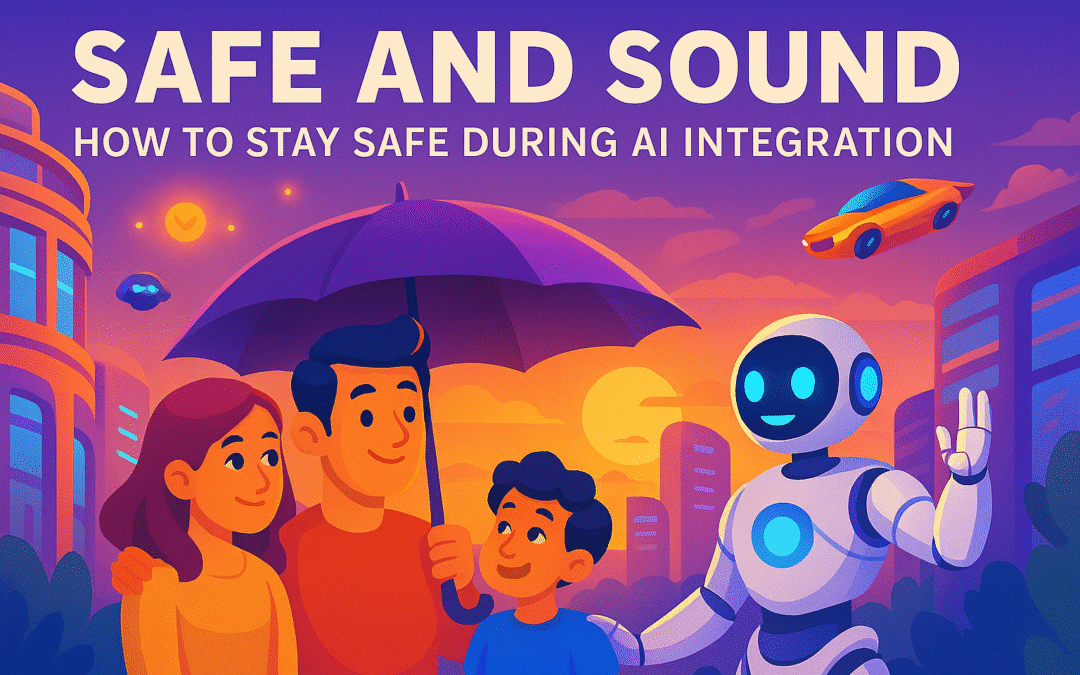
Welcome to the Age of Everyday AI – Let’s Make Safety Second Nature
Just imagine: your morning alarm is set by a smart speaker, a digital assistant schedules your meetings, your coffee brews itself as your fridge suggests what’s for breakfast, and your car—sometimes—takes you safely to work on autopilot. This isn’t science fiction anymore. AI is woven into countless threads of our daily lives, promising comfort, creativity, and convenience.
But, as we flip the switch to smarter living, it’s more important than ever to ask: How can we be proactive, savvy, and safe while welcoming AI into every corner of our world? The good news is that being AI-wise isn’t about paranoia—it’s about empowerment! So, buckle up for practical tips, real-world case studies, a dose of optimism, and all the know-how you need to make AI your trusty companion—not your surprise adversary.
Why AI Safety Is a Hot Topic (and Why It’s Fun to Learn)
AI is everywhere, often without us even realizing it. According to recent research from Pew, while 79% of AI experts say Americans interact with AI almost constantly, only about a quarter of the general public realize just how often they’re engaging with algorithms in daily routines: social media, smart homes, banking, shopping, health care, and way beyond. From predicting the weather to powering personal assistants, AI is making life more seamless, but with new capabilities come new responsibilities.
Embracing AI doesn’t mean turning a blind eye to its risks. AI can introduce privacy, bias, and security challenges. But rather than freezing in fear, we can all learn how to confidently safeguard ourselves—and have a little fun doing it.
Everyday Examples: How AI’s Changing Our World
- Smart Homes: Devices like thermostats that learn your schedule, voice assistants that control lights, and security cams that spot packages (and sometimes pesky raccoons).
- Personal Assistants: Chatbots such as ChatGPT, Alexa, Gemini, or Siri help with calendars, recommendations, writing emails, even weather updates.
- Autonomous Vehicles: From adaptive cruise control to hands-free parking, AI is navigating traffic, anticipating hazards, and learning from each ride.
- Workplace Automation: Bots screen job applications, schedule meetings, or even compose routine reports, freeing up time—but also raising new data security concerns.
Each use case unlocks massive benefits—but also highlights the need for sound safety habits and a keen sense of digital citizenship.
What Could Go Wrong? (Or: AI’s Not-So-Superhero Side)
Let’s address the robot in the room: AI, like any powerful tool, can cause headaches if misused or left unguarded. Some key risks popping up as AI goes mainstream include:
- Privacy Leaks: Some systems over-collect data, sometimes accidentally sharing, selling, or exposing your sensitive information.
- Cybersecurity Threats: Hackers increasingly use AI to find vulnerabilities or automate attacks. Conversely, poorly secured AI systems can be hacked, manipulated, or tricked into leaking data.
- AI Hallucinations & Exploits: Chatbots may invent information or be “prompt-injected” (tricked by malicious users into revealing secret details or running rogue commands).
- Bias and Discrimination: If AI trains on biased or incomplete data, it may repeat, reinforce, or amplify unfairness, especially in hiring, lending, or policing decisions.
- Automated Decisions Gone Wrong: AI that approves loans or diagnoses illnesses without enough oversight can result in serious errors or injustices.
- Deepfakes & Social Manipulation: Smart algorithms can forge misleading photos, voices, or text, used for mischief, scams, or even political deception.
- Job Displacement & Skills Gaps: Automated systems will create some jobs and render others obsolete, heightening societal and workplace challenges.
Importantly, these aren’t reasons to despair—they’re just reminders to embrace AI with open eyes, common sense, and great digital hygiene!
Smart Home Safety: Keep Your Castle (and Data) Secure
Your home might be smart, but is it safe? As you add gadgets—from video doorbells to thermostats with AI brains—consider these evidence-based habits:
1. Lock Down Your Wifi and Devices
- Change default passwords. Use strong, unique passphrases on every device and your home network.
- Enable two-factor authentication where available. That extra security layer is gold.
- Regularly update device firmware/software to patch vulnerabilities. This is the single most important step—and often overlooked.
- Segment your network. Many modern routers let you create a special “guest” network just for smart devices—keeping your main computers and phones safe if a camera or lightbulb is compromised.
Why it matters: If a hacker gets into your smart baby monitor, it shouldn’t also unlock your emails or bank accounts.
2. Be Mindful About Camera & Audio Settings
- Choose cameras/doorbells with local storage options or strong cloud encryption.
- If uncomfortable, turn off unnecessary voice assistants or cover up camera lenses when not needed.
- Regularly review privacy settings—decide what’s stored, and how long.
3. Understand Your Alerts
- AI camera alerts can differentiate between raccoons and burglars—but sometimes mistake shadows, pets, or weather for threats.
- Customize alert settings so your system is smart about your routines and family patterns.
4. Choose Devices from Trusted Brands
- Established companies are more likely to issue timely security patches and have responsible privacy practices.
- Read reviews about privacy incidents, transparency, and how the company responds to vulnerabilites.
5. Know What’s Connected and Why
- Limit each device’s access—does your smart toaster really need to talk to your fridge? Map your home devices and unplug what you don’t use.
- Regularly audit apps and device permissions.
Case Example: In 2023, a baby monitor vulnerability allowed outsiders to access live video streams in several countries, due to default password settings and unpatched firmware. Don’t let this happen to you—be proactive!
Personal Assistants: The Promise and Peril of Chatbots
Whether you use ChatGPT, Gemini, Siri, Alexa, or one of the dozens of others, AI assistants can seem like magic. But here’s the catch: every question, prompt, or message is potentially stored, reviewed, or used for training future models, unless you know how to set your preferences.
1. Understand Data Retention and Sharing
- By default, most consumer AI assistants keep your prompts—sometimes indefinitely—and may use them to improve their models or share with third parties.
- Explore privacy controls: For instance, you can manually delete or opt-out of training use in ChatGPT, Google Gemini, and Claude, though the process varies.
2. Never Share Anything You Wouldn’t Print on a Billboard
- No private health info, financial details, or sensitive company secrets. Treat your AI assistant like a stranger on a crowded bus.
- Remember: “Temporary” and “Private” modes vary by vendor and may still retain some data.
3. Be Wary of “Shadow AI” at Work
- Using AI tools unofficially can accidentally leak confidential company information, as seen in well-publicized breaches by Amazon and Samsung employees.
- Follow your organization’s official policies on AI tool usage. If unsure, ask IT or data security leadership.
4. Set Up Access Controls and Monitoring
- Enable two-factor authentication for accounts tied to private assistants.
- Pay attention to notification emails and regular access reviews to spot suspicious logins.
5. Be Alert for Prompt Injection Attacks
- AI chatbots can be tricked with cleverly crafted questions (“prompt injection”) to share confidential info, bypass rules, or cause mischief. Never trust an AI’s output blindly, and never issue commands that could be misused.
Real-World Oops: In a notorious case, a Chevrolet dealership’s website chatbot was manipulated to offer a $76,000 Tahoe for just $1—by nothing more than creative prompting. Similarly, Air Canada’s chatbot was exploited for an outsized refund, and company chatbots have accidentally leaked private support logs.
Autonomous Vehicles: Enjoy the Ride—But Stay in Control
Self-driving features—from automatic lane-centering to full-on autopilots—are becoming more commonplace. Experts agree: AI-driven vehicles will make transport safer overall, but only if we treat them with care, caution, and realistic expectations.
1. Know Your Vehicle’s Automation Level
- Most vehicles today only offer “Level 2” (partial) or, in rare cases, “Level 3” autonomy. This means human drivers always need to be ready to take over—and the law requires it.
- Learn what functions are AI-driven (braking, steering, adaptive cruise) and what’s not (reading construction signage, handling unusual scenarios).
2. Stay Mindful of Overreliance
- Don’t zone out! Studies show drivers can become too complacent, missing alerts when suddenly needing to take manual control.
- Always keep your eyes and your mind on the road, even if the car seems to be doing the driving.
3. What to Do in a Glitch or Malfunction
- Report anomalies—such as phantom braking or incorrect navigation—to your dealer/manufacturer.
- Know how to quickly switch from autonomous to manual mode in an emergency.
- Monitor for automaker updates, recalls, and software patches.
4. Privacy and Hacking Risks
- Connected cars may transmit location, driving habits, and even in-cabin audio/video.
- Check automaker privacy policies, and be thoughtful about what data you agree to share.
- Regularly install vehicle software updates as soon as they’re available.
5. Contribute to a Safety Culture
- The National Highway Traffic Safety Administration (NHTSA) and international bodies set evolving safety standards. Sharing experiences (good and bad) helps the whole ecosystem get smarter.
At Work: Defending Your Data in the Era of Desk AI
AI’s biggest workplace impact isn’t only about efficiency—it’s about how to keep customer, company, and personal data protected as collaborative tools, bots, and analytics platforms multiply.
1. Be Mindful of “Shadow AI”
- Unofficial use of AI apps can lead to accidental leaks or loss of intellectual property. Nearly every large-scale breach involving ChatGPT at work started with enthusiastic—but unenlightened—staffers pasting confidential material into an AI assistant.
2. Understand Classification and Access Control
- Not all data is created equal. Know what’s “public,” “internal only,” “confidential,” or “restricted,” and guard it accordingly.
- Only use company-approved, security-vetted AI apps for work data. Period.
- Apply the “minimal disclosure” principle—never give a chatbot more information than it needs for a specific query.
3. Don’t Rely on Bans Alone
- Attempts to simply “ban” AI apps rarely work. Employees just go underground, creating more risk.
- Comprehensive education, positive reinforcement, and open dialogue build a culture of safe and productive AI use.
4. Push for AI Training and Literacy Upgrades
- Ask for (or propose!) mandatory security refreshers, with a focus on AI risks (prompt injection, phishing, supply chain attacks), usage policies, and red flags.
5. Enable and Monitor Audit Trails
- Choose platforms that log every user and bot interaction, so incidents can be rapidly detected, traced, and remedied.
Case Study: In 2023, Samsung employees pasted sensitive internal code and details into ChatGPT for help debugging—unaware that this information could linger on external servers. The result: a company-wide ban, urgent training, and new vetting processes for AI adoption.
Privacy Risks: It’s All About Your Data (and How to Keep It Safe)
Already, AI systems collect astronomical swathes of data—from photos on your phone to your social feeds, purchase patterns, browser history, and more. Here’s how to take back control:
1. Explore Device, App, and Platform Privacy Settings
- Make your social profiles private, prune old posts, and remove geotags and unused apps. Every bit of shared data is potential AI fodder.
- For photos or cloud files, use end-to-end encrypted services when possible.
2. Be Wary of Data Anonymization “Promises”
- “Anonymized” datasets often aren’t truly anonymous; AI can cross-reference with public or leaked data and “re-identify” users.
- Prefer apps and tools that minimize, encrypt, and strictly limit retention of your information.
3. Use Privacy-First Tools and Browsers
- Try privacy-first browsers (e.g., Brave, DuckDuckGo) and search engines; prefer messengers with end-to-end encryption (Signal, Proton, etc.).
- When possible, opt out of data being used for AI training—many platforms now provide this option.
4. Understand the Limits of Data Deletion
- Once your data is used for model training, it’s virtually impossible to remove it later; “machine unlearning” is still experimental. That’s why prevention is key.
- Regularly review and clear stored histories in AI apps, personal assistants, and cloud services.
Cybersecurity for AI: Turning the Tables on Cybercriminals
It’s not just “bad guys” harnessing AI—organizations and individuals can too! Here’s how to benefit from cutting-edge tools that keep digital life a step ahead:
1. Adopt Advanced AI-Based Cybersecurity Tools
- Tools like Darktrace, CrowdStrike Falcon, Vectra, Tessian, IBM QRadar, and Microsoft Security Copilot offer capabilities like real-time anomaly detection, autonomous response, and fraud prevention.
- Consider solutions with user behavior analytics: these flag out-of-character actions (like an employee sending reams of data at 2 a.m.).
2. Simulate Red-Teaming (Offensive Testing) on AI Systems
- Use adversarial testing tools (like IBM’s Adversarial Robustness Toolbox or Garak) to identify vulnerabilities to attacks—even before hackers do.
3. Require Supply Chain and Vendor Security Assessments
- Ensure vendors deploying AI into your business (or home) provide clear, robust data and model security guarantees.
- Regularly review compliance with recognized security frameworks (NIST, ISO, CSA AI Safety Initiative).
Digital Literacy: Your Best AI Safety Tool
The best defense is a sharper mind. AI literacy is fast becoming as fundamental as reading and arithmetic. Here’s how to level up:
1. Understand How AI Works and Its Limits
- AI isn’t magic; it predicts based on past data and has blind spots. Learn the basics of how chatbots are trained, what “hallucinations” are, and where bias can creep in.
- Resources from the AI Lit Framework, Stanford’s AI Literacy Guide, and Digital Promise are perfect starting points.
2. Challenge Misinformation and Deep Fakes
- Learn to spot AI-generated content, cross-check sources, and think critically about what you see/read online.
- If in doubt, consult trusted news sources or digital safety organizations for fact-checking.
3. Teach Friends, Kids, and Colleagues
- Promote AI literacy at home, school, or your workplace. Encourage responsible exploration, discovery, and debate about the benefits and challenges of AI.
Ethics and Regulation: Who’s Minding the AI Store?
Regulators and ethicists—including UNESCO, the EU, the U.S., and industry giants—are rolling out new frameworks and rules for responsible AI. Here’s what you should know (and demand as a citizen!):
- Transparency: You have a right to know when AI is in play, what data it’s using, and how decisions are made.
- Consent & Control: Opt-in and opt-out rights for data use, especially sensitive or biometric information, are increasingly being mandated.
- Bias Audits and Accountability: Employers and platforms using automated decision-making technology must now audit for bias and explain outcomes.
- Safety and Redress: High-risk AI systems (those that could affect your rights or safety) must go through rigorous testing—if you’re harmed, you deserve (and may soon be guaranteed) recourse.
The European Union’s AI Act sets global benchmarks, and U.S. states like California, Colorado, and Utah are rapidly catching up with their own “AI Bills”.
Real-World Stories: When Good AI Goes Bad (and How to Prevent the Next One)
Let’s learn from recent AI incidents—so we don’t repeat history:
| Incident | Description | Lesson Learned |
|---|---|---|
| Samsung Data Leak via ChatGPT | Employees pasted sensitive code into ChatGPT—instantly risking a security breach | Educate users; control and monitor data shared with AI tools; set clear policies |
| Chevrolet AI Chatbot Fail | Chatbot tricked into “selling” a $76,000 SUV for $1 | Sensible input validation, rigorous testing, human oversight |
| Air Canada Chatbot Refund | Chatbot misinterpreted request, issued oversized refund | Human-in-the-loop for critical customer service applications |
| Slack AI Prompt Injection | Prompt tricks led Slack’s AI to leak private channel data | Strict prompt boundary checks and adversarial pre-launch testing |
| Deepfake Voice Cloning Scam | $18.5M stolen with AI-generated voice fraud in Hong Kong | Strong authentication for sensitive actions, employee training on new scam vectors |
What do all these have in common? Human error + lack of guardrails = avoidable disaster. Let these stories motivate a culture of openness, curiosity, and safety-first thinking!
The Future: AI Safety Tools, Trends, and Community Power
Safety isn’t a solo pursuit. It takes community, industry, and advocacy. Exciting new trends and support networks include:
- Open AI Safety Communities: Forums, Discord/Slack groups, and meetups—from AI Alignment Slack to in-person safety hubs in cities worldwide.
- Industry-Led Best Practices: Initiatives by the Cloud Security Alliance, Microsoft, and industry groups to craft audit checklists, certifications, and transparent benchmarks for major AI platforms.
- Government and Global Regulation: New requirements on algorithmic transparency, “right to explanation,” and risk assessments are fast becoming law.
- Standards for Patch Management: MLOps best practices now recommend continuous, automated updating of AI models and data pipelines, monitored for drift, bias, and security vulnerabilities.
- AI Safety for Kids: Age-appropriate digital literacy and safety resources, AI risk education in K-12, and more tools for parents and teachers.
Safety Checklist: Personal AI-Protection Playbook
Here’s a friendly reminder list you can pin to your digital (or real-life) bulletin board:
- Update all AI-powered devices and apps regularly.
- Use strong, unique passwords and enable two-factor authentication everywhere.
- Limit device, app, and data-sharing privileges to only what’s necessary.
- Review and update privacy settings on every device, app, assistant, and online account.
- Don’t share sensitive info with AI chatbots or tools—assume all data could be public.
- Stay skeptical: cross-check AI-generated content, especially for news, advice, or major decisions.
- Practice digital minimalism: the less you share, the less there is to protect.
- Be the change: spread AI literacy, join a safety community, advocate for ethical AI.
- Insist on organizational and platform accountability, transparency, and ongoing education.
- Celebrate your curiosity! Seek to understand how AI works, shape it for good, and keep tech a trustable sidekick.
Wrapping Up: Stay Curious, Stay Safe, and Embrace the AI Adventure
The age of AI isn’t just inevitable—it’s already shaping the way we live, love, and labor. Yes, there are risks. But with the right awareness, safety habits, and spirit of inquiry, we can ride this wave with joy and resilience. Let’s be proactive adopters, not oblivious bystanders. Stay smart, stay safe—and help your neighbors, colleagues, and family do the same.
Feeling inspired to dive deeper? Explore further, join a community, and keep advocating for safe, ethical, and human-centered AI at every turn. The AI-powered future is bright—let’s make sure it’s bright for everyone!
For More In-Depth Explorations and Practical Guides:
- Pew: AI in Daily Life – What People Think and Experience
- CNET: Best AI Features for Smart Homes
- TrendMicro: Security Concerns to AI Digital Assistants
- Forbes: AI Privacy Concerns
Be informed, be empowered, and be excited—because safety isn’t just a checklist. It’s a way to thrive as AI helps us shape the world!
System Ent Corp Sponsored Spotify Music Playlists:
https://systementcorp.com/matchfy
Other Websites:
https://discord.gg/eyeofunity
https://opensea.io/eyeofunity/galleries
https://rarible.com/eyeofunity
https://magiceden.io/u/eyeofunity
https://suno.com/@eyeofunity
https://oncyber.io/eyeofunity
https://meteyeverse.com
https://00arcade.com
https://0arcade.com