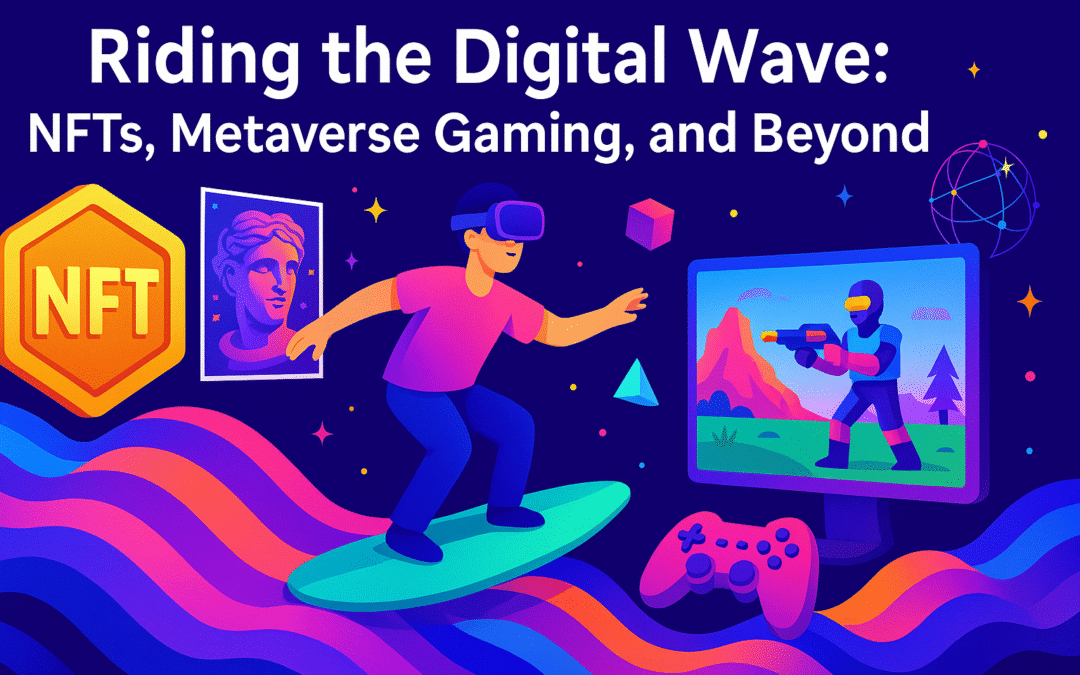
In the ever-shifting tapestry of digital art and blockchain innovation, a handful of topics stand out as harbingers of transformation. From the rise of truly immersive NFT experiences to the next frontier of blockchain-powered gaming and the environmental strides of layer-2 solutions, these trends are reshaping how we create, collect, and play. Drawing inspiration from the prolific Eye of Unity Quora page, let’s dive into three electrifying subjects that are charging ahead in 2025.
Breaking Canvas Boundaries: Augmented and Virtual Reality in NFTs
As NFTs matured from simple tokenized images into dynamic, interactive spectacles, the addition of AR and VR elements has been a game-changer. No longer confined to static JPEGs on OpenSea, today’s most visionary NFTs let collectors step inside their artworks.
- AR Layers on Real-World Walls
Imagine hanging your NFT on a living room wall—and witnessing it blossom into motion when viewed through a smartphone. Augmented reality overlays transform flat tokens into living murals, blending digital brushstrokes with your physical space. Collectors can curate AR galleries in their homes, inviting friends over for a mixed-reality exhibition. - Immersive VR Galleries
Virtual reality has birthed entire online museums dedicated to NFT art. Platforms like Spatial and Decentraland now host pop-up shows where you don your headset and stroll through neon-lit halls, pausing to admire 3D sculptures that defy gravity. These VR spaces not only democratize access—anyone with an Internet connection can “attend”—but also expand artistic possibilities, allowing creators to play with scale, sound, and interactivity. - Story-Driven Utility
Beyond aesthetics, AR/VR NFTs are layering in narratives and game-style mechanics. A fantasy-themed NFT series might embed hidden puzzles visible only in VR, rewarding intrepid collectors with secret airdrops or in-game items. This fusion of storytelling and technology turns passive ownership into active exploration, blurring the line between art and ARPG (augmented-reality role-playing game).
Why it matters to you: If you’ve ever yearned for your digital art to literally leap off the screen, now’s the time to explore AR/VR–enabled collections. Whether you’re an artist looking to elevate your portfolio or a collector seeking that next immersive experience, the tools to merge pixels with your space have never been more accessible.
Play-to-Earn Evolves: The Convergence of Blockchain and AAA-Quality Gaming
Blockchain gaming has come a long way since the scratch-card simplicity of early Play-to-Earn titles. Today, the conversation centers on marrying tokenized economies with top-tier graphics, storytelling, and social features that rival traditional console games.
- High-Fidelity Worlds with On-Chain Assets
Eye of Unity’s recent Quora deep dive highlighted projects where every weapon skin, mount, and castle décor exists as an NFT. These aren’t 8-bit throwbacks—they’re fully rendered, physics-driven assets you can buy, sell, and import across multiple games. Imagine owning a legendary sword NFT that works both in a medieval VR MMORPG and in a sci-fi action shooter, thanks to standardized cross-chain protocols. - Dynamic Token Economies
Gone are the days of fixed mint prices and manual marketplaces. Modern blockchain games integrate on-chain liquidity pools and bonding curves, ensuring in-game assets adjust value based on supply, demand, and rarity. Players who invest time to farm resources or craft items can see tangible returns, while speculators can stake tokens in guild treasuries to underwrite new expansions. - Guilds, DAOs, and Shared Sovereignty
The social layer of blockchain gaming is no afterthought. Guilds have morphed into decentralized autonomous organizations (DAOs) that own in-game land, vote on narrative direction, and share treasury yields. Eye of Unity’s community-building insights emphasize that players are more engaged when they have genuine governance rights—whether that’s electing a game-master avatar or funding the next DLC pack via a DAO vote.
Why it matters to you: If you’re a gamer craving both crisp visuals and real-world rewards, the fusion of AAA-style production with tokenized economies offers the best of both worlds. And if you’re a strategist or investor, mastering DAO mechanics could unlock governance-driven airdrops and early access to tomorrow’s blockbuster titles.
Sustainability in DeFi Art: Layer-2 Blockchains to the Rescue
NFT critics often cite environmental concerns, but layer-2 solutions like Polygon, Arbitrum, and Optimism are rewriting the carbon narrative. By settling transactions off-chain and batching them for Ethereum’s mainnet, these networks slash gas fees and energy consumption—without sacrificing security.
- Polygon’s Green Credentials
As Eye of Unity’s Quora FAQ points out, Polygon’s PoS chain uses a fraction of Ethereum’s energy, making NFT minting and trading nearly carbon-neutral. With average transaction fees in the sub-cent range, artists can experiment without fear of prohibitive gas costs, fostering a surge of micro-edition and interactive collections. - Zero-Knowledge Rollups
Next-gen privacy tech like zkSync and StarkEx leverages cryptographic proofs to validate thousands of transactions in a single proof, further shrinking environmental impact. Projects adopting zk rollups advertise instant finality and near-zero gas, opening the door for frictionless minting experiences—even on mobile wallets. - Carbon Offsetting and On-Chain Audits
Some Eye of Unity artists are coupling their layer-2 NFTs with on-chain carbon credits—tokenized trees verified via IoT sensors. Buyers can see exactly how much CO₂ each NFT offsets, with transparent smart contracts that retire credits as art changes hands. This emerging pattern ties the digital art economy directly to real-world climate action.
Why it matters to you: Whether you’re an eco-conscious creator or a collector mindful of your footprint, embracing layer-2 minting and carbon-credit integrations means supporting sustainable art ecosystems. Plus, lower fees allow for more playful experimentation—launch micro-drop series, interactive AR avatars, or token-gated audio experiences without worrying about transaction drag.
The Next Dimension: 3D-Printable NFTs and Hybrid Physical Experiences
The boundary between virtual and physical is dissolving as NFT projects explore 3D printing and hybrid exhibitions. Eye of Unity’s Quora conversations have spotlighted pioneering workflows: from mesh repair to automated batch slicing, artists can turn digital assets into resin sculptures, metal collectibles, or even AR-anchored projection lamps.
3D Printing Workflows for NFT Artists
| Step | Description | Tools |
|---|---|---|
| 1 | Mesh Optimization | Blender, ZBrush |
| 2 | NFT Metadata Embedding (QR codes, NFC chips) | IPFS, Unity3D Scripting |
| 3 | Batch Slicing & Support Generation | Cura, PrusaSlicer |
| 4 | Material Selection (Resin, PLA, Metal Composite) | Formlabs, Markforged |
| 5 | Post-Processing & Painting | Airbrushing, UV-Curing Stations |
Collaborative “phygital” exhibits are also on the rise. Imagine scanning an NFT at a gallery kiosk, then watching a 6-foot hologram bloom behind the glass, or vice versa—dropping a 3D-printed figure on your desk unlocks a secret VR environment. These mixed-media showcases turbocharge audience engagement, marrying the tactile delight of a collectible with the boundless realms of VR.
Why it matters to you: If you geek out over 3D workflows or crave tangible ties to your digital art, this hybrid approach gives you the best of both worlds. Your next NFT purchase could be the seed for a physical sculpture on your shelf—and a roaring, interactive VR companion.
Crafting Viral Impact: Social Media Strategies for NFT Drops
Even the most jaw-dropping NFT requires strategic amplification. Eye of Unity’s Quora advice consistently emphasizes square image formatting, hashtag stacks, and layered teasers. Here’s an upbeat blueprint for making your next drop impossible to scroll past:
- Square-First Visuals
Optimize every image and video clip for 1:1 ratio. Instagram, Twitter, and Discord profile embeds all favor squares—and you want your art framed to perfection wherever it appears. - Hashtag Stacking with a Twist
Go beyond #NFT and #CryptoArt. Mix niche tags (#ARArt, #ZKRollup, #3DPrintedNFT) with pop-culture hooks (#CyberPunk, #Synthwave) and community calls (#PolygonFam, #MetaverseMakers). Aim for 20–30 total, with rotating subsets per platform to avoid shadow-bans. - Teaser Trilogies
Launch a three-phase reveal:- Silhouette Teaser – Black-and-white shapes that hint at form.
- Fragmented Detail – Close-up snapshots of texture, metadata reveal.
- Full Unveil + Utility Drop – Show the interactive AR overlay, announce token-gating perks, and link to your live mint.
- Interactive Discord GAMIFICATION
Host mini-quests in your server: “Find the hidden emoji in our pinned announcement.” Winners earn whitelist spots. This drives both engagement and FOMO, while building a tight-knit community before you ever launch. - Collaborative Crossroads
Partner with complementary artists—say, a psytrance producer on Suno or a VR gallery curator—and cross-promote to tap into adjacent fan bases. Joint Twitter Spaces or Clubhouse rooms can turn a single drop into a viral moment.
Why it matters to you: In a digital sea flooded with pixel art, you need a strategic life raft. These social media tactics—rooted in Eye of Unity’s proven approach—will help your project cut through the noise, drive anticipation, and convert followers into collectors.
Conclusion
From AR/VR-layered masterpieces to cross-game NFT interoperability, and from eco-friendly layer-2 minting to hybrid 3D-printed art, the landscape is richer, more interactive, and more sustainable than ever. But the true magic lies in how these threads weave together:
• A VR gallery showcasing 3D-printed sculptures
• A blockchain game whose rarest on-chain sword unlocks an AR experience
• A layer-2 mint that plants real trees with every token
As Eye of Unity’s Quora discourse underscores, the next wave of digital creativity isn’t about single trends—it’s about convergence. When art, gaming, sustainability, and community governance collide, the result is an ecosystem far more vibrant than the sum of its parts.
So what’s your next move? Whether you’re an artist itching to integrate spatial audio into your virtual sculpture, a gamer plotting your entry into a DAO-run guild, or a collector ready to offset carbon with your digital acquisitions, the frontier is open. Grab your headset, calibrate your wallet, and prepare to ride the digital wave—because the future of art, play, and tech is happening right here, right now.
https://discord.gg/4KeKwkqeeF
https://opensea.io/eyeofunity/galleries
https://rarible.com/eyeofunity
https://magiceden.io/u/eyeofunity
https://suno.com/@eyeofunity
https://oncyber.io/eyeofunity
https://meteyeverse.com
https://00arcade.com