
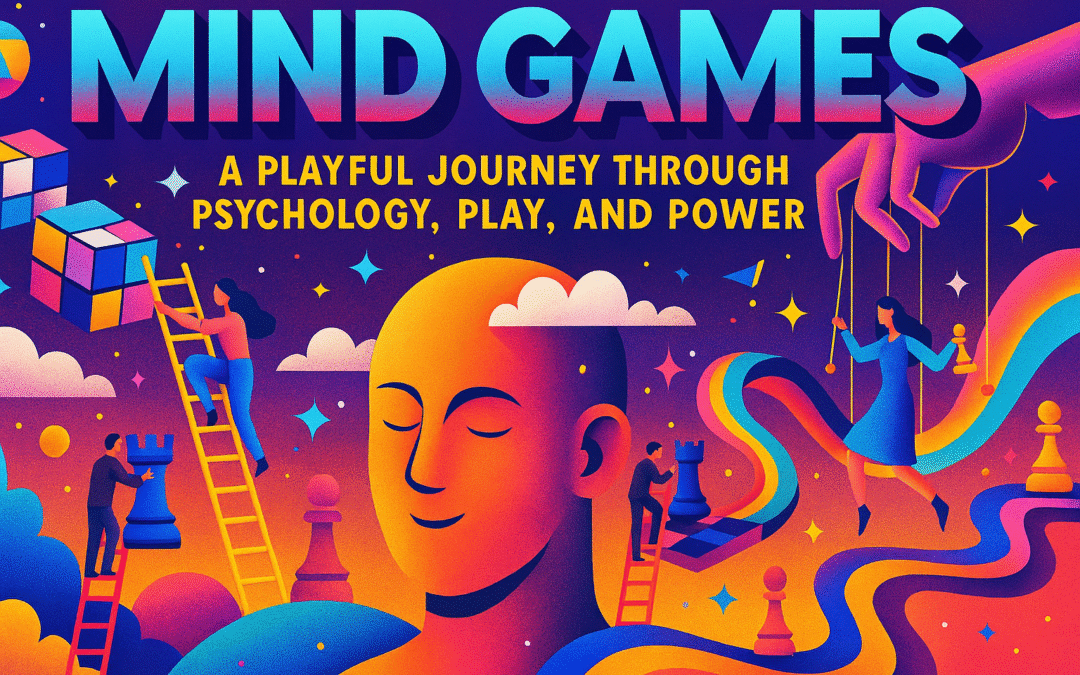
Fasten your seatbelt. We’re about to plunge headfirst into the mesmerizing labyrinth of mind games—a world where play meets power, puzzles meet purpose, and cunning challenges spark creativity and connection. Whether you’re a puzzle enthusiast, a fan of psychological drama, a strategy game ace, or someone seeking social wizardry in relationships or business, mind games are all around you—sometimes as fun as a Saturday night Sudoku, sometimes as tricky as an office cold war. This is your ultimate guide to understanding, enjoying, and navigating the invigorating landscape of mind games.
The Mind Game: What Actually Is It?
Ask a dozen people what a “mind game” is, and you’re in for as many answers as moves on a chessboard. But at its core, a mind game is an action, statement, or structured activity that challenges, manipulates, entertains, or stimulates one or more persons’ reasoning, perception, or emotions—often for amusement, skill-building, influence, or strategic advantage.
Psychology dictionaries call a mind game a psychological tactic used to manipulate or intimidate, commonly used in various settings, from playful puzzles to more sinister manipulations in human relationships or workplace politics. But the term also stretches to cover mental skill-building activities and friendly competitions—think crossword puzzles, chess, riddles, and team challenges.
In short, mind games span a spectrum:
- Playful: Puzzles, riddles, memory challenges, logic problems.
- Social: Communication games, team-building, role-play.
- Strategic: Board games (like chess or Go), negotiation tactics, business “power plays.”
- Manipulative: Psychological intrigue in relationships, offices, or even popular media.
Let’s pull this apart—playfully, strategically, and with a dash of psychological sleight-of-hand.
Psychological Mind Games and Transactional Analysis: The Inner Theater
Games People Play—Literally
Perhaps no one has done more to shape the popular understanding of psychological mind games than Dr. Eric Berne, whose 1964 bestselling book Games People Play introduced Transactional Analysis (TA) to the world. According to Berne, our everyday interactions are filled with “games”—repeated, structured social behaviors driven by unconscious motives. Some games are constructive; many are not.
In TA, a “game” is an often-unconscious sequence of interactions—featuring a “hidden” or “ulterior” motive—that typically follows a predictable path to a dramatic outcome. These games can play out in marriages, offices, friendships, therapy sessions, even criminal enterprises.
Berne identified a taxonomy of games, sorted by context and consequence:
- Life games: “Kick Me,” “Alcoholic,” or “Now I’ve Got You, You SOB.”
- Marital games: “Sweetheart,” “Frigid Woman,” “If It Weren’t for You.”
- Party games: “Ain’t It Awful,” “Blemish,” “Why Don’t You—Yes But.”
- Sexual games: “Let You and Him Fight,” “The Stocking Game.”
- Underworld games: “Cops and Robbers.”
- Therapy games: “I’m Only Trying to Help You.”
- ‘Good’ games: Structured exchanges where both win, or at least become aware.
He explains, “A game is an ongoing series of complementary ulterior transactions progressing to a well-defined, predictable outcome. Descriptively, it is a recurring set of transactions… with a concealed motivation… or gimmick”.
Berne’s genius was in recognizing that people aren’t always consciously aware they’re playing games—but the outcome always benefits at least one participant. For example, a spouse who chooses a domineering partner can later “blame” that partner for her own fears (the “If It Weren’t for You” game). The rewards and risks for each party may be psychological, emotional, or material.
Why Play Mind Games? Motive, Power, and Payoff
Berne suggests we play mind games because we crave structure, stimulation, and “strokes” (recognition, even if negative). Games help us avoid self-awareness, emotional discomfort, or too much intimacy.
But games also become entrenched habits, sometimes inherited from childhood. The “parent–adult–child” model Berne introduced helps us spot the ego states in play:
- Parent: Rules, advice, discipline, tradition.
- Adult: Objective reason, problem-solving.
- Child: Creativity, emotion, spontaneity.
Games often arise when our ego states mismatch (e.g., Parent speaks, expecting Child response; but gets ‘Adult’ logic instead).
The Modern Take on Psychological Mind Games
Modern psychology has expanded—and in some cases, criticized—TA’s approach, but its legacy endures:
- Gaslighting, blame-shifting, and passive-aggression are still widely recognized as toxic mind games.
- Communication games can also be constructive, helping people learn empathy, assertiveness, and negotiation skills.
- Some games are so institutionalized that we all tacitly “agree to the rules,” as in many office or relationship dramas.
Social Skill-Building: Communication Games and Activities
But mind games aren’t just about manipulation or defense—they’re powerful tools for developing communication and social skills.
Communication Games: Practice Makes Powerful
Research in positive psychology and team dynamics shows that structured “communication games” can boost empathy, active listening, team cohesion, and even cross-cultural understanding.
Examples of Effective Social Games:
- High and Low-Energy Social Skills: Partners reflect on energetic behaviors and role-play opposite reactions—building insight.
- Blindfold Guiding: Partners direct one another through an obstacle course, blindfolded, using only verbal cues—fostering trust and clarity.
- Back Writing and True/False Exercises: Light-hearted exercises to develop expressive skills and trust among group members.
- Making Eye Contact, Empathy Stories, Mirroring: All designed to improve non-verbal cues, emotional intelligence, and group connection.
For kids, games like Emotion Charades, Simon Says, and Story Chain teach emotional literacy, turn-taking, and creative thinking.
In workplaces, communication games such as “Can You Hear Me Now?”, “Taboo”, “Mirror”, and scenario role-play are used to break down barriers, encourage precise instructions, and foster teamwork.
The science is clear: These activities help people navigate real-life complexities—negotiating, apologizing, resolving conflict, or simply knowing when and how to listen. They also make learning fun, memorable, and sticky—a classic “win-win” mind game.
Mind Games as Entertainment: Puzzles, Riddles, and Brain Teasers
Now for the most universally loved form of mind games: those played for fun—the kind that light up your neurons and spark a dopamine rush when you crack the code.
The Ancient Roots of Modern Puzzles
From ancient Egypt and Greece to digital apps, puzzles have been humanity’s favorite “mind sport” for millennia. Egypt used symbolic puzzles for religious rites and teaching. The Greeks loved riddles (think the Riddle of the Sphinx). Ancient China brought us tangrams and knot puzzles. In the Middle Ages, monks and scholars used riddles to train minds, while the Renaissance exploded the genre with math and logic puzzles.
In the 20th century, classics like the crossword (invented in 1913) and the Rubik’s Cube (1974) emerged, while digital technology spawned online riddles, Sudoku, escape rooms, and puzzle video games.
Popular forms today include:
- Conundrums, enigmas, and lateral thinking puzzles
- Logic games: Sudoku, crosswords, logic grid puzzles
- Visual and word puzzles: Jigsaw puzzles, word searches, pattern games
- Strategy board games, mechanical puzzles, and brain apps
Online communities like Braingle.com boast over 15,000 brain teasers, riddles, logic questions, and multiplayer puzzle experiences.
Why Are Brain Teasers So Addictive?
Cognitive Benefits:
- Stimulate diverse brain regions: Language, memory, pattern recognition, logic, and spatial skills.
- Sharpen executive function: Puzzles demand focus, planning, and sequential reasoning.
- Create “flow states”: The sense of deep engagement (aka “in the zone”) is pleasurable and therapeutic.
Social and Emotional Benefits:
- Boost mood and reduce stress: Completing a puzzle provides satisfaction, a break from anxiety, and even social connection when done in groups.
- Encourage collaboration and communication: Many social and competitive puzzles require teamwork.
- Delay cognitive decline: Regular puzzle play in adulthood is linked to reduced risk of dementia and improved cognitive reserve.
Don’t believe us? Try your hand at some brain teasers for adults or puzzle communities and see if you don’t catch the bug.
Puzzles and Pop Culture
From Alice in Wonderland’s riddles to Netflix’s obsession with escape rooms and locked-room thrillers, puzzles are everywhere in modern media. They’re at the heart of social apps like Wordle, the backbone of strategy board games, and the spark behind YouTube trends and local competitions.
Strategy Games as Mind Games: Chess, Go, and Beyond
Chess: The Ultimate Mind Game
If mind games had a monarch, its name would be Chess. Invented over 1,500 years ago, chess is one of the most beloved and studied games in world history—an iconic battleground for intellect, psychology, and strategic trickery.
Why does chess persist?
- Deeply strategic: Mastery requires foresight, planning, tactical ingenuity, and relentless mental calculation.
- Memory and creativity: Champions memorize thousands of positions and employ creative new combinations.
- Empathy and “theory of mind”: Skilled players predict opponents’ plans, developing a mental model of the “other.” A 2019 study found that chess trains perspective-taking—essential for social cognition.
- Flow and focus: Chess regularly fosters deep engagement and concentration, even among children with ADHD or elderly seeking to stave off dementia.
Chess also has a dark side: The intensity of competition can cause anxiety for top players, and “mind games” in tournaments—psychological feints, distracting gestures, or intimidating stares—are legendary.
Go, Poker, and Modern Digital Strategy
Go, another classic from ancient China, boasts even greater complexity; the best human players now routinely face off against artificial intelligence.
In the digital era, games like Starcraft, Civilization, and Among Us further blur the line between play and mind warfare. In poker, the “game” is as much about reading the mind and bluffing as about probability calculations.
Not surprisingly, neuroscientists and educators now recognize strategy games as complex training grounds for critical thinking, focus, and psychological resilience—offering both entertainment and real-world skill transfer.
Digital Brain Training: Apps and Platforms
Move over, crosswords—welcome to the golden age of digital brain games. Today, platforms like Lumosity, GoGoBrain, and a host of apps promise to improve memory, attention, and executive function—with millions of users (and many ongoing studies to test the claims).
Do Brain Training Apps Work?
The answer is yes—with caveats:
- Cognitive benefits are well-documented (especially in targeted skill areas like processing speed, spatial reasoning, and working memory), but the transfer to “broad” intelligence or real-life tasks can be limited.
- Engagement and consistency matter: Short, regular sessions beat marathon play.
- Novelty is key: New and progressively difficult challenges produce the best results.
- Social and enjoyment factors: Multiplayer and competitive formats increase both enjoyment and benefits.
Notably, studies show that digital games can provide stress relief, foster resilience, and even support therapy in mental health interventions.
Mind Games in Dating and Relationships: Love’s Twisted Chessboard
Here’s where mind games get a little darker—and sometimes, a lot more complicated. In relationships and dating, mind games range from “playing hard to get” (mostly harmless) to manipulative or emotionally abusive tactics like gaslighting, blame-shifting, hot-and-cold behavior, and more.
Common Romantic Mind Games:
- Passive-Aggressive Responses: “I’m fine…” when you’re not—an indirect method of expressing discontent.
- Gaslighting: Challenging your perception of reality (“You’re overreacting,” “That never happened”) to gain power or avoid accountability.
- Negging: Giving backhanded compliments to undermine a partner’s confidence.
- Breadcrumbing: Offering intermittent affection, messages, or attention to keep someone emotionally invested with little actual commitment.
- Hot-and-Cold/Ignoring/Ghosting: Oscillating between warm attention and withdrawal to create anxiety and leverage.
- Blame-Shifting: Making the partner feel “responsible” for any conflict or dissatisfaction.
These games often rely on emotional manipulation, exploiting anxiety or uncertainty to create a power imbalance. The results can be devastating: lowered self-esteem, chronic doubt, and emotional distress.
Why do people play mind games in relationships?
- To gain power and control
- To avoid intimacy, vulnerability, or direct communication
- To compensate for insecurity or fear of rejection
- Cultural and media norms can also reinforce game-playing as “sexy” or “exciting,” despite potential harm
How to break free?
- Awareness, assertiveness, and, if necessary, distancing or ending toxic relationships. Many relationship experts recommend establishing boundaries, open dialogue, and seeking therapeutic support when patterns persist.
Mind Games in Business and the Workplace: The Art of Corporate Survival
Manipulation, Strategy, and Survival in Office Politics
You don’t have to look far to spot mind games in corporate corridors—especially in high-stakes or competitive environments. From gaslighting to exclusion, blame-shifting, and ambiguous directives, mind games dominate many workplaces, often masquerading as “leadership” or “healthy competition”.
Common workplace mind games:
- Gaslighting through misinformation: “You never sent that email.” Yes, yes you did.
- Withholding information or resources: Keeping you out of the loop to undermine confidence.
- False urgency: Creating phony crises to control attention or priorities.
- Blame-shifting and scapegoating: Avoiding responsibility by blaming others.
- Microaggressions and undermining: Subtle put-downs, snide comments, or constant interruptions.
- Ambiguity in tasks: Unclear directions, then criticism for not meeting “expectations.”
- Divide-and-conquer tactics: Pitting employees against one another to maintain control.
Outcomes of persistent mind games in business:
- Stress, burnout, decreased productivity, and a toxic work environment.
- Erosion of trust and morale.
- “Survival of the wiliest”—not always the most competent.
What can you do?
- Recognize the signs and keep documented records.
- Set boundaries and assert your worth.
- Seek allies, HR support, or (if needed) safer workplaces.
- Managers are increasingly encouraged to foster transparency, open communication, and team-building activities—in other words, to replace mind games with collaborative games.
Pop Culture Portrayal: Mind Games in Media, Movies, and TV
Few tropes are as enduring, or entertaining, as the psychological mind game in fiction. From movies about chess grandmasters to thrillers with manipulative villains, cinema and TV have endlessly played with the theme.
Top Mind Game Movies Include:
- Sleuth (classic battle of wits)
- Shutter Island, Memento, Inception (psychological thrillers with reality-bending plots)
- The Science of Sleep, A Beautiful Mind (portraits of imagination and schizophrenia)
- The Prestige, Fight Club, Persona, Solaris (identity, deception, perspective)
- Being John Malkovich, The Machinist, Secret Window (surreal explorations of mind and self).
Books and TV also revel in riddles, puzzles, and games of manipulation—from Sherlock Holmes to Alice in Wonderland to modern crime series.
These stories remind us that mind games are compelling because they dramatize the tension between cleverness, vulnerability, and power—a dynamic we all experience, sometimes with joy, sometimes with pain.
The Cognitive and Health Benefits (and Limits) of Mind Games
Brain Health: Can Mind Games Make You Smarter?
A robust body of research suggests that regular engagement with mind games (puzzles, strategy games, memory challenges) can coach and support brain health on multiple fronts:
- Improved cognitive skills: Memory, logic, reasoning, spatial skills, vocabulary, processing speed.
- Executive function: Enhanced attention, planning, and mental flexibility.
- Social benefits: Improved communication, teamwork, resilience, and perspective-taking.
- Mood and mental health: Reduced stress, enhanced mood, distracted relief from anxiety.
- Potential protection against dementia: Regular puzzle play is associated with delayed cognitive decline and lower dementia risk in aging adults.
Caveats: The “transfer” from puzzles to general IQ or real-world tasks is moderate (don’t expect a crossword a day to make you Einstein), and sustained benefit depends on progressive challenge, novelty, and ongoing engagement.
Video Games and Brain Training: Boon or Bane?
The digital revolution has delivered a tsunami of new cognitive playgrounds (Lumosity, Peak, Elevate, etc.), and recent longitudinal studies show modest benefits for spatial reasoning, processing speed, and mood—but only when used mindfully and in moderation.
Risks: Excessive or obsessive play can harm sleep, social life, or finances; digital “loot boxes” may spur problematic gambling behaviors. The best advice: diversify your play, mix digital with physical and social games, and listen to your body and mind for signs of overuse.
Ethical Considerations: When Do Mind Games Cross the Line?
Mind games tread a delicate line between friendly challenge and harmful manipulation. The difference often lies in intent, transparency, and the resulting impact.
- Constructive mind games foster learning, skill development, and social connection—everyone agrees to the “rules,” and the game is “played clean.”
- Manipulative mind games exploit vulnerabilities, rely on deceit, and harm psychological well-being—violating autonomy, trust, or mutual benefit.
For instance: Teaching a child chess to boost their planning skills? Good. Gaslighting a partner by denying their reality? Bad.
Ethicists argue that ethical mind games require transparency, mutual benefit, and respect for autonomy; all others risk crossing into manipulation and exploitation.
Knowing the difference is vital for maintaining healthy relationships, leadership, and personal integrity.
A Brief History of Mind Games: From Riddles to e-Sports
- Ancient times: Puzzles in Egypt, riddles in Greece, tangrams in China.
- Middle Ages: Riddles and logic problems in education, art, and religious teachings.
- 18th–19th centuries: Mechanical puzzles, jigsaw inventions, puzzle books.
- 20th century: Crosswords, Rubik’s Cube, mass-market puzzles.
- Digital age: Online puzzle platforms, escape rooms, brain-training apps, global e-sports, social puzzle communities.
This history shows one clear trend: Mind games adapt and evolve with technology and culture, but their core appeal endures—the quest for challenge, mastery, and meaning.
Online Communities and Real-World Events: Where to Play and Meet
Online Platforms
- Braingle: Over 15,000 free puzzles, riddles, and social games—plus a vibrant community for chat and competition.
- MindGames.com: Daily brain games, crosswords, Sudoku, and memory challenges.
- Reddit’s r/JigsawPuzzles: Share your favorite puzzles and tips with fellow enthusiasts.
San Diego’s Local Scene
If you’re lucky to be in San Diego, you can flex your brain in person:
- Pacific Puzzlers: Organizes popular jigsaw puzzle competitions and puzzle swaps in bars and breweries—perfect for socializing and friendly rivalry.
- University Heights Library Puzzle Swap: Community-driven puzzle exchange events.
- More events: Local meetups and tournaments for chess, escape rooms, board games, and more.
Table: Mind Games at a Glance
| Type | Example Activities | Purpose/Outcome | Cognitive/Social Benefit |
|---|---|---|---|
| Psychological | TA games, gaslighting, blame | Power play, conflict, manipulation | Awareness, defense |
| Communication/Social | Trust games, role play, mirroring | Skill-building, empathy, team-building | Communication, EQ |
| Entertainment/Puzzles | Sudoku, crosswords, jigsaws | Fun, cognitive challenge, relaxation | Memory, logic, focus |
| Strategy Games | Chess, Go, poker, video games | Planning, empathy, tactical thinking | Focus, problem-solving |
| Digital Brain Training | Lumosity, Peak, Elevate | Memory, attention, skill enhancement | Cognitive boost |
| Relationship | Hot/cold, negging, withdrawal | Control, avoid vulnerability, insecurity | Self-awareness, boundary setting |
| Workplace/Business | Gaslighting, exclusion, blame-shifting | Power, promotion, survival | Survival, resilience |
Conclusion: Your Next Move
Whether you see mind games as exercises in intelligence, social survival, or emotional strategy, they are an inescapable feature of human life—full of risk and reward, fun and frustration, challenge and connection.
The most enriching mind games are played with consent, mutual respect, and a desire to grow smarter, more empathic, and more resilient. The darkest are driven by hidden motives and the thirst for control. Choose your games—and your playmates—wisely.
Now, let the games begin!
System Ent Corp Sponsored Spotify Music Playlists:
https://systementcorp.com/matchfy
Other Websites:
https://discord.gg/eyeofunity
https://opensea.io/eyeofunity/galleries
https://rarible.com/eyeofunity
https://magiceden.io/u/eyeofunity
https://suno.com/@eyeofunity
https://oncyber.io/eyeofunity
https://meteyeverse.com
https://00arcade.com
https://0arcade.com