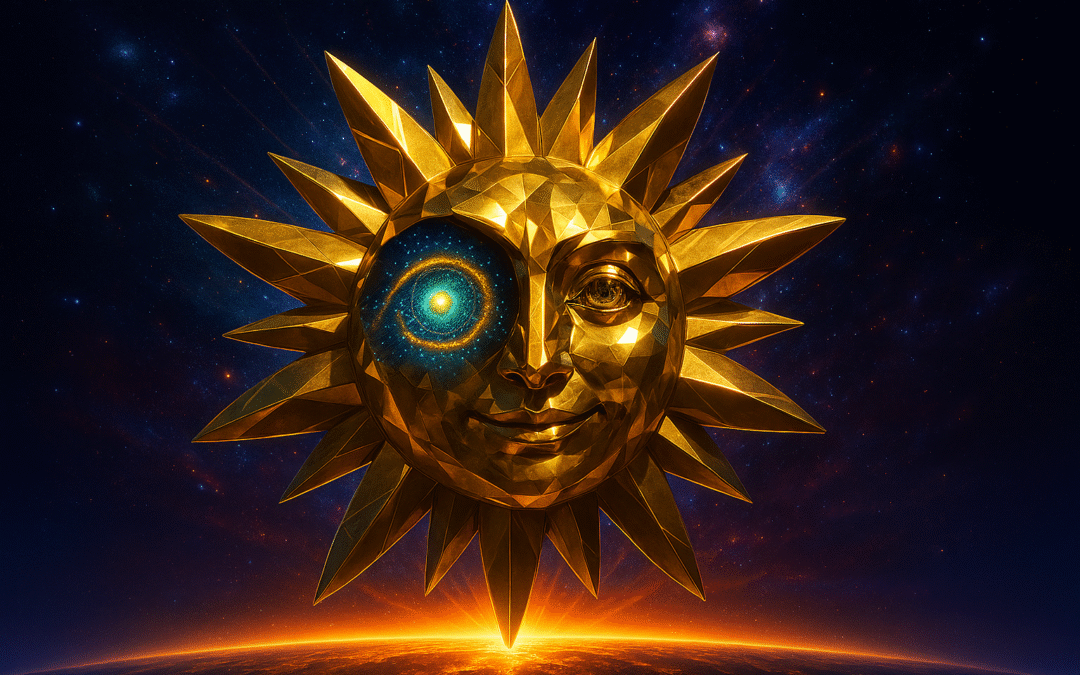
Imagine this: you arrive at the world’s farthest edge—a mist-draped cliff where the map surrenders to white space and, in trembling script, the cartographer scrawls, “Terra Incognita” You peer over this precipice and glimpse not only monsters, but a library swirling with books that contain every possible ending, every possible truth, every delightful error, and every impossible answer. At this vertiginous intersection of awe and fear, where boundaries dissolve and reason falters, magic—the kind born from pure knowledge of the unknowable end—takes root.
This is not the cheap spectacle of stage magicians, nor a mere metaphor for ignorance. It is a wild, metaphysical force, forged in our relentless (and painfully human) yearning to see what cannot be seen, to grasp what cannot be held, and to make sense of the “end of the Earth”—the place where knowledge and mystery outpace each other in a never-ending waltz.
In this journey, we’ll traverse haunted libraries, stand at the boundaries of mythologies and physics, and rewrite the edges of our own beliefs. We’ll encounter gods, monsters, world-reshaping scientists, intrepid explorers, and—above all—those curious readers (real and fictional) for whom the “unknowable end” is not a wall, but the start of the next grand chapter.
Let’s chart a course to the very edge.
Knowledge and Magic: More Than Smoke and Mirrors
What Is Magic—And Can It Come From Knowledge?
Magic, as anthropologists and philosophers have wrestled with it, rarely fits into one neat category. It’s the vibrant grey zone at the blurry boundary between “proper” science, religion, art, and the wild metaphysics of human imagination. Magic, in many classic and modern accounts, is defined not by what it is, but by what it is not: it is the tool for manipulating invisible, non-material agencies and energies—an attempt to shape reality beyond what science accepts as “possible”.
But here’s the twist: magic is often deeply entangled with knowledge. In fact, many magical traditions (from the Renaissance magicians to modern occultism) posit magic as a kind of “forbidden science,” or an experimental art of secret correspondences and cosmic analogies. It is about knowing and working with laws that are invisible, liminal, or simply unknowable. This knowledge-based magic—let’s call it “epistemic magic”—requires not just belief, but an aspiration to know the unthinkable, to cross the boundary from ignorance into impossible insight.
Anthropologist Bronisław Malinowski famously argued that magic becomes most potent when humans are confronted with “the problem of the unknown and the unknowable”: when all rational effort fails, the spell, the charm, the ritual, springs into being as our most creative and desperate coping mechanism.
A Working Definition
Magic derived from pure knowledge of the unknowable is the imaginative, often experimental action at the shifting boundary where human curiosity, wonder, and terror meet the absolute limits of understanding.
The Philosophical Notion of the Unknowable
Known Unknowns and the Boundaries of Reason
The concept of the “unknowable” has kept philosophers up at night since well before the Age of Exploration. As Immanuel Kant delineated centuries ago, human knowledge is bounded by our own cognitive constraints: what we experience and process is always shaped by the structures of our perception. Beyond this—into the territory of “things in themselves” or the noumenon—lies the truly unknowable, immune to both intuition and reason.
Modern thinkers, such as Nicholas Rescher and Colin McGinn, argue that some truths may be out of reach not because we lack data, but because human cognition itself is fundamentally limited. There are “unknown unknowns,” as Donald Rumsfeld (and philosophers before him) have noted—zones of reality forever hidden from discovery.
Consider the “Unknowable Truth Paradox”: if there is a truth inherently impossible to know, does it “matter” for us? Does magic emerge precisely where the rules break down and our best methods fail? Here, magic becomes the tool or the language for striving, not for certainty, but for communion with the mysterious—an earnest attempt to map the unmappable.
The End of the World: Map Edges and Mythic Boundaries
Cartographic and Mythological Margins
When early explorers pushed out beyond the confines of familiar seas or continents, they found only uncertainty. Medieval and Renaissance mapmakers, unable to describe those empty spaces, scrawled warnings in the margins: “hic sunt dracones.” Sometimes lions, sea serpents, or other monsters took their place. These icons weren’t just whimsical; they marked the psychic boundary between what was known and what was (potentially fatally) unknowable.
What we cannot know, we do not know, and our imaginations will fill the void. This is myth-making as an epistemic device. The “end of the Earth” becomes not a dead-end, but a threshold for mythic invention, full of possibility and peril.
Terra Incognita in Culture
Cultures across history have expressed fascination and dread for the world’s edge:
- Norse Ragnarok: Cataclysmic events ending in the death of gods and the rebirth of a new world. The cycle of destruction and renewal acknowledges the limits of even divine knowledge and power.
- Mesoamerican 2012 Phenomenon: The Mayan “end” was less apocalypse and more transformation—a transition into a new cycle, a reset of the cosmic clock.
- Greek Five Ages of Man: In Hesiod’s account, the world decays through ages, each marked by declining divine favor and growing hardship, arriving finally at catastrophe and, perhaps, the unknown.
- The Hopi Blue Star Prophecy: Environmental imbalance brings about the world’s demise, but also a purifying renewal, as new knowledge is gained from the end itself.
In all these tales, the “end” isn’t final—it is a boundary, a transformation, or a revelation. Knowledge of the end is itself a kind of power, a fertile source of magic and prophecy.
Fantastical Dimensions and Literary Explorations
Borges’ Library of Babel: The Infinite Unknown
Arguably no writer dramatizes the unknowable more ingeniously than Jorge Luis Borges. In “The Library of Babel,” Borges imagines a universe consisting of endless hexagonal rooms, each lined with books encoding every possible permutation of letters. Somewhere, every truth resides—ancient knowledge, the story of your own death, the perfect catalog of the library itself. But this wealth is indistinguishable from gibberish and error; the message is lost in the infinitude of static.
For Borges, and by extension for the magical epistemologies he inspires, the pursuit of pure knowledge at the edge yields not certainty, but terror, awe, and a kind of existential magic: “For every rational line or forthright statement there are leagues of senseless cacophony… the certainty that everything has already been written annuls us, or renders us phantasmal”.
Metaphysical Detective Stories and Modern Fantasy
Modern fantasy and metaphysical fiction, following in Borges’ footsteps, elevate the acts of knowing and not-knowing to center stage. In metaphysical detective tales, as in Umberto Eco’s “The Name of the Rose,” the search for truth becomes increasingly convoluted. Mysteries are insoluble, detectives become lost, and the greatest discoveries are realized at the threshold where rational explanation surrenders to the unresolvable.
Knowledge-Based Magic Systems
Contemporary fantasy distinguishes itself through robust, rule-based magic systems that are often founded on secret knowledge:
- In Sanderson’s Mistborn, the ingestion of various metals yields magical powers, but only to those who “know” the right lore and combinations.
- Harry Potter draws on the idea that magical power comes with complex training and arcane understanding.
- Phillip Pullman’s His Dark Materials explores knowledge as temptation, as the substance of both loss and redemption.
The best magic is not just mysterious—it is charged with epistemic weight. The more you know, the more dangerous (and enchanting) the world becomes.
Philosophical and Scientific Explorations of the Limits
The Science of Unknowing: Where Reality Disappears
Science, too, acknowledges boundaries that border on the magical. In physics, limits emerge in the form of chaotic systems, quantum uncertainty, the boundaries of the observable universe, and unsolvable mathematical problems like the halting problem.
The OVER criterion in science—Observability, Verifiability, Empirical Reliability—sets the harsh boundary for empirical investigation. Yet, theories about dark matter, the multiverse, the origins of consciousness, or the nature of time all brush up against this boundary, just as alchemists and magicians once tested the outer edges of belief.
But what happens at the absolute limit?
- Gödel’s Theorems show that certain truths about mathematical systems cannot be proven within the systems themselves—unknowability stamped into the structure of reality.
- Heisenberg’s Uncertainty Principle in quantum mechanics: the act of measurement disturbs what’s being measured; some properties are forever intertwined and indeterminate, leaving us with only probabilities—eerie, magical, and humbling.
- Chaos Theory, with its “sensitive dependence on initial conditions,” guarantees that within some narrow slice of reality, perfect foresight is denied, and the future remains magic until it becomes the past.
When Knowledge Becomes Magic Again
In these twilight zones, magic thrives as a way to express not ignorance, but profound awe. The metaphysical magic that emerges at the boundary of knowledge is not just a gap-filler. It is an embrace of the poetic, the mysterious, and the hopeful—the same spirit that compels new science and new art, from quantum speculation to climate modeling, from AI research to science fiction epics.
Folklore and Cultural Interpretations: The Many Ends of Earth
From ancient myths to modern pop culture, cultures have reimagined the end of the world—and what can be known about it—over and over again. The “ends” may be cataclysmic, cyclical, redemptive, or ambiguous. In all, the magical potency of “knowing the end” is transformative.
Mythic Motifs: Boundaries and Transformations
- Flood Myths: The Mesopotamian Epic of Gilgamesh, the biblical Noah, and the Aztec Five Suns all illustrate the cleansing and renewal that follows destruction—the unknown as opportunity.
- Cyclical Cosmologies: Hindu and Buddhist traditions envision time itself as endless cycles of creation and destruction (yugas, kalpas), with each ending serving as womb for new beginnings.
- Apocalypse as Revelation: In Greek, “apocalypse” literally means “unveiling”—the end time as a moment not just of destruction, but of ultimate knowledge, the revealing of secrets.
Stories at the edge, whether told through ancient dances, oral traditions, or binge-worthy Netflix series, offer both a warning and an invitation: the End is not simply doom, but a revelation, an answer, perhaps even a higher order.
Metaphysical Boundaries and the Mystique of Limits
Boundaries as Ontological Devices
Philosophers have long debated what it means for something to have an “edge” or a “boundary”—be it a physical map’s edge, the line between life and death, or the invisible limit of human comprehension.
Boundaries are not stand-alone entities; they depend for their existence on the things they bound. A surface cannot exist without an object to have the surface; and yet, most of what we “see” and “know” are the boundaries, not the substance within.
In metaphysics, boundaries often become metaphors for the self: what separates you from not-you, the known from the unknown, the self-contained world from the peril of others—a theme as old as Plato and as fresh as contemporary thought experiments about AI and consciousness.
Magical Realism: Bridging Real and Fantastic Knowledge
In the modern era, magical realism and fantasy fiction serve as laboratories for exploring not just what might be, but the epistemological and metaphysical cracks between worlds. In magical realism, the mystical is not a violation of reality—it is woven into the everyday fabric, just as “fact” interlaces with “fairy”.
These stories:
- Fade the distinction between what is possible and what is plausible, allowing new knowledge to emerge from the intersection of myth, metaphysics, and lived experience.
- Integrate issues like technology, climate change, migration, and identity as modern equivalents of “monsters at the edge,” forcing characters to confront the unknowable in their own lives.
- Feature protagonists whose magic is “earned” through knowledge, tradition, or the humility of honoring that which cannot be known.
The effect is to enchant the everyday, inviting us to see that the magical edge of the world may be as near as our own backyard, our memories, or the horizon of tomorrow’s science.
Weaving Engaging Narratives at the Edge
Mystery, Engagement, and the Reader’s Quest
The most effective stories about magic and unknowable ends thrive on the techniques of engagement and suspense. Mystery stories—both in fiction and in teaching—work not by providing immediate answers, but by sustaining curiosity, tension, and wonder, inviting readers to co-create meaning from ambiguity.
Key techniques include:
- Foreshadowing: Suggesting danger or revelation at the periphery, keeping curiosity and tension alive.
- Dramatic Irony: Letting the reader in on secrets the characters only suspect, sharpening anticipation.
- Open Endings and Ambiguity: Provoking afterthought and debate, echoing the metaphysical detective story’s penchant for unsolved mysteries.
Just as maps leave blanks at the edge and fill them with monsters, stories leave blanks in meaning and fill them with metaphor, inviting us—reader, listener, explorer—to become magicians ourselves.
Best Practices in Markdown Blog Craft: Structure, Links, and Narrative
As we translate these magical, philosophical, and fantastical journeys into digital stories (such as this very article), best practices are themselves a form of magic well worth mastering:
Structure:
- Clear, nested headings (#, ##, ###) for navigation and accessibility.
- Strategic, purposeful bolding for emphasis—guiding the reader’s eye, not overwhelming it.
- Sparing use of lists and tables, ensuring that full paragraphs do the analytical heavy lifting.
Hyperlinks:
- Links should be relevant, purposeful, and contribute substance—not noise or distraction.
- Best practice suggests 3–5 good links per ~1,000 words; clusters at the start, and none overwhelming the main CTA or sense of narrative flow.
- Internal linking (to other posts) and external linking (to sources or inspirations) both build value. Reliability, freshness, and context matter as much as SEO metrics.
Paragraphs and Readability:
- Short, focused paragraphs (4–8 sentences) make even metaphysical topics digestible.
- Tables and lists (where used) are always directly explained and contextualized in narrative prose.
Conclusion: Magic as the Ultimate Threshold
At the End of the Earth—be it the edge of the map, the end of a story, the twilight moments before apocalypse, or the limit of human knowledge—magic is not a last refuge of the ignorant. It is the lively, inventive, philosophical force by which curiosity resists closure and hope survives even the most dreadful endings.
To know the unknowable is not to conquer it, but to acknowledge its mystery, to dance with it, to let it make us braver writers, deeper thinkers, better neighbors, and, perhaps, participants in the ongoing enchantment of our world. The End, then, is never truly the end: it is a borderland, alive with dragons, libraries, and impossible possibilities.
So, as you log out, close the book, or survey the blank space at the edge of your own map: remember, every unknowable end is also, always, the beginning of another story.
Links to Further Adventure:
- “The Library of Babel” by Jorge Luis Borges (Wikipedia)
- “Ragnarok: The End of the Old Gods and the Rise of the New” — Norse Mythology WorldWide
- The Unknowable Truth Paradox Explained
- On “Terra Incognita” and ancient mapping
- Magical Realism in Contemporary Fiction
- Philosophy and Fiction: A Symbiotic Relationship
- End of Days: Apocalyptic Myths Across Cultures
Sponsored Spotify Music Playlists:
https://systementcorp.com/matchfy
https://systementcorp.com/power – Psytrance
https://systementcorp.com/90-degrees – Pop EDM
https://systementcorp.com/my-music – New Underground Rap
https://systementcorp.com/ai-music – AI Psytrance
https://discord.gg/4KeKwkqeeF
https://opensea.io/eyeofunity/galleries
https://rarible.com/eyeofunity
https://magiceden.io/u/eyeofunity
https://suno.com/@eyeofunity
https://oncyber.io/eyeofunity
https://meteyeverse.com
https://00arcade.com