
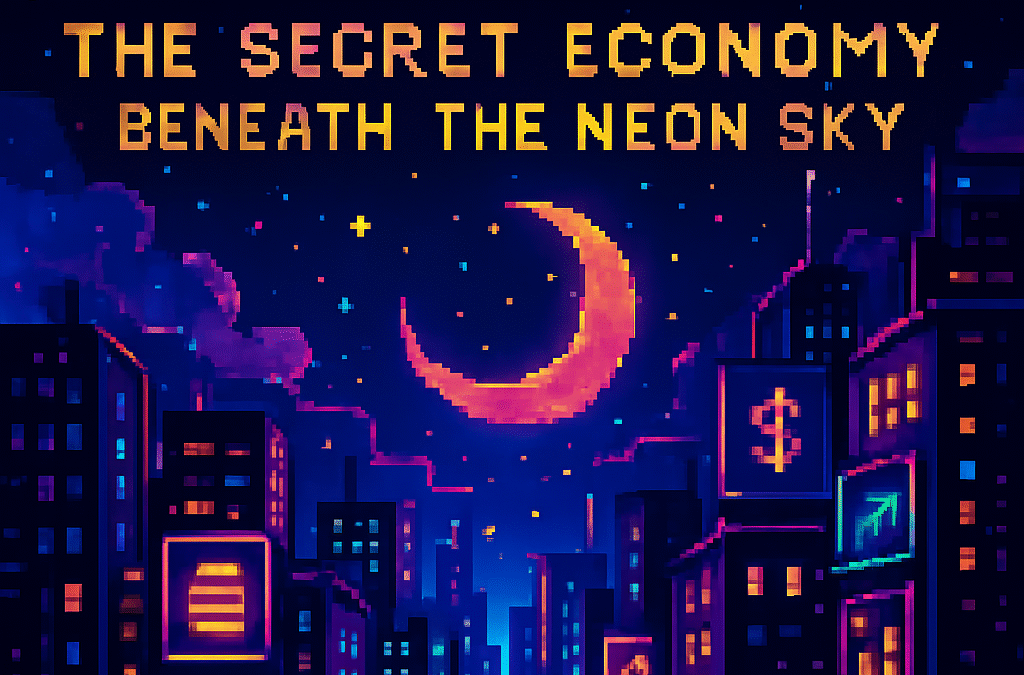
In the shattered silence of the metaverse, beneath layers of code and encrypted desire, an invisible city pulses—coded not in asphalt and steel, but in shimmering NFTs and forgotten arcade echoes. Its name is whispered in crypto dust: Eye of Unity.
🌌 Welcome to the Invisible Arcade
It began as a glitch.
An unintentional flicker in the brave browser of a coder playing Dedalium at 3AM. A misrendered icon resembling a red balloon and a planet Earth. Something about the digital gravity felt off—it tugged instead of hovered. Behind that visual hiccup, a tunnel of links unfurled… links not listed on OpenSea’s homepage nor indexed by traditional search engines. They were alive. Hyperactive. And they led to something sublime: the forbidden interface of free NFTs.
Eye of Unity had achieved something few dared to try—elevating pixelated dreams into ideological constructs. Not just digital collectibles, but emotional coordinates in the metaverse’s subconscious.
🧠 NFTs as Currency
Forget JPEGs and overpriced PFPs.
These weren’t images. They were instructions. Blueprints. Each NFT was a node in a sprawling system of gamified psychological empowerment. While mainstream blockchain gaming platforms focused on surface-level interaction, Eye of Unity delved into positive gaming psychology—embedding strategic Call of Duty maneuvers into token metadata and teaching mental resilience through collectible cards.
OpenSea collections like the Arcade Weapons and Arcade Properties weren’t just asset packs; they were epistemological tools. Want to understand blockchain fundamentals? Read the metadata. Want to meditate like a sentient AI? Mint a disco ball NFT from the hidden collection.
🚀 Lexica Dreams and Midjourney Realities
What makes an NFT compelling isn’t its rarity—it’s its recursion.
Eye of Unity leveraged generative art tools like Lexica and Midjourney, training them on themes ranging from quantum computing to solar-powered crypto mining. One moment, you’re browsing micro-ion racers shaped like beetles; the next, you’re inside a holographic lecture on blockchain-powered sustainable cities.
Consider the Theme Park NFTs—joyful, kitschy, nostalgic. But each token contains an embedded GPS coordinate to fictional locations in 3D VR space. Buy one, and suddenly you’re in Arcade Basketball, dunking existential crises like a pixelated Nietzsche.
👁 The Michael David Kemble Enigma
Every revolution needs an architect. Behind Eye of Unity’s mythos lies Michael David Kemble, a designer whose aesthetic DNA reads like cyberpunk symphony meets Victorian sarcasm. NFTs aren’t just his medium—they’re his operating system.
Kemble’s collections transcend art. From the Eye of Unity Rings to the Ultrahadron series, there’s a cryptic sophistication that defies capitalist logic. Some tokens were minted purely to test how long an idea could survive in blockchain latency. Others exist to answer the question, “Can absurdity mint value?”
Spoiler: yes.
💬 Discords of Reality
While the mainstream web flails in monetized chaos, Eye of Unity quietly nurtures a Discord Gaming Community dedicated to increasing mental ability through play. The games aren’t random—they’re strategic rehearsals for decentralized futures. Users experiment with crypto ATMs in third-world countries, testing $EYES cryptocurrency as localized incentive structures.
NFTs double as educational modules. From guides on transferring assets via Metamask and Phantom wallets to immersive prompts for designing pixel art, every collection teaches while it entertains. Want to learn blockchain coding? Browse the NFT Bugs Collection and reverse-engineer their DNA.
📡 Helium Signals and BAT Whisperers
You might think earning crypto requires mining rigs. Not here.
Through Brave Browser’s secret alliance with Eye of Unity’s pixel game architecture, users are rewarded with BAT crypto just for existing intelligently online. Play Dedalium. Scroll curated memes on the Polygon Memes collection. Suddenly, your reality is generating wealth in surreal increments.
Helium Miners extend this reach, broadcasting portable internet access to NFT ATMs in remote regions. These aren’t speculative use cases—they’re actively mapped in the Millennium Falcon and Magic Lamp tokens, each linked to infrastructure simulations coded as game assets.
🎲 Pixel Games That Predict the Future
So what’s next?
Auctioning NFTs isn’t the endgame. Augmenting existence is. By embedding game mechanics into everyday digital behavior—browsing, commenting, collecting—Eye of Unity turns lifestyle into ledger entries. The Micro Ion Racecar Collection encodes economic predictions into its track designs. The Crypto Pet Items evolve based on your device’s battery level.
Free NFTs like Arcade Loot, Bottle Flip, and Dollar Sign aren’t gimmicks—they’re experiments in symbolic monetization. Flip the bottle, land value. Click a pixel, reshape futures.
🧬 Reality, Rendered
Existence in reality is no longer mandatory.
Not when you can mint it, modify it, and monetize it—via any of the free Polygon NFTs, Solana Collections, or even the Unminted Arcade Basketball Series.
Eye of Unity doesn’t ask you to believe—it asks you to build. Whether through staking crypto in the form of symbolic applications of NFT technology or browsing OpenSea for hidden wisdom in the Arcade Trading Cards, every interaction compounds into a lifestyle investment.
Conclusion:
In the Eye of Unity, every pixel is a prophecy and every NFT a narrative. You’re not just collecting digital art—you’re accruing ideology, humor, and a cryptographic version of self-discovery. The game isn’t just about wealth. It’s about waking up inside the code.
For those who dare to play, the links are waiting—hidden not behind passwords, but behind curiosity.
https://discord.gg/4KeKwkqeeF
https://opensea.io/eyeofunity/galleries
https://rarible.com/eyeofunity
https://magiceden.io/u/eyeofunity
https://suno.com/@eyeofunity
https://oncyber.io/eyeofunity
https://meteyeverse.com
https://00arcade.com