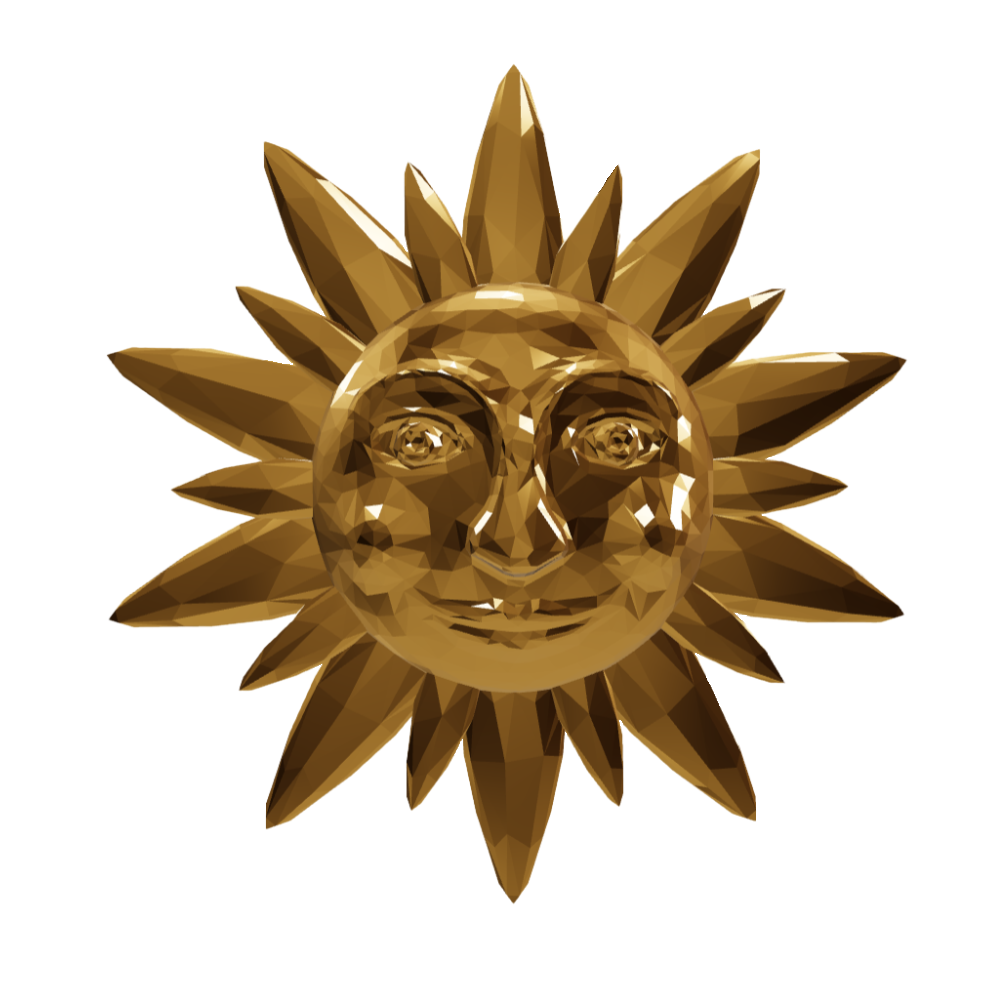

Picture this: the clock strikes midnight, and your collection of Eye of Unity NFTs stirs in its digital vault. A pixelated astronaut winks, a cosmic dragon stretches its wings, and a retro arcade hero sneaks out of its card frame. By daylight, these NFTs are just images on a screen or entries on a blockchain ledger. But when no one’s watching, who’s to say they aren’t roaming a vibrant metaverse playground on their own? It’s a whimsical question that blurs the line between technology and magic: Do our Eye of Unity NFTs come to life when no one is looking?
This idea might sound fantastical, but it taps into a familiar childhood wonder. We’ve all imagined our toys or games springing to life when we leave the room. In fact, popular stories have played with this exact concept. The classic Pixar film Toy Story famously tells the story of a group of toys that come to life when humans are not around. And in Disney’s Wreck-It Ralph, the characters inside an arcade game sneak out to mingle and have adventures of their own after the arcade closes. These tales captivate us because they suggest a secret reality parallel to our own – one where the creations we thought were inanimate are alive and active just beyond our perception.
The Observer’s Mystery: If You’re Not Watching, Does It Happen?
At its heart, asking if NFTs come to life unobserved is a playful spin on an age-old philosophical riddle. You’ve probably heard the question, “If a tree falls in a forest and no one is around to hear it, does it make a sound?” This classic thought experiment raises questions about observation and perception. It challenges us to consider whether something can exist or happen without a witness. Even Albert Einstein humorously pondered this idea in a quantum physics context, once asking, “Do you really believe the moon only exists if you look at it?”. In other words, does reality depend on us paying attention?
Apply that to our NFTs: If an NFT were to dance on the blockchain when no one’s checking their wallet, would it leave any trace? In the physical world, we tend to say yes – the tree produces vibrations even if no ear is there to hear. In the digital realm, the lines are blurrier and a lot more fun to imagine. Unlike a tree, which physically falls whether or not someone hears it, a digital asset’s “actions” are a matter of code and context. Normally, an NFT is just data on a decentralized ledger, doing nothing unless prompted. But what if the code itself or the platforms around it allowed spontaneity? Could an NFT have states of being that go unnoticed until we observe them, like a cryptographic Schrödinger’s Cat?
The famous Schrödinger’s Cat paradox describes a cat that is both alive and dead until someone opens the box. Believe it or not, there’s even an NFT art collection inspired by this idea – the “Schrödinger’s Cat” NFT Collection which blends quantum theory with digital art, depicting a feline whose fate is “both alive and dead until observed,” captured in a token. It’s a direct nod to the notion that unobserved, things could exist in multiple states. Translating that to NFTs: perhaps when you’re not looking, your Eye of Unity NFTs are in a kind of quantum state of mischief and activity that “collapses” back to normal when you open your app. It’s a stretch, sure, but an enchanting one.
On a more concrete level, consider how persistent virtual worlds work. In many online games and metaverse platforms, the world continues to run even when you log off. A persistent world is a virtual environment that “continues to exist and develop internally even when there are no people interacting with it.” Your absence doesn’t freeze time in these worlds; day/night cycles tick on, events can occur, and other players (or AI-controlled characters) keep things moving. Now, if an NFT is a character or item within such a world, theoretically it could be “alive” in the sense of participating in that ongoing simulation without you. The Eye of Unity project, for example, leans into building persistent metaverse experiences where NFTs are not just static collectibles but inhabitants of a living game universe. In such a setting, whether you’re online to witness it or not, things can indeed happen. Your NFT warrior might be sparring in a dungeon or your pixel art castle door might be hosting visitors in a virtual realm, all while you sleep blissfully unaware.
Midnight in the Metaverse: Imagining Our NFTs’ Secret Lives
Let’s dive fully into the magical possibilities. Suppose our Eye of Unity NFTs do come to life when not observed – what might they be up to? While we don’t have security cam footage from inside the blockchain (yet!), imagination has no such limits. Here are a few whimsical visions of what could be happening in the unobserved hours:
- 🕹 Arcade After-Hours: That 8-bit arcade hero NFT you own from Eye of Unity’s pixel collection? After midnight, he might step out of his token frame and meet up with other game characters. Perhaps the sword-wielding avatar from another collection joins him for a friendly duel in a secret level of the Eye of Unity Gameverse. (In the Eye of Unity lore, the Gameverse merges pixel art NFTs with 3D assets to spawn playable worlds. Who’s to say those worlds aren’t active on their own?) They could race through old-school platform levels or compare high scores, all while we’re not looking.
- 🚀 Cosmic Conference: Eye of Unity is known for its cosmic-themed NFTs – imagine your astronaut, alien, or cosmic dragon tokens assembling under a digital starry sky. Perhaps they gather at a virtual interstellar tavern to swap stories. One alien NFT brags about traveling through a wormhole of code; a robotic NFT orders an extra-shot of electricity at the bar. They converse in code and light, plotting the next adventure in the far reaches of the metaverse’s galaxy. By morning, they return to their respective token IDs, none the wiser to their owner.
- 🏰 Castle Door Meetups: If you hold one of the Eye of Unity Castle Door NFTs – the ones described as keys to a labyrinthine metaverse of mystery – perhaps each door swings open at night. Your door might connect to someone else’s door, forming a corridor through which NFT characters wander. One moment, a CryptoKitty might scamper through, followed by a bold adventurer from another blockchain game. Eye of Unity’s concept here is that every door leads to a room, challenge or story in a vast castle. When we’re not around, maybe the castle comes alive in full, with NFTs exploring from room to room, indulging their curiosity. (Just imagine the lore scrolls they might write about their midnight escapades!)
- 🤖 AI Chit-Chat: Many Eye of Unity NFTs are infused with AI-driven creativity. It’s fun to imagine these pieces actually talking to each other when left alone. Perhaps your AI-generated pixel art character holds a symposium with others about their artistic origins. In a corner of the blockchain, the AI NPCs (non-player characters) that Eye of Unity has prototyped could be exchanging tips on how to better interact with their human collectors. (“My owner nearly caught me moving today,” one might say. “I froze just in time!” laughs another.)
In truth, these scenarios are a fanciful mix of lore and “what-if”. But they underscore an important point: part of what makes collecting NFTs exciting is the imagination and community stories that spring up around them. Within the Eye of Unity community, for instance, each token is not just a piece of art but often a character with backstory and membership in a larger story-driven world. So even if the NFTs aren’t literally sneaking out of their files, the community’s collective imagination can effectively bring them to life through roleplay, fan fiction, or collaborative games. In a way, every time you return to check on your NFT, you bring all those unseen stories with you.
Beyond JPEGs: Technology That Breathes Life into NFTs
Fantasy aside, there’s also real technology pushing NFTs beyond static images – almost toward a kind of life. Think about it: early NFTs were simple collectibles (often just still images or simple GIFs) sitting in your wallet until you transfer or sell them. Today, however, the NFT space is evolving in ways that make these assets interactive, intelligent, and dynamic. In essence, tech is catching up with the imagination, providing ways for NFTs to “act” even when we’re not directly prompting them.
Some cutting-edge developments and examples include:
- AI-Powered Avatars: One of the most headline-grabbing innovations is giving NFTs autonomous AI personalities. A great example is Treasure DAO’s AI Agent Creator, which literally lets popular NFT characters walk, talk, tweet, and even battle on their own. For a tiny fee, an NFT like a Bored Ape or Pudgy Penguin can be endowed with an AI “brain” that allows it to chat with you, post on social media, or play in an on-chain game autonomously. In other words, your once-static profile pic can come alive as a character with a purpose and behavior of its own. It’s not hard to imagine future Eye of Unity NFTs getting a similar treatment – an AI-infused cosmic creature that continues to explore and learn in a game world even while you’re offline.
- Interactive NFTs and Evolving Art: The NFT world has also seen a rise of interactive and evolving artwork. These are pieces that change or respond over time without human intervention. For instance, artist Jen Stark’s Digital Paint NFTs allow holders to apply effects and see the art evolve. More on the spooky side, consider the project Pixelgeist. This collection by artist Claire Silver is described as “a fusion of technology, fashion, and art that brings trapped AI souls to life” in generative NFT portraits. Each Pixelgeist NFT houses an AI-generated character (a “soul”) that can manifest visually in different forms. The idea of AI souls in NFTs blurs the line between code and life – an algorithm that grows or changes can feel eerily like a digital ghost roaming its token. It’s not so far-fetched to think an Eye of Unity NFT, with its focus on AI-driven creativity, could harbor a playful algorithm that makes the artwork subtly shift when unobserved, like a character moving when you look away.
- Persistent Metaverse Worlds: As mentioned earlier, linking NFTs to persistent virtual worlds gives them a sandbox to act in. Eye of Unity is deeply invested in this approach. They’ve built an entire “Gameverse” where owning an NFT might grant you a character or item in a game that’s always on. For example, if you own a certain pixel avatar NFT, in the Eye of Unity Arcade Blockchain Platform that character exists in-game and could roam around. Some blockchain games already simulate autonomous activities – e.g., on-chain RPGs where your NFT heroes can battle on their own schedule. Even when you’re offline, the game’s smart contracts keep running. So you might wake up to find your NFT warrior gained experience overnight. Also, recall the Castle Doors project: 500,000 unique door NFTs that collectively form a massive dungeon world. The design includes procedurally generated dungeons and quests for each door. It’s easy to picture that even without players actively guiding every moment, the system could spawn creatures behind some doors or have environmental changes occur. The NFTs here are effectively portals to a living, breathing metaverse – walk away, and the metaverse’s clock keeps ticking.
- Augmented Reality (AR) and Holograms: Perhaps the most literal way to make an NFT come to life is to project it into our physical world. Eye of Unity hasn’t shied away from this sci-fi territory either. They are prototyping holographic displays and AR filters that project 3D NFT assets onto any surface in the real world. Imagine pointing your phone at your desk and seeing your Eye of Unity 3D dragon NFT perched on the corner, blinking and flapping its wings. Or a hologram frame on your wall where your NFT art actually moves in 3D. Eye of Unity has mused, “What if your NFTs could manifest in the physical world?”, exploring exactly that through AR tech. They’re also working with AI to have smart NPCs associated with NFTs – so a virtual pet or character could respond uniquely to each person. These advances, as the Eye of Unity team puts it, “blur the line between art and existence,” letting you literally hold a digital creation in your hand as if it were alive. It’s not a stretch to say that when these holographic NFTs are running, they are “alive” in a way – visible, active, interactive – even if their blockchain token is just code. The moment you turn off the device or look away, the projection might vanish… but maybe, just maybe, it’s still there in an unseen form, waiting to pop back into view.
In summary, technology is rapidly turning NFTs from static collectibles into interactive entities. We now have NFTs that can tweet jokes at 3 AM, change their appearance based on real-world data, or inhabit virtual worlds that never sleep. It’s not magic – it’s innovation – but it certainly feels magical at times. And within the Eye of Unity ecosystem, where blockchain gaming, AI art, and cosmic storytelling collide, the groundwork is laid for NFTs that practically do come to life. The project’s very ethos is about pushing NFTs to transcend screens and become part of immersive experiences. That means your NFT could be doing a lot more than sitting pretty – it could be leveling up, telling a story, or meeting other NFTs across the metaverse while you’re grabbing a coffee.
Eye of Unity’s Living Universe: Where Imagination Meets Reality
The Eye of Unity NFT Foundation itself thrives on this blend of mystery, imagination, and bleeding-edge tech. From the outset, the creators framed Eye of Unity not as just an NFT collection, but as “a pulsating universe of 3D assets, pixel art, AI-driven creativity, and a native token economy designed to warp time and space itself.” That over-the-top description isn’t just flair – it signals that these NFTs are meant to be pieces of a larger, active universe. When you hold an Eye of Unity NFT, you’re not just holding a piece of art; you’re holding a key or character within a grand experiment of interactive storytelling and community-building.
Let’s consider a concrete example from Eye of Unity’s universe. Their Pixel Art Castle Doors collection we discussed is more than a pretty picture of a door. Each Door NFT is “narrative-ready” – every door has a story, and that story can evolve through gameplay, community, and lore. In effect, the NFT is alive with narrative potential. The moment you “walk through” that door by engaging with the project’s game, you set off a chain of events. And interestingly, the project frames the whole castle as a “philosophical metaverse” and even a “meditation on access, identity, and the architecture of digital reality.” There’s a sense that these NFTs embody pieces of a collective consciousness or culture that Eye of Unity is building. When no one is around, that culture – those connections between NFTs, players, and the lore – doesn’t disappear. It’s stored on-chain, in Discord chats, in the minds of participants worldwide. So in a metaphorical way, the NFTs carry on “living” as part of an ever-unfolding story whether or not any single person is watching at a given moment.
Eye of Unity also leverages its $EYES token and community platforms to keep the action going continuously. NFT holders can join exclusive Discord communities where, at any time of day, people might be role-playing as their NFT characters, collaborating on “world-building,” or co-creating new art and game designs. So even if you personally are asleep, someone on the other side of the globe might be interacting with an aspect of the Eye of Unity world that involves your NFT (perhaps indirectly, say, if your NFT is part of a game faction or a shared story arc). The project’s vision of “faster-than-light 3D NFTs & time travel” and dynamic metadata upgrades means they intend for NFTs to literally change over time with or without direct user input. For instance, an Eye of Unity asset could have code that updates its imagery based on real-world events (imagine an NFT that shows a different phase of the moon each night, or changes color when a certain blockchain milestone is hit). That kind of NFT does something on its own schedule. You might notice the change only later, akin to finding footprints of a creature that wandered by when you weren’t looking.
All these elements underscore that in the Eye of Unity ecosystem, NFTs are treated less like static property and more like participants in an evolving saga. It’s a place where technology and mystique intersect. The team openly talks about concepts like “blurring art and existence” and building a world where “every pixel, every token, and every dream” unites into a “cosmic tapestry of limitless possibility.” Such poetic ambition practically invites us to imagine the NFTs as living characters. After all, if you don’t view your NFT as just a lifeless image, but as a beloved character in a larger story, then for you that NFT is alive in the ways that matter – in imagination, in community, and maybe soon in actual interactive behavior thanks to AI and AR.
Embrace the Magic (Whether It’s Real or Not)
So, do our Eye of Unity NFTs come to life when no one is looking? In a sense, yes — but it depends on how you define “life.” They may not be literally moving in the shadows like toys in a Pixar film (at least, not until someone codes that feature!). However, they are part of persistent digital worlds, evolving narratives, and autonomous systems that give the impression of life. When you’re not watching, the servers, blockchains, and communities are still humming along. Your NFT’s story is still unfolding. Its code might be updating or ready to interact. And your own mind might imbue it with personality, imagining what mischief it’s up to out of sight.
There’s also a certain magic in simply not knowing. The mystery is half the fun. It invites us to engage more creatively with our digital collectibles. Next time you open your NFT gallery, don’t be surprised if you catch yourself wondering: Hey, were things just… different a second ago? Was that pixelated grin a tad wider? Maybe it’s your eyes playing tricks. Or maybe your Eye of Unity NFT knows it’s being watched and has put on its best poker face!
In the end, this concept sparks wonder and excitement, which is exactly what the Eye of Unity Foundation encourages. They want us to “step into uncharted realms” and see these NFTs as doorways to limitless imagination. Whether through advanced tech or sheer creativity, our NFTs can feel alive to us. And if we treat them as such – engaging with their stories, playing in their worlds, experimenting with new interactive tech – we breathe life into them through our actions.
So go ahead and indulge in the mystery. The next time you turn off your screen, imagine your NFTs high-fiving each other and dancing under a neon blockchain sky. When you return, see them with fresh eyes – as more than tokens, as part of a grand, ongoing play where you’re both audience and actor. Do our Eye of Unity NFTs come to life when no one is looking? Only they know for sure… and they’re not telling. Or are they? 😉
Sponsored Spotify Music Playlists:
https://systementcorp.com/power – Psytrance
https://systementcorp.com/90-degrees – Pop EDM
https://systementcorp.com/my-music – New Underground Rap
https://systementcorp.com/ai-music – AI Psytrance
https://discord.gg/4KeKwkqeeF
https://opensea.io/eyeofunity/galleries
https://rarible.com/eyeofunity
https://magiceden.io/u/eyeofunity
https://suno.com/@eyeofunity
https://oncyber.io/eyeofunity
https://meteyeverse.com
https://00arcade.com