Imagine if your favorite video game character stepped out of the screen and into your hands. Today’s NFT scene is a wild mix of pixelated punks, dancing cat GIFs, and looping video clips – all cool, but still flat as a pancake. Meanwhile, a quiet revolution is brewing, adding a whole new dimension (literally) to digital collectibles. In this article, we’ll take a fun whirlwind tour through the history of NFTs, see why most collectibles are stuck as .GIF images and MP4 videos, and discover why embracing .GBL 3D files could be the game-changer that takes NFTs from flat to fully three-dimensional. And spoiler alert: pioneers like Eye of Unity are already leveling up gameplay, ownership, and authenticity with real 3D .GBL NFTs. Let’s dive in!
The Wild Ride: A Brief History of NFTs
NFTs (non-fungible tokens) didn’t just pop up overnight with apes and punks – they have a colorful past. The very idea of unique digital assets traces back to experiments on the Bitcoin blockchain around 2012, in the form of “colored coins” and rare digital collectibles. In 2014, artist Kevin McCoy minted what’s often credited as the first-ever NFT, “Quantum,” on a pre-Ethereum blockchain. Fittingly, its digital content was a simple animated GIF file – a pixelated image of flickering shapes. Little did anyone know that this humble GIF would spark a movement.
Fast forward to 2017, and things really took off with Ethereum providing an easier way to create and trade NFTs. Projects like CryptoPunks – 10,000 unique 24×24 pixel art characters – became the talk of the town. Each CryptoPunk was basically a tiny 2D avatar (a punky pixel face), but the idea of owning a digital character was revolutionary. Hot on their heels came CryptoKitties, collectible cartoon cats you could breed – their features stored as tokens, but represented by cute 2D cat illustrations. CryptoKitties were so popular that they famously congested the Ethereum network in late 2017, showing the world the power of NFTs (and the need for blockchains to scale!).
After these early collectibles, NFTs kept evolving. Digital artists started tokenizing their art, leading to a full-blown crypto art movement. In 2021, NFT mania went mainstream: auction houses sold NFT artworks for millions. The most famous example? Beeple’s digital collage Everydays: The First 5000 Days fetched an eye-popping $69 million at Christie’s. That piece was essentially a giant JPEG file – yes, a flat image – but owning the token was like owning the Mona Lisa of digital art. Around the same time, collections like Bored Ape Yacht Club (a troop of cartoon ape profile pictures) caught fire, with celebrities buying these JPEG apes as status symbols. By the end of 2021, “NFT” was such a cultural phenomenon that Collins Dictionary named it the Word of the Year.
While art and profile pics grabbed headlines, NFTs were also branching into other areas. Virtual worlds such as Decentraland and CryptoVoxels began selling plots of virtual land as NFTs, foreshadowing a future where you could own a piece of the Metaverse. In gaming, projects like Axie Infinity turned in-game characters into NFTs, and sports fans flocked to NBA Top Shot, which turned epic basketball highlights into collectible NFT “Moments” (essentially short video clips of slam dunks). By this point, one thing was clear: NFTs could represent almost anything – art, video, music, virtual real estate, you name it – but the most common forms that took off were still 2D images and videos. Most NFTs you could buy were basically a token pointing to an image file (PNG/JPEG/GIF) or a short MP4 video.
Why so flat? To understand that, we need to look at what creators and collectors found accessible in those early days. It turns out, minting a quirky image or looping GIF was much easier than building a complex 3D model. But as we’ll see, technology and tastes never stand still for long.
Flat NFTs Everywhere: JPEGs, GIFs, and MP4s Galore
Take a scroll through any major NFT marketplace and you’ll be greeted by vibrant 2D art – from pixel art characters to elaborate digital paintings. High-quality images, flashy GIF animations, and short MP4 video loops have dominated NFT content since the beginning. Why did these formats become the default? A few good reasons:
- Ease of Creation: Most early NFT creators were digital artists comfortable with 2D mediums. It’s a lot simpler to create a PNG image or animate a GIF than to model and rig a 3D object. So naturally, the first wave of NFT content leaned toward what those creators knew best – flat visuals.
- File Size & Platforms: Early NFT platforms imposed strict limits on file sizes and formats to keep transactions smooth. For example, Foundation.app (a popular art NFT site) only allowed JPG or MP4 up to 50 MB. Images and short videos fit these limits well, whereas rich 3D files can be much larger. As a result, creators often stuck to what would easily upload and display on these sites.
- Instant Display: A JPEG or GIF NFT can be immediately appreciated in any web browser or Twitter feed – no special viewer needed. Collectors could show off their Bored Ape or CryptoPunk as a profile picture instantly. In contrast, a 3D model (.gbl) might require a viewer or plug-in to fully appreciate, which was a friction point early on.
- Habits and Culture: Let’s face it – the 2021 NFT boom was all about the flex. Owning a rare meme image or a GIF of a flying cat with a Pop-Tart body (Nyan Cat sold as an NFT for nearly $600k) was a pop culture moment. The community rallied around these easily shareable visuals. Even NFTs of video highlights like NBA Top Shot’s dunks felt familiar – like digital sports cards – because you could watch the clip on your phone with no fuss.
So, by and large, we got used to NFTs being synonymous with “digital pictures that you own” – whether static images or moving images. This flat format dominance even fueled skeptics who meme’d that NFTs were “just expensive JPEGs that anyone can right-click and save.” The truth was more nuanced (ownership on the blockchain is what made them unique, not the file itself), but it’s true that the experience of many NFTs boiled down to looking at a 2D screen.
However, this isn’t the end of the story. Even during the height of JPEG-mania, future-facing creators were experimenting with bringing NFTs to life in 3D. Some NFT platforms began to support 3D model files (like .glTF or .GLB) early on. On the Tezos blockchain, the marketplace Hic et Nunc became a home for avant-garde 3D NFT art – artists minted interactive sculptures as GLB files you could spin around in your browser. Ethereum-based sites like SuperRare also allowed 3D uploads and noted that GLB (Binary glTF) was fully supported for tokenizing artwork.
Yet these were the exceptions to the rule. The mainstream NFT scene remained flat. If you bought a character from a popular collection, chances are you got an image. For example, owners of CloneX avatars (a high-profile 3D avatar collection by RTFKT and Nike) were initially trading slick 2D illustrations of the characters – only later were actual 3D files provided for use in metaverses. Clearly, there was a gap between what the NFTs were and what they could be.
This begs the question: with all this powerful tech available, why aren’t we all using .GBL (GLB) files for NFTs already? What’s holding the 3D revolution back? And more importantly, what is a .GBL/.GLB file anyway, and why should we care? Let’s unpack that next.
Enter .GBL: Bringing NFTs into the Third Dimension
It’s time to talk about .GBL files – the key to unlocking true 3D NFTs. First off, .GBL refers to the GLB format (the terms are used interchangeably in many NFT circles, and we’ll stick with “.GBL” to keep it consistent). GLB is essentially the binary version of glTF (Graphics Language Transmission Format), an open 3D file standard. Think of glTF/GLB as the 3D world’s equivalent of a JPEG image – a widely accepted, efficient format for sharing 3D models. In fact, GLB is often called “the JPEG of 3D” because it bundles all the data (geometry, textures, materials, animations) into one compact file that’s easy to transmit and load.
So why is using .GBL for NFTs such a big deal? Let’s break down the superpowers that 3D .GBL NFTs bring to the table, especially compared to flat GIFs or videos:
- 🔄 Full Interactivity: A .GBL NFT isn’t a recording or snapshot – it’s the actual 3D object. Owners and viewers can interact with it freely: rotate it, zoom in, view it from any angle. You’re not stuck with one camera perspective. This makes the experience far more immersive. Owning a 3D NFT is like holding a digital sculpture in your hand rather than a photo of the sculpture.
- 🎮 In-Game and Metaverse Utility: 3D NFTs can be used in virtual environments. Imagine owning a futuristic car NFT and then driving that exact 3D model inside a game or metaverse world. With .GBL, that’s possible – the file can be imported into game engines (Unity, Unreal, etc.) or placed into VR/AR spaces. In other words, your NFT can double as a video game asset or a VR avatar. This interoperability is a game-changer. Many see this as the future: as one tech writer speculated, NFTs could serve as the digital representations of physical objects or characters in the metaverse, moving with you across games. You can’t do that with a flat JPEG of a sword – but you can with a .GLB 3D model of one.
- 📁 True Asset Ownership (Files and All): When you buy a 3D NFT, you often get access to the actual model files. That means as an owner, you have the underlying 3D data – not just a picture of it. This is a step up in the ownership experience: you could 3D-print your NFT, modify it (if license allows), or use it in your own creative projects. In contrast, buying a 2D NFT usually gives you no additional files beyond the image. With 3D NFTs, collectors feel like they hold a “digital original” – something much harder to fake or replicate meaningfully without the source model.
- ✨ Enhanced Authenticity & Uniqueness: Because 3D models contain so much detail (mesh geometry, texture maps, possibly animations), a 3D NFT can carry a lot more unique information than a flat image. This can make each token feel more distinct. For instance, two animated 3D dragons can differ not just in color, but in how they move, what sounds they make, etc. The authenticity of owning that specific interactive model is more palpable than owning a copy of an image that anyone can screenshot. It’s akin to the difference between owning a real bronze statue versus a photo of the statue. The NFT’s blockchain record proves authenticity, but the 3D format makes that authenticity tangible by letting you engage with the piece in depth.
- 🌐 Open, Portable Format: GLB is an open standard with wide industry support. It supports advanced features like PBR (physically-based rendering) materials for realistic lighting, skeletal rigs for animation, and it’s royalty-free to use. That means a .GBL NFT can be loaded in many apps and platforms without proprietary restrictions – web viewers, AR apps, game engines, you name it. Already, platforms like Spatial.io, OnCyber, Decentraland, and others allow users to import GLB models to display in virtual galleries or worlds. This portability is crucial for the emerging interconnected metaverse. With .GBL NFTs, your digital collectibles aren’t siloed to one website; they become part of a larger ecosystem of 3D content.
To visualize the differences, let’s compare flat NFTs and 3D NFTs side by side:
| Aspect | 2D NFTs (JPEG/GIF/MP4) | 3D NFTs (.GBL) |
|---|---|---|
| Interactivity | Static view or pre-rendered animation only | Fully interactive: view from any angle, zoom, manipulate in 3D |
| Utility in Games/VR | Mostly none (beyond profile pics or art display) | High – can serve as in-game items, avatars, virtual land, etc. across compatible worlds |
| Ownership Experience | Primarily visual bragging rights; content is an image or video anyone can copy | Tactile feel of owning a object; includes the 3D model file itself, enabling usage in creative ways |
| Immersion | Limited to a flat screen; you observe it passively | Immersive and visceral – you can place it in AR, walk around it in VR |
| Authenticity Perception | Often criticized as “just a copyable picture” | Feels like a unique digital artifact with depth and detail, not easily replicated in full |
It’s clear that .GBL NFTs open up possibilities that a simple GIF could never. Want to display your collection? With 3D NFTs you could set up a virtual reality gallery where visitors can literally walk around your art pieces. Have a character NFT? You could become that character in a VR chat room or game, since you possess the actual 3D avatar model. The NFT no longer sits in a wallet as a pretty picture – it lives and breathes in various experiences you choose.
No wonder many observers see 3D NFTs as the future of digital collectibles. They’re already popping up in various industries: virtual fashion (3D NFT sneakers and dresses you can “wear” via AR), architecture (NFT building designs one can tour in 3D), and more. In short, 3D unlocks the full creative and functional potential of non-fungible tokens, going beyond digital art into the realm of digital assets.
However, if this is so great, we have to ask: why isn’t everything an interactive .GBL NFT by now? Let’s look at a few challenges that slowed the 3D takeover – and why those obstacles are quickly fading.
Why Haven’t 3D NFTs Taken Over (Yet)?
Shifting an entire industry from 2D to 3D is no small feat. There are some understandable reasons why the majority of NFT projects in the past didn’t utilize .GBL, even if in theory they could:
- 🛠️ Creation Complexity: Not every artist or team has 3D modeling skills. Crafting a high-quality 3D asset requires expertise in modeling, texturing, rigging, and animation. In the early NFT rush, many creators were solo digital illustrators; asking them to become 3D technical artists overnight was a tall order. Even those who could make 3D art faced steep workloads – it’s generally more time-consuming to produce a detailed 3D piece than a 2D drawing. This barrier meant fewer 3D collections got off the ground initially.
- 💾 File Size & Tech Limits: 3D files can be big. Higher polygon counts, multiple texture maps, animations – it adds up. Blockchains themselves can’t store large files, so NFT media is stored off-chain (usually on IPFS or other storage). Still, marketplaces have limits and users expect quick loading. In the past, a 50+ MB GLB file might have been considered cumbersome compared to a 2 MB image. Over time, internet speeds and storage solutions (like IPFS and Arweave) improved, but early on this was a concern.
- 📱 Display & Compatibility: A few years ago, not all NFT marketplaces and wallets had good support for 3D viewing. If you bought a 3D NFT but couldn’t easily see it in 3D on your device, that’s a poor user experience. Some collectors encountered issues – for example, a GLB that looked fine on desktop appearing black on a mobile app until viewers caught up. This made creators worry: “Will my buyers know how to view this properly?” Thankfully, today most major platforms (OpenSea, etc.) have built-in 3D viewers, and mobile support is catching up.
- 🤔 Market Mindset: There was also a psychological factor: the early NFT market was flush with speculation on quick-hit collectibles. Many projects prioritized quantity and hype over depth. It was faster to pump out 10,000 variations of a 2D character (just swap some traits) than to design 10,000 bespoke 3D models. So a lot of teams chose the path of least resistance to capitalize on the craze. Only later did the market (and the cooldown of NFT frenzy) reward more thoughtful, content-rich 3D projects. In other words, the culture had to shift from “get rich flipping cartoons” to “build something lasting and interactive.”
- 📚 Learning Curve for Collectors: Early NFT adopters were crypto enthusiasts and art collectors who might not all be techies into 3D graphics or gaming. Handing them a GLB file might elicit a “What do I do with this?” response initially. It took time and education for the broader community to understand and desire the possibilities of 3D NFTs. Now, with the concept of the Metaverse becoming mainstream, collectors are actively seeking items they can use in virtual worlds, making them more eager to embrace 3D.
The good news is that each of these obstacles is shrinking by the day. 3D design tools are more accessible (even beginner-friendly tools and asset marketplaces for models exist), internet and storage tech easily handle large media, and demand is growing for richer NFT experiences. As VR/AR and gaming continue to rise in prominence, there’s a natural intersection with NFTs: people will expect their digital assets to be 3D and functional, not just pretty pictures. In fact, a 2023 study predicted that a quarter of the global population will spend at least an hour a day in the Metaverse in the near future – if you’re going to live part of your life in a 3D world, you’d want your NFTs to come alive there with you!
Forward-thinking projects saw this writing on the wall and started building the 3D future of NFTs early. One striking example is Eye of Unity, which has been on a mission to push NFTs beyond the flatlands and into fully interactive realms.
Eye of Unity’s Vision: Real 3D NFTs for Play, Ownership, and Legacy
While many were content to trade 2D pictures, Eye of Unity stepped up to demonstrate what real 3D .GBL NFTs can do for gaming and the metaverse. Think of Eye of Unity as a creative lab where blockchain, gaming, and art converge in multi-dimensions. They embraced .GBL models as a core part of their NFT collections from the get-go – not as a gimmick, but as a way to enhance gameplay, ownership, and authenticity for the community.
Let’s look at a few ways Eye of Unity is leveraging 3D NFTs:
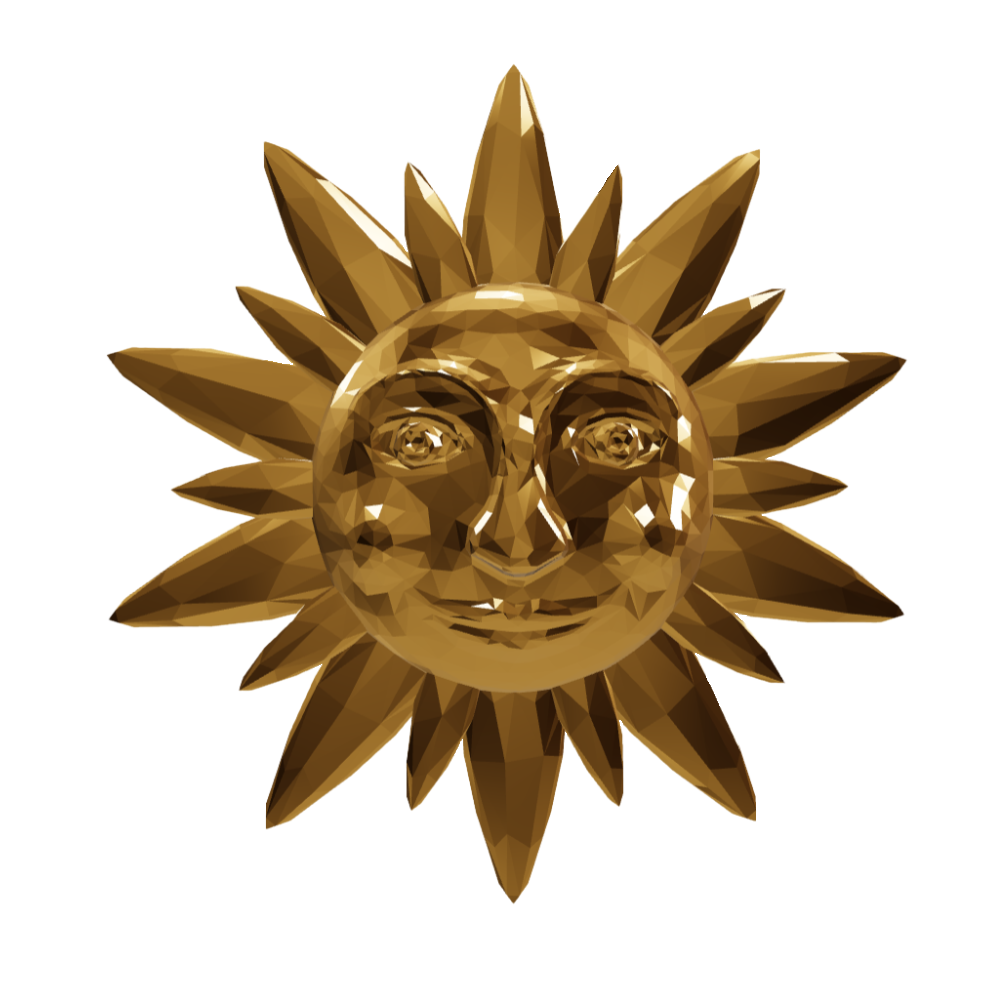
- Game-Ready 3D Assets: Eye of Unity’s flagship Eyeverse collection consists of 5,000 unique 3D NFTs on Polygon – and these aren’t just static models collecting dust in a wallet. Each .GBL file in the Eyeverse is fully optimized for use in games and virtual worlds. They come with high-resolution textures, are directly importable into popular engines like Unity or Unreal, and even carry metadata describing their lore and rarity. Essentially, when you own an Eyeverse NFT, you own a piece of a ready-made game universe. The team explicitly designed them as the building blocks of a future metaverse – everything from futuristic vehicles and creatures to architectural structures are in the library. This “plug-and-play” approach means community developers or even the owners themselves can drop their NFT asset into a game environment with minimal fuss and start playing. It’s not theory; Eye of Unity is actively developing a 3D world game where all these NFT assets become interactive elements of gameplay.
- Enhanced Gameplay & Community Events: By using .GBL NFTs, Eye of Unity can offer gameplay experiences that typical NFT projects can’t. For example, holders of the Eyeverse Soldier 3D NFT can load their 3D avatar model into Spatial, a web-based VR world, and flaunt it in digital meetups. The NFT isn’t just a ticket to a Discord role (though it is that too); it’s also your in-game character. Eye of Unity regularly hosts community tournaments and mini-games where owning certain 3D NFTs grants you special abilities or access. This creates a tight feedback loop: the NFT gives you a game piece, playing the game can yield new NFTs or upgrades, and so on. It’s a living ecosystem rather than a one-off collectible. By blending NFT ownership with active gameplay, Eye of Unity makes owning their NFTs an engaging, ongoing adventure, not just a flex in your wallet.
- True Ownership & Authenticity: Eye of Unity places huge emphasis on the idea of digital ownership in its purest sense. All their game asset NFTs are stored on-chain or distributed networks in a way to be immutable “forever”. They even utilize IPFS/Filecoin to host entire games and assets, meaning even the content of the NFT (like the 3D model or the game it’s part of) is preserved long-term. For owners, this means when you buy an Eye of Unity 3D NFT, you’re assured the asset is truly yours with no dependency on a single server or company that might vanish. This commitment to authenticity goes further: Eye of Unity has experimented with soulbound NFTs and legacy concepts, treating some tokens as “heirlooms” to be passed down like digital family treasures. The 3D format reinforces this heirloom quality – these aren’t disposable pictures, but rich artifacts you can imagine preserving for future generations of gamers and collectors.
- Bridging Digital and Physical Worlds: Perhaps one of the coolest things Eye of Unity has done is empower users to bring their 3D NFTs off-chain and into the real world via 3D printing. Since owners have the actual .GBL files, they can download them and use them to print physical replicas of their NFTs. Eye of Unity even published guides on how to 3D print your Eyeverse Soldier avatar into a tabletop figurine. Picture that – a digital avatar you own as an NFT, which you can also hold as a custom-made action figure in your hand! This kind of crossover was unheard of with 2D NFTs (you can print a picture on a poster, but it’s not the same as an interactive figurine). By giving users the means to create physical collectibles from their NFTs, Eye of Unity enhanced the sense of ownership dramatically. It’s your asset, so why not let you materialize it? They highlight how token metadata even includes 3D-print compatibility info, making the process smoother. The result: a collector can wander a VR gallery with their 3D NFT, then look on their real-life shelf and see the exact same character smiling back. Talk about authenticity and connection to what you own.
- A Flourishing 3D Economy: All these capabilities tie into Eye of Unity’s larger mission of a player-driven economy. Because the assets are truly owned by players, people can trade them freely (Eyeverse even set its NFTs with zero royalties to encourage free exchange), use them across platforms, or even monetize them in new ways. For instance, a savvy owner might use an Eyeverse land NFT to host ticketed virtual events, or rent out a rare 3D model for use in a metaverse concert. Eye of Unity’s approach basically says: here are the tools and assets, do what you will – you have full control. This harks back to the original dream of NFTs enabling a fairer playing field for creators and players. As noted in an NFTCalendar feature, Eye of Unity’s projects aim to restore true ownership and fair monetization rights to gamers, letting them control and profit from their in-game assets as they please. A 3D asset you can use anywhere clearly has more versatile monetization potential than a static asset locked to one context.
In short, Eye of Unity is charting a path that many others are likely to follow. They treat NFTs not as fleeting hype objects, but as foundational pieces of a persistent digital world. By marrying blockchain with game development, they are showing how .GBL NFTs can make digital experiences more immersive and meaningful. Every 3D model they mint isn’t just eye candy; it’s a functional piece of a grander puzzle – be it a game, a story, or a community event.
And it’s not all in some far-off future. They have already launched these collections on marketplaces (the Eyeverse collection is live on OpenSea), integrated with Discord for token-gated access, and continually engage their community with new drops and challenges. The success of Eye of Unity’s approach suggests that as broader NFT adoption catches up, users will increasingly expect this level of depth. Why would you settle for a flat image of a sword when you could own the sword, wield it in a game, display it in AR on your table, and 3D-print it for your collection? The value proposition of NFTs is simply stronger when it appeals to both our online and offline lives, and 3D formats make that possible.
The Future: From Flat Pixels to Living Polygons
NFTs have come a long way from the days of single GIF artworks and pixel avatars. The history has been thrilling and at times absurd, but it’s clear that we’re moving toward a future where NFTs are more than just digital trading cards. As we push into the era of the Metaverse and immersive online experiences, the content of our NFTs needs to rise to the occasion. .GBL 3D NFTs are poised to become the new standard, bringing together the worlds of art, gaming, and collectibles into one interactive playground.
Imagine a few years from now: you stroll through a virtual city buzzing with players. You pass someone accompanied by a pet dragon – it’s not just an image attached to their profile, but a full 3D dragon NFT that they own, flapping its wings and following them. In a storefront, a famous brand is dropping new virtual sneakers as 3D NFTs – people are trying them on their avatars and via AR on their real feet before buying. You head to an NFT gallery where sculptures float in mid-air; one particularly intricate 3D artwork catches your eye. You reach out with your VR controller to inspect it closer – it’s an NFT that the artist has listed for sale, and you can interact with it just like a real object. This world is populated by .GBLs come to life, and it’s vastly richer than the flat web of the past.
The beauty is, this isn’t just fantasy. All the building blocks are here or in development. Projects like Eye of Unity are already implementing these ideas, turning 3D NFTs into games and experiences today. Tech giants and indie creators alike are exploring the convergence of VR, AR, and blockchain. When you hear buzzwords like “Web3 metaverse,” remember that the underlying enablers are things like interoperable 3D asset standards (GLB) and NFTs to verify ownership and provenance.
Using .GBL NFTs aligns with the ethos of decentralization and user empowerment that kicked off the NFT movement in the first place. Since GLB is open and widely supported, it prevents lock-in. If one platform disappears, your 3D assets can find a home elsewhere. That permanence and flexibility means your digital collectibles truly belong to you “for the rest of all time,” as Eye of Unity boldly puts it. It’s a safeguard against the hype cycles – even if NFT prices fluctuate, the utility and enjoyment of a well-made 3D asset can remain.
Conclusion
The evolution from flat to 3D is not just a technological upgrade, but an expansion of what’s possible. NFTs started as a way to claim “I own this digital thing.” With .GBL and real 3D content, it becomes “I own this digital thing, and I can do amazing things with it.” Whether it’s enhancing gameplay with unique items, forging stronger emotional connections through interactivity, or bridging worlds by turning digital creations into physical reality, 3D NFTs deepen the meaning of ownership in the digital age.
So, the next time someone asks why NFTs are stuck as GIFs and videos, you can tell them: Not for long. The .GBL revolution is underway, and it’s turning NFTs into something far more exciting – assets you can truly play with, build with, and treasure. Pack your JPEGs, folks; we’re stepping into the third dimension of NFTs, and the view is spectacular.
The era of the living NFT has begun – and it’s going to be a blast in every dimension!
https://discord.gg/4KeKwkqeeF
https://opensea.io/eyeofunity/galleries
https://rarible.com/eyeofunity
https://magiceden.io/u/eyeofunity
https://suno.com/@eyeofunity
https://oncyber.io/eyeofunity
https://meteyeverse.com
https://00arcade.com