
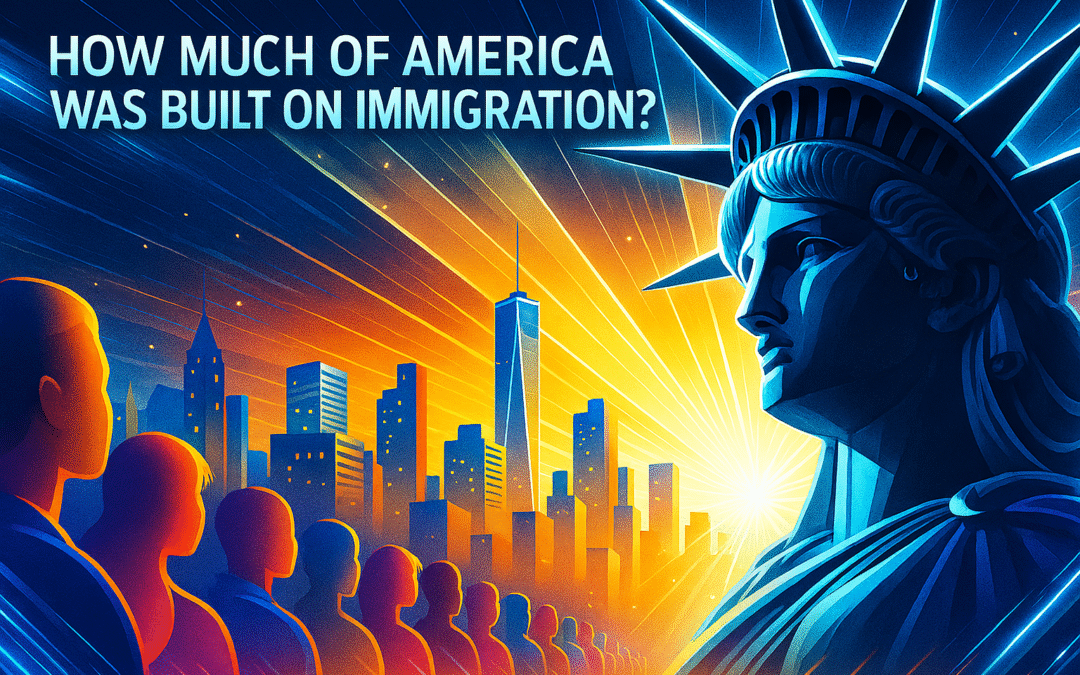
A Celebration of the Immigrant Spirit in the Making of the United States
Introduction: The Immigrant DNA of America
Walk down any bustling street in New York City, share a meal of tacos in Los Angeles, listen to a blues band in Chicago, or visit an innovation hub in Silicon Valley. You are witnessing living proof that America is a tapestry woven from countless immigrant threads. From the earliest colonial settlements to the latest wave of tech entrepreneurs, the contributions of immigrants are as foundational as the Statue of Liberty itself — not just a symbol of freedom, but a monument built, funded, and restored by the very hands of those who journeyed from afar.
America as we know it didn’t just “welcome” immigrants; it was and remains the product of immigrants’ ambition, labor, creativity, culture, and courage. This blog article explores the multifaceted ways in which immigration has built — and continues to build — the United States. We’ll celebrate the major historical immigration waves, highlight iconic communities, trace the economic and cultural impacts of newcomers, and spotlight the real people behind the “nation of immigrants” ideal.
Major Historical Immigration Waves: America’s Lifeblood
America’s story begins with movement. Even the ancestors of today’s Native Americans arrived as immigrants over 15,000 years ago, crossing the Bering land bridge from Asia. But the modern “nation of immigrants” narrative takes off with the European colonists of the 17th and 18th centuries — themselves seeking opportunity, religious freedom, and refuge from war and poverty.
The centuries that followed brought wave after wave:
- Colonial-Era and Early Republic Immigration: British, Dutch, French, Spanish, Germans, and Africans (through the tragic forced migration of slavery) established settlements, farms, and communities, making early America a polyglot society from the start.
- 19th Century Surges:
- Irish and German immigration exploded amid famine and revolution, especially between the 1820s and 1860s.
- Chinese immigrants arrived by the tens of thousands to work the gold mines and build the transcontinental railroad.
- Italians, Jews, Poles, and Eastern Europeans streamed in from the 1880s to the 1920s, settling in booming cities and building the industrial backbone of the nation.
- Mexican Migration: Following the annexation of what is now the American Southwest, and again during the Mexican Revolution and World Wars, millions crossed the border to labor in agriculture, railroads, and industry.
- 20th and 21st Century Global Arrivals: After the liberalization built into the Immigration and Nationality Act of 1965, new communities from Asia, Africa, the Middle East, and especially India and China, surged. America’s population grew ever more vibrant and multicultural.
Want the timeline? Check out resources like this comprehensive U.S. immigration timeline from HISTORY.com or the Library of Congress’s immigration history lessons.
Not every wave was greeted with open arms — far from it. America’s periodic open-heartedness has always intersected with nativist backlash, exclusionary laws, and complex debates over identity and belonging. But across time, the evidence is clear: the “American” experience is a chronicle of continual renewal by newcomers.
Economic Contributions: The Engine of Growth
Immigrants Powering Prosperity
How much of the U.S. economy is built on immigration? Simply put: a huge share.
It’s in the Numbers
- Immigrants generated $1.6 trillion in economic activity in 2022.
- Added more than $579 billion in local, state, and federal taxes in the same year.
- Immigrants account for nearly one-fifth (19%) of the U.S. workforce — far above their share of total population.
- Immigrants boost GDP growth: The Congressional Budget Office (CBO) estimates that higher-than-expected immigration from 2024–2034 will boost U.S. GDP by a whopping $8.9 trillion.
The myth that “immigrants take jobs from Americans” has been thoroughly debunked. As this Migration Policy Institute explainer notes, immigrants expand the labor force, start businesses at higher rates, and fill critical gaps in everything from nursing and farming to high-tech fields.
Job Creators and Entrepreneurs
- Immigrants are twice as likely as native-born Americans to start businesses. Over 40% of Fortune 500 companies were founded by immigrants or their children.
- Immigrant-founded U.S. billion-dollar startups employ over 859 people per company — most in the United States.
- Companies like Google, Tesla, eBay, Yahoo, Intel, Chobani, and Moderna? All co-founded by immigrants.
Innovation & Patents
- In strategic industries (AI, tech, life sciences), immigrants are responsible for over 30% of patents developed.
- 60% of America’s top AI startups have an immigrant founder, accelerating America’s global leadership.
Filling Critical Labor Needs
- Healthcare: Immigrants make up nearly a quarter of all doctors and a sizable share of nurses and home health aides, keeping hospitals running and caring for America’s growing elderly population.
- Agriculture and food production: From field to table, immigrants are the backbone of farming, processing, and distribution.
- STEM Fields: Over half of U.S. STEM degrees go to international students, many of whom stay to drive innovation and employment.
Table: Immigrants’ Share of the Workforce by Industry (2022)
| Industry | Number of Immigrants Employed | Immigrants’ Share of Industry Jobs |
|---|---|---|
| Educational & health services | 5.2 million | 14% |
| Professional & business services | 4.3 million | 21% |
| Construction | 3.3 million | 29% |
| Manufacturing | 2.9 million | 19% |
| Leisure & hospitality | 2.7 million | 21% |
| Agriculture, forestry, fishing, hunting | 468,000 | 20% |
| Information | 412,000 | 14% |
Source: U.S. Census Bureau; Council on Foreign Relations
In short, immigrants are job makers, not job takers. They are essential to the growth of America’s middle class and vital as the U.S. population ages, with immigrants and their children making up almost all future labor force growth.
Cultural and Culinary Influences: Building America’s Soul (and Stomach)
Step into any city, small town, or suburban strip mall and you’ll taste, see, and hear America’s immigrant mosaic. Immigrants have radically shaped American culture, cuisine, language, music, and arts. America is not a “melting pot” where differences disappear; it’s a bubbling stew where each ingredient is deliciously distinct.
Culinary Revolution: The World on Every Plate
American cuisine is immigrant cuisine. Pizza, bagels, tacos, sushi, curries, kimchi tacos, and more have become as American as burgers and apple pie (which, for the record, has Dutch and English roots).
- Italians: Brought us pizza, pasta, espresso, and the concept of the neighborhood restaurant — now a $50 billion industry.
- Chinese: Created chop suey, General Tso’s chicken, and a restaurant empire with over 45,000 establishments — more than McDonald’s and Starbucks in the U.S. combined.
- Mexicans: Enchiladas, salsa, tacos — Mexican restaurants account for 8% of all U.S. eateries, and salsa now outsells ketchup as America’s favorite condiment.
- Indians: Introduced Americans to the magic of curry, turmeric, and complex spice blends, revolutionizing both health trends and flavor profiles.
- Middle Eastern, Japanese, Thai, Vietnamese, Ethiopian, Korean — each community has changed the American palate and innovated food-service models from the food truck to fine dining.
For a more in-depth taste, read How Immigrants From Everywhere Made American Food the Most Diverse In The World or The Influence of Immigration On American Cuisine.
Check out these statistics:
- The country’s more than 2.3 million employees in ethnic restaurants are mostly in immigrant-founded businesses.
- Food truck industry: 80% owned by first- or second-generation immigrants, generating $1.2 billion annually.
Beyond Food: Music, Art, and Language
- Music: Jazz, blues, country, polka, hip-hop, and pop — all bear the marks of African, Caribbean, European, Jewish, and Asian influences.
- Literature and theater: Russian-Jewish immigrants shaped Broadway, Eastern Europeans helped launch Hollywood, and new arrivals continue to win Pulitzer Prizes and Oscars.
- Language: Over 60 million Americans speak a language other than English at home, including Spanish, Chinese, Tagalog, Vietnamese, and Hindi — building bridges to global commerce and culture.
Our most iconic cultural touchstones? From “God Bless America” (written by Russian-Jewish immigrant Irving Berlin) to blue jeans (Levi Strauss, from Germany), immigrant inventiveness is ever-present.
Social and Civil Rights Movements: Immigrants on the Front Lines
America’s legacy of freedom and justice has often been advanced by immigrant hands and voices. Immigrants and their children were prominent in:
- Labor movements: Leading strikes, organizing unions, and winning better pay and safer workplaces in factories, mines, and mills. Jewish, Italian, Eastern European, and Mexican immigrants played especially pivotal roles.
- Civil rights battles: Jewish- and African-American alliances fought for equality in the 1960s; Mexican Americans and new Asian-American communities challenged exclusion and racism.
- Women’s rights: Irish, Italian, Jewish, Mexican, and Chinese women helped build and lead movements for suffrage, workplace rights, and educational equality.
The Immigration and Nationality Act of 1965, ending racist national origin quotas, was itself a direct result of the Civil Rights Movement’s moral force, opening America’s doors to Asia, Africa, the Middle East, and beyond.
- Learn more about the civil rights origins of modern immigration law
- How the civil rights movement opened the door to immigrants of color
Today, immigrants and their descendants continue to champion voting rights, immigrant justice, LGBTQ+ equality, and workers’ rights. Streets from Santa Barbara to New York City are filled with activism, music, and hope.
Policy Milestones: The Legal Evolution of America’s Immigrant Identity
American immigration policy has been defined by cycles of openness, exclusion, and (recently) a push for inclusion — each reflecting core national values and anxieties.
Landmark Laws and Turning Points
- Naturalization Act of 1790: Limited citizenship to “free white persons” — the beginning of a fraught racial legacy.
- Chinese Exclusion Act (1882): First law to ban immigration by nationality or race. Led to decades of exclusion for Asians and set a precedent for restrictive quotas.
- Quota Acts of 1921 and 1924: Created strict racialized quotas barring most Southern and Eastern Europeans and virtually all Asians, while making some exceptions for Mexicans at the lobby of southwestern agriculture.
- Bracero Program (1942-1964): Brought millions of Mexican guest workers during World War II, showing America’s reliance on cross-border labor.
- Immigration and Nationality Act (1965): Abolished national-origins quotas, opening doors to millions from Asia, Africa, and the Middle East, transforming America’s demographic landscape.
- IRCA (1986): Offered amnesty to millions of undocumented immigrants, while tightening future enforcement.
- DACA (2012): Deferred Action for Childhood Arrivals provides work permits and protection from deportation for certain undocumented immigrants brought as children(the “Dreamers”).
- Ongoing Policy Debates (1990s–2020s): Include wall-building, bans, sanctuary cities, pathway-to-citizenship proposals, refugee caps, and efforts to expand (or restrict) high-skilled immigration.
For a full legal timeline, see the Cato Institute’s “A Brief History of U.S Immigration Policy”.
Key Takeaway: U.S. immigration law has often reflected the nation’s best aspirations and its deepest insecurities. Each push for exclusion has faced energetic challenge from those who remember that America’s strength comes from renewal, inclusion, and diversity.
Compelling Stories: The People Who Built America
We often speak in numbers and “waves,” forgetting that every immigrant was — and remains — an individual with a story. Here are just a few whose journeys shaped our nation:
Albert Einstein (Germany > U.S.)
Fleeing Nazi persecution, Einstein landed in America in 1933. The world’s greatest physicist became not only a U.S. citizen but a humanist voice for peace and civil rights. His ideas birthed nuclear physics, GPS technology, and modern cosmology. Read more about his revolutionary legacy here and here.
Levi Strauss (Germany > U.S.)
Strauss, an immigrant during the Gold Rush, invented blue jeans, one of the most recognizable global fashion icons, turning American workwear into an international symbol.
Madeleine Albright (Czechoslovakia > U.S.)
Escaping both Nazis and then communists, Albright became the first female Secretary of State.
Sergey Brin (Russia > U.S.)
A refugee from anti-Semitic persecution, Brin co-founded Google, forever changing information access and the digital economy.
Hamdi Ulukaya (Turkey > U.S.)
Arriving with almost nothing, Ulukaya founded Chobani Yogurt, built an empire, and shares profits with employees.
Nikola Tesla (Serbia > U.S.)
His innovations in electricity and magnetism made possible everything from smartphones to power grids.
Gloria Estefan (Cuba > U.S.)
Her family fled for freedom; her infectious music helped shape American pop and introduced millions to Latino rhythms.
And the list rolls on:
- Irving Berlin, Joseph Pulitzer, Hedy Lamarr, Jerry Yang (Yahoo!), John Muir (national parks), Andrew Carnegie (steel), Arnold Schwarzenegger, and more.
- See fuller profiles here.
American Landmarks Built by Immigrants: The Physical Legacy
Look up: Many of America’s grandest icons were literally built, designed, or preserved by immigrants and their descendants.
- Statue of Liberty: Assembled in New York by recent immigrant labor; its pedestal was funded mainly by immigrant donations.
- Brooklyn Bridge: Constructed by Irish, Italian, and German immigrant labor.
- Empire State Building: Raised to the sky by Irish, Italian, Eastern European, and Mohawk ironworkers.
- Transcontinental Railroad: Spanned the continent on the backs of thousands of Chinese and Irish laborers, enduring lethal conditions.
- Golden Gate Bridge, Hoover Dam, Mount Rushmore, U.S. Capitol Dome, Biltmore Estate: Diverse immigrant craftsmen, engineers, and artists made these American icons possible.
- Ellis Island: Served as a gateway to millions of newcomers — and was itself built and operated in large part by immigrants.
For a visual trip through these sites, explore 13 Famous American Landmarks Mostly Built by Immigrants and NPS stories on migration and immigration.
Notable Immigrant Communities: Patchwork of American Identity
Each immigrant group brought distinct challenges and gifts, forming unique communities and leaving an enduring legacy.
The Irish
- Arrivals: Over 4.5 million between 1820 and 1930, with a peak during the Great Potato Famine (1845-1852).
- Contributions: Dominated urban machine politics (think “green” St. Patrick’s Day parades), labor unions, public infrastructure, police and fire departments, and the Catholic church.
- Challenges: Faced rampant discrimination and violence—“No Irish Need Apply” signs were a notorious reality.
Chinese
- Immigrated: First in the mid-1800s for gold rushes and railroad work. Suffered from the racist Chinese Exclusion Act of 1882, which set a dark precedent in U.S. law.
- Contributions: Built the West, founded Chinatowns, introduced new cuisines and business models, became integral to tech and medicine in the modern era.
Italians
- Arrived: Over 4 million between 1880-1920, settling cities from New York to San Francisco.
- Legacy: Construction, cuisine (pizza, pasta!), festivals, mutual aid societies, and more.
- Struggled with: Prejudice, stereotypes, and “Little Italies” as economic and cultural sanctuaries.
Germans
- Waves: Multiple, beginning in the 1600s but especially strong in the 1800s — over 5 million came between 1820 and World War I.
- Lasting Impact: Beer (Miller, Busch), kindergarten, Christmas traditions, Midwestern agriculture, and music. Today, over 40 million Americans claim German descent.
Jews (Eastern Europe and Germany)
- Arrived: In numbers soaring to over 2.5 million between 1880 and 1924.
- Achievements: Shaped labor movements, education (Yeshiva University, Brandeis), and culture (Hollywood, Broadway, Tin Pan Alley).
Mexicans
- Historical residents: Present centuries before the U.S. existed; borders moved over them.
- Modern migration: Fueled by agriculture, rail, and industry — and shaped American food, language, and politics.
- Present-day: Largest immigrant group; essential to labor, culture, and power dynamics of the U.S. West and South.
Indians
- Explosive growth post-1965: From a few thousand to over 5 million by 2023.
- Impact: Lead the high-tech, healthcare, and engineering sectors; Indian Americans are the highest-earning U.S. ethnic group.
- Entrepreneurial superstars: From Sundar Pichai (Google CEO) to the founders of unicorn startups.
See any American city and you’ll find thriving enclaves — Little India, Koreatown, Greektown, Polish Parade, Somali markets, Vietnamese pho shops, and more. Together, they affirm that “American” is a plural, not a singular, identity.
Entrepreneurial and Innovative Contributions
America has been built — and rebuilt — by the daring risk-takers of every generation:
- More than half of America’s billion-dollar startups (“unicorns”) were started by immigrants. Nearly two-thirds have an immigrant founder or executive.
- AI leadership: 60% of America’s top AI companies have at least one immigrant founder — including OpenAI, Anthropic, and major chipmakers like NVIDIA and AMD.
- Patents: Immigrants account for over 30% of U.S. patents in strategic sectors.
- Drive America’s “edge” in global technology and innovation.
Take Hamdi Ulukaya (Chobani), Sergey Brin (Google), Elon Musk (South Africa via Canada), and Sundar Pichai (Google CEO): Their stories are the American Dream made real in the artificial intelligence age.
For further reading, see Most Billion-Dollar Startups In The U.S. Founded By Immigrants (Forbes) and The Immigrant Edge: How Foreign-Born Entrepreneurs Drive America’s Unicorn Boom (Crunchbase).
The Ongoing Debate: Challenges and Opportunities
Immigration has never been a wholly unifying issue. Americans long held an ideal of being “a nation of immigrants” but have also cycled through periods of anxiety, backlash, and exclusion, from the Know-Nothing Party to modern debates on borders and Dreamers.
Key facts to keep nuance:
- Immigrants contribute more in taxes than they receive in services at the federal level. Most economists agree that they are a net positive for the U.S. economy.
- Immigrants (especially the undocumented) are subject to exclusion from key benefits and often work in low-wage, risky jobs.
- The vast majority of Americans recognize the importance of immigration for the nation’s prosperity and diversity.
What continues to unite? The American dream — the promise that anyone, regardless of origin, can build something enduring and beautiful in the United States.
Explore the Legacy (and Get Inspired!)
Want to experience America’s immigrant legacy first-hand?
- Visit Ellis Island and the Statue of Liberty (NY/NY), Angel Island (CA), or the Lower East Side Tenement Museum (NY).
- Celebrate festivals from Feast of San Gennaro to Tet (Vietnamese New Year), Diwali, Juneteenth, or the Mexican Day of the Dead.
- Tour a neighborhood — from Little Havana in Miami to Chinatown in San Francisco.
Or just share a meal with friends of every background — it’s the truest American experience there is.
Conclusion: America’s Future, Still Built by Immigrants
Every new generation of Americans rewrites the definition of who “belongs.” From the enslaved Africans who built the South to the Irish and Germans who constructed the railways, from the millions who processed through Ellis Island to the tech visionaries of today, America is a perennial work-in-progress, powered by immigrants’ hope, resilience, and innovation.
To all newcomers, and to their descendants: “Welcome. You are the builders, dreamers, and doers. You are America.”
Hungry for more? Click any hyperlink throughout the article to dive deeper, meet real people, explore history, and get inspired. And remember — every time you celebrate a holiday, speak a “foreign” word, grab a bite at a new restaurant, or launch your own idea, you’re part of the next chapter in the great American immigrant story.
Let’s keep building it together.
System Ent Corp Sponsored Spotify Music Playlists:
https://systementcorp.com/matchfy
Other Websites:
https://discord.gg/eyeofunity
https://opensea.io/eyeofunity/galleries
https://rarible.com/eyeofunity
https://magiceden.io/u/eyeofunity
https://suno.com/@eyeofunity
https://oncyber.io/eyeofunity
https://meteyeverse.com
https://00arcade.com
https://0arcade.com