
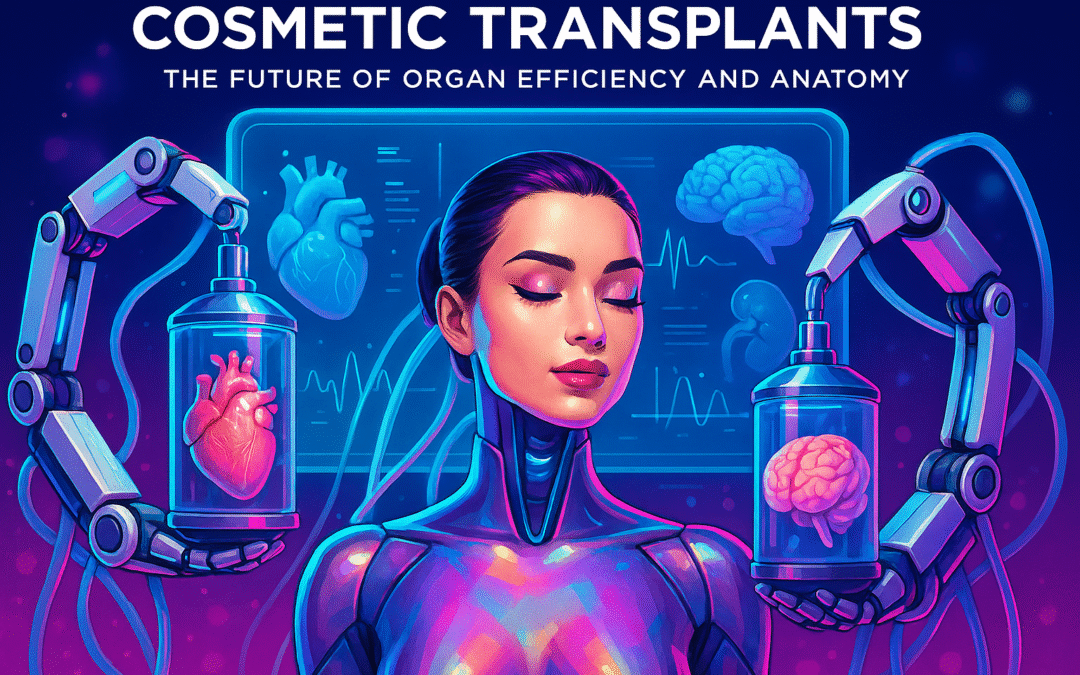
Introduction: Cosmetic Transplantation—Beyond Beauty, Toward Supercharged Organ Function
Forget everything you thought you knew about cosmetic surgery. What if the cosmetic upgrades of tomorrow could do much more than sculpt a perfect nose or smooth a wrinkled brow? Imagine a world where face-lifts restore smiles and restore the ability to eat and speak, where an “aesthetic” liver transplant supercharges detoxification, or where a genetically enhanced heart literally outperforms its predecessor. The new frontier is here: cosmetic transplants designed to upgrade the efficiency and function of organs—not just their appearance.
This is not a distant sci-fi fantasy, nor simply a nascent medical daydream. Innovative medical teams are already pushing the boundaries, merging aesthetics and performance to make organs not only look but perform better than ever. Let’s dive into this exhilarating convergence of art, science, and technology, and discover the shape of medicine’s most captivating revolution.
From Face-Lifts to Life-Lifts: Redefining Cosmetic Transplants
Defining Cosmetic Transplants for Functionality
Cosmetic transplants have traditionally meant procedures like face, hand, or scalp transplants—often performed after trauma or disease—for restoration of appearance and social function. But in recent years, a shift is underway: cosmetic and reconstructive transplants are increasingly engineered to provide, restore, or even augment organ functionality. That means thinking of beauty and utility as two sides of the same surgical coin.
Unlike “routine” plastic surgery, which enhances visual features, cosmetic transplants can involve entire organs or composite tissues—like faces, livers, or hearts—transplanted for both their appearance and their physiological activity. Medical teams now design, select, and even genetically optimize these grafts to improve organ performance, endurance, and integration.
Scenarios of the Future
- A facial transplant restores muscle function and speech, not just a “normal look.”
- A kidney transplant with gene-edited filtration units works faster and lasts longer.
- A heart built using 3D bioprinting pumps with more vigor than the original.
This marriage of visual and biological excellence is unleashing a host of new solutions for patients, from those with catastrophic injuries to individuals who want lasting improvements in function—and maybe even performance enhancement.
A Brief History: From Ancient Vanity to Modern Bioengineering
Ancient Roots, Modern Goals
Cosmetic medicine is nearly as old as civilization. Sushruta Samhita, an ancient Indian medical text, described nose reconstruction over 2,500 years ago. Throughout history, reconstructive efforts were motivated by restoring both appearance and, often inextricably, function—helping patients eat, speak, breathe, or move.
The major leaps, however, happened in the 20th century, especially after World Wars I and II, when reconstructive surgery was required for thousands of wounded soldiers, prompting the invention of procedures that improved not just the look but the performance of faces, jaws, and limbs.
Cosmetic Transplant Milestones
- Hand transplant (1998): Pioneered a new era of vascularized composite allotransplants (VCAs), for both functionality and aesthetics.
- First face transplant (2005): Combined restoration of social identity and critical facial functions like speech, eating, and blinking.
- Recent: Organ transplants as performance upgrades, leveraging 3D bioprinting, gene editing, and cellular therapies to enhance native organ function, not just replace it.
These breakthroughs underline a paradigmatic shift: the aesthetic and the functional are being fused at the deepest cellular and technological level.
The State of the Art: Cosmetic Transplants that Enhance Functionality
Functional Face Transplants: More Than Meets the Eye
The most iconic example of cosmetic transplantation is the face transplant. But these procedures aren’t just about visual transformation. They’re about giving back the capability to eat, breathe, speak, make facial expressions, and engage fully in social life.
Recent Survivals and Outcomes
- Latest multicenter cohort analysis: 50 global face transplants had a 5- and 10-year survival rate of 85% and 74%, respectively.
- Success is defined not just by looks, but by return of sensation, facial movement, speech, swallowing, and emotional expressivity.
- Recipients often experience significant enhancement in psychological well-being, self-esteem, and social integration, with return to employment and relationships reported.
Pushing Beyond the Basics
Early transplants focused on replacing lost tissue. Now, teams customize tissue composition, nerve repair, and microvascular anastomoses to maximize functional outcomes. Surgeons are using 3D modeling, “smart” pre-surgical planning, and personalized tissue engineering to give each recipient not just a new face, but a new lease on life—with improved, sometimes even superior, function.
Bioengineered Hearts: Cardiovasc-Utiful and Powerful!
Heart transplantation used to be about replacing a failing organ with a functioning one. Today, bioengineers and physicians are developing hearts that may eventually surpass the original in endurance and adaptability.
Innovations in Heart Transplants
- 3D bioprinting of heart tissue—including intricate vascular networks—is progressing rapidly.
- Recent breakthroughs at Stanford and Harvard have enabled the printing of organ-scale blood vessels that closely mimic natural cardiovascular architecture, crucial for organ viability, nutrition, and function.
- Bioengineered hearts, using patient-derived induced pluripotent stem cells, are being designed for better compatibility, reduced rejection, and even tailored performance metrics (such as contractility and output).
With artificial intelligence (AI)-guided simulations and genetic tailoring, future heart transplants could be optimized for endurance athletes or fitted to a patient’s unique physiological profile.
Kidney Transplants: Filters You Can Trust
Kidney transplants are the most common solid organ transplants, but organ shortage and post-transplant complications remain significant. New technology is unleashing a second wave—potent, longer-lasting, and performance-altered kidneys.
Portable Perfusion and Performance Optimization
- KidneyVault™ Renal Perfusion System: FDA-approved portable machine perfusion tech allows for safe, longer-distance transport and preservation of donor kidneys, reducing ischemic damage and expanding access.
- Real-time digital monitoring ensures optimal filtration and perfusion before surgery, helping doctors select the best organs and reduce cold-ischemia time.
- Cellular/genetic engineering and nanotechnology deliver kidneys with boosted filtration efficiency and resilience to immunological challenges.
Such innovations have increased the donor pool, expanded transplant eligibility, and are paving the way for designer kidneys—with tailored performance profiles.
Liver Transplants: Next-Level Detox and Regeneration
The liver’s functionality—detoxification, metabolism, and protein synthesis—is vital. Modern liver transplants go far beyond mere replacement.
Bioartificial Livers and Cellular Upgrades
- Bioartificial Liver Devices: Acting as biological “bridges” or long-term alternatives to transplantation, these devices use human (or genetically engineered animal) hepatocytes to supplement detoxification and synthetic activities while a patient’s own liver regenerates or until a suitable donor is available.
- Stem cell–derived hepatic-like cells and regenerative tissue engineering allow for liver grafts that regenerate faster and clear toxins more efficiently.
- Nanotechnology-enhanced immunosuppressant delivery minimizes systemic toxicity, ensuring that these enhanced organs continue working at peak performance.
Lung Transplants: Breathing Life into Performance
Modern lung transplantation is seeing a renaissance through technology-driven support systems like extracorporeal membrane oxygenation (ECMO) and AI-assisted optimization.
Tech-Enabled Functional Gains
- Advanced ECMO devices support critically ill patients both before and after transplantation, improving gas exchange and allowing for rapid rehabilitation.
- Integrative AI models predict optimal donor–recipient matches, anticipate rejection risk, and personalize immunosuppression.
- Research into stem cell therapies aims to boost lung regenerative capacity and optimize oxygenation—think supercharged breathing for the modern patient.
Pancreatic Islet Cell Transplants: Endocrine Enhancement
For people with Type 1 diabetes, islet cell transplantation offers restored insulin production. But the new age of transplants is about making these cells more resilient, vascular, and responsive.
Enhancements in Islet Cell Therapy
- Co-transplantation of engineered vascular endothelial cells with islets supports better blood supply, survival, and integration, as seen in early trials at Weill Cornell Medicine.
- Novel islet transplantation sites and devices offer more controlled and accessible engraftment, potentially improving long-term glucose control and reducing the need for frequent immunosuppression.
Long-term studies show improved metabolic control, quality of life, and even reduced mortality in transplant recipients, marking a bright future for endocrine augmentation.
Next-Gen Technology: 3D Bioprinting, Gene Editing, and Nano-Medicine
3D Bioprinting: Layer-by-Layer Perfection
3D bioprinting is the revolution at the heart of custom organ manufacture. This approach uses bioinks (live cells and scaffolds) to precisely assemble complex organs with patient-specific architectures.
Achievements and Aspirations
- Harvard and Stanford teams have demonstrated printing of vascularized structures equivalent to those in a real human heart, overcoming a critical hurdle to creating viable, large organs.
- Functional printed organoids are already used for drug testing and disease modeling, while full-sized transplants are expected within one or two decades.
- Combined with AI and imaging (e.g., MRI, CT scans), printed organs can be tailored precisely for fit, function, and even enhanced tissue properties.
Gene Editing and Cell Therapies: Designer Organs
Imagine choosing not only the appearance but also the performance specifications of your transplanted organ. Gene editing allows us to repair or enhance organ function—before, during, or after transplantation.
CRISPR and Beyond
- Gene-edited donor organs (including from pigs, in xenotransplantation) are making transplantation safer by removing immunogenic antigens and enhancing graft longevity.
- Designer cell lines can be introduced to organs for improved metabolic function, regenerative capacity, or resistance to diseases like diabetes, cancer, or infections.
Ethical and Societal Questions
While gene editing for disease prevention is widely supported, “designer” cosmetic enhancements spark debate on medical necessity, fairness, and the risks of unintended genetic consequences. The quest for perfection brings both promise and complexity.
Nanotechnology: Precision at the Molecular Level
Nanomedicine is revolutionizing transplant optimization—from targeted immunosuppressant delivery to nano-engineered tissue scaffolds.
Advances in Application
- Self-assembled nanoparticles of immunosuppressive drugs (e.g., rapamycin) have shown superior graft survival rates and fewer side effects in preclinical studies.
- Nanoparticles can be designed to selectively home in on transplanted organs, minimizing systemic exposure and maximizing local therapeutic benefits.
- Next: Nano-engineered interfaces can monitor, repair, or replace damaged cellular structures in transplanted grafts, taking organ upgrades to the atomic layer.
AI and Digital Health: Optimizing Every Step
From matching donors to recipients (using inputs from histopathology, genetics, imaging, and more) to predicting graft rejection and personalizing immunosuppression, AI is the digital brain behind modern transplantation.
How AI Changes the Game
- Risk stratification and remote monitoring: AI models using wearables, continuous sensors, and advanced diagnostic tools detect organ failure or rejection, sometimes before patients or clinicians notice symptoms.
- Robotic-assisted, AI-integrated surgery: Delivers computerized precision, tremor reduction, and enhanced intraoperative guidance—for truly next-level transplants, both cosmetic and functional.
- Personalized post-transplant care: Machine learning helps tailor immunosuppressant dosages to genetic, metabolic, and lifestyle factors.
Key Institutions, Research Leaders, and Biotech Startups
Centers of Innovation
- Mayo Clinic: Leader in transplant innovation—pioneering AI-driven diagnostics, CAR-T therapies for rejection, and 3D bioengineered organs.
- Stanford & Harvard: Global trailblazers in bioprinting, vascularization, and cardiac tissue engineering.
- Cleveland Clinic: Home to numerous face and solid organ transplants, including successful functional and aesthetic procedures, and advanced pre-surgical planning using AR/VR tech.
Biotech Startups Shaping the Future
| Startup | Focus | Notable Contributions |
|---|---|---|
| TransMedics | Organ storage and preservation devices | Portable normothermic perfusion for “out-of-body” organ upgrade |
| eGenesis Bio | Gene-edited pig organs for transplantation | Breakthroughs in xenotransplants and immunomodulation |
| Paragonix Technologies | Portable perfusion systems for kidney and other organs | Enabling safer, longer transport and real-time digital monitoring |
| Magenta Therapeutics | Stem cell and cell therapy for transplant optimization | Improving patient experience and graft longevity |
| XVIVO Perfusion | Ex vivo perfusion solutions | Extending donor pool and enhancing marginal organ quality |
These ventures, often in partnership with major academic centers, are shaping both the science and the business of the future transplant landscape.
Ethical, Regulatory, and Social Considerations
Regulations: Blending Beauty and Bioethics
Regulatory agencies (like the FDA in the US and EMA in Europe) are forging new frameworks to address the confluence of “cosmetic” and “functional” organ procedures. Key points include:
- Minimal Manipulation & Homologous Use: Each transplant product (cells, tissues, organs) is reviewed for both how much it’s processed and whether its use aligns with original function.
- Device Approvals and Oversight: Intervention devices (ECMO, perfusion systems, bioartificial organ tech) require demonstration of benefit, safety, and quality controls.
- Cosmetic vs. Clinical Indication: Current cosmetic surgery guidance cautions against unnecessary risk in purely aesthetic procedures, but allows functional augmentation within clinical parameters.
Patient Autonomy and Informed Consent
Patients must be fully apprised of:
- The risks of lifelong immunosuppression.
- The experimental or off-label nature of some enhancements.
- The possibility (and limitations) of “custom” or “cosmetic” outcomes.
This transparency is critical as patients’ expectations increasingly blend appearance, health, and performance.
Access, Equity, and Medical Tourism
Sadly, transplant innovation is not distributed equitably. Access to cutting-edge functional cosmetic transplants is often limited to wealthy countries or those able to travel for care. Medical tourism is booming for both cost savings and specialized expertise, especially in countries recognized for high-tech cosmetic or organ transplants. But challenges remain:
- Variable regulation and follow-up increase the risks associated with experimental or advanced procedures done abroad.
- Cost is a major barrier, with most insurers covering only clinically essential organ transplants and rarely enhancements seen as “optional”.
Strategies to expand donor pools (living, deceased, or xenotransplantation) and performance upgrades are actively needed to increase global equity in transplant access.
Real Patients, Real Upgrades: Stories from the Frontier
The Face of New Possibilities
Take the story of “Andy,” a face transplant recipient at Mayo Clinic. After losing significant facial structure due to trauma, conventional surgery could not restore eating, smiling, or social interaction. The full face transplant involved not only aesthetic restoration, but also rebuilding jaw function, speech, and the physical ability to eat and emote—allowing Andy to marry, raise children, and regain social confidence.
The Youngest Face Transplant Patient
Katie Stubblefield, the youngest US face transplant recipient, endured a devastating injury as a teen and underwent a 31-hour operation. Post-transplant, she not only regained a “normal” appearance but also function—swallowing, eating, displaying facial emotions, and preparing to live independently. This was made possible by highly customized transplant planning and careful integration of function with form.
Portable Tech Saves Lives
Vanderbilt University Hospital performed Tennessee’s first successful kidney transplant with a portable perfusion device, delivering a superior-quality organ and expanding the patient’s options. The donor pool expanded, and outcomes have improved, even for «high-risk» recipients who previously had little chance at success.
The Cutting Edge and Beyond: The Next Frontiers
Xenotransplantation and Synthetic Biology
Xenotransplantation—the use of gene-edited animal organs—has entered the clinical realm. In Jan 2025, a genetically modified pig kidney was successfully transplanted at Massachusetts General Hospital, freeing a patient from dialysis for the first time in years.
Universal organ availability and “one organ for life”—made possible by gene editing, advanced immunosuppression, and precision biomanufacturing—are now on the horizon.
Synthetic and Printed Organs: On-Demand Upgrades
Within the next decade, expect:
- Full-sized, lab-grown kidneys, livers, and hearts on demand.
- Personalized, AI-modeled transplants designed to outperform their originals.
- Widespread use of printed tissue for reconstructive, cosmetic, and functional upgrades.
Human enhancement surgery—blending aesthetics and biology—will blur the lines between “cosmetic” and “medically necessary.”
Market Landscape: Costs, Demand, and Biotechnological Promise
| Metric | US (2025 est) | Notable Global Context |
|---|---|---|
| Annual transplants | ~50,000+ | Demand far exceeds supply worldwide |
| Cosmetic procedures | >4.7 million | Largest markets: US, Brazil, Germany |
| Cost (organ transplant) | $100k–$700k+ | Organs, surgery, medications incl. |
| Cost (cosmetic surgery) | $5k–$20k+ | Cosmetic face/functional upgrades even higher |
| Key Players | TransMedics, eGenesis Bio, Magenta Therapeutics, Paragonix, XVIVO Perfusion, OrganOx | Rapidly growing field of startups and partnerships |
The market for functional, cosmetic, and upgraded transplants is projected to skyrocket as each new innovation redefines standards of care and patient demand.
Conclusion: Cosmetic Transplants—A Brave, Beautiful New World
Cosmetic transplantation’s future belongs not only to those who wish to look better, but to everyone who wants to live better, longer, and more fully. Whether it’s a face that smiles and eats, a kidney that filters forever, or a heart that beats stronger than ever, this dazzling convergence of aesthetics and power is changing what it means to heal and to enhance.
System Ent Corp Sponsored Spotify Music Playlists:
https://systementcorp.com/matchfy
Other Websites:
https://discord.gg/eyeofunity
https://opensea.io/eyeofunity/galleries
https://rarible.com/eyeofunity
https://magiceden.io/u/eyeofunity
https://suno.com/@eyeofunity
https://oncyber.io/eyeofunity
https://meteyeverse.com
https://00arcade.com
https://0arcade.com