
Are you ready to pull back the curtain on the world of crypto and ignite your journey as a blockchain innovator? Strap in—this isn’t just a primer. It’s a turbo-charged, upbeat, and insightful deep dive into the basics of developing a crypto ecosystem. By the end of this article, you’ll not only understand the “how,” but the “why”—and you’ll be equipped to seize your place in the next great digital revolution.
The Big Picture: What is a Crypto Ecosystem?
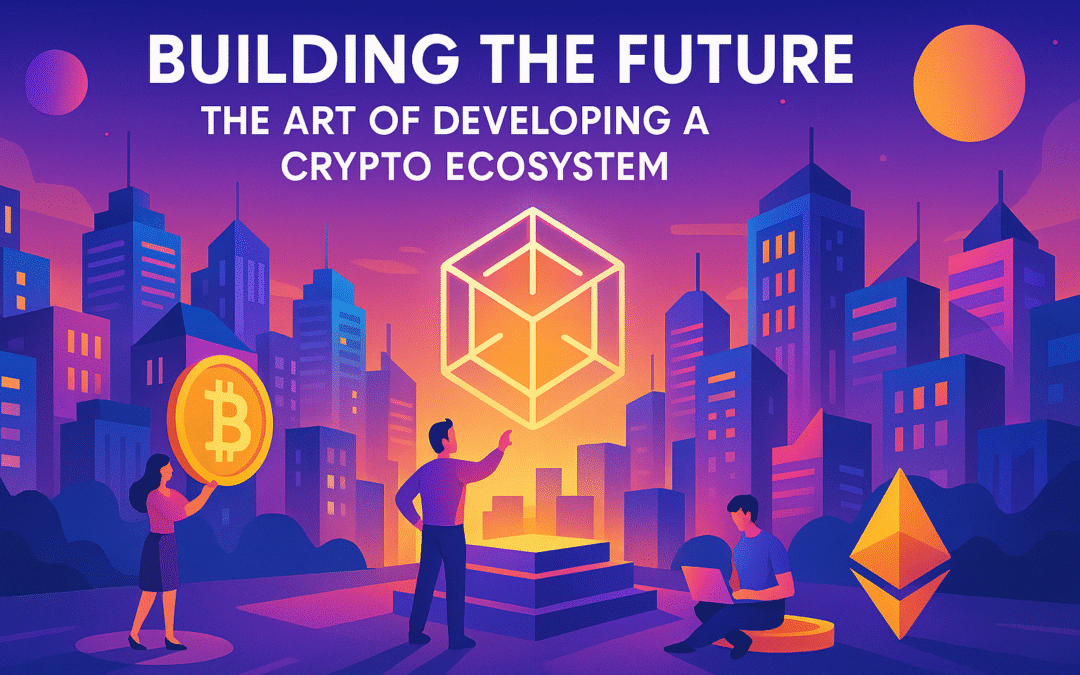
Picture a living, breathing digital city—a space bustling with innovation, value, and unstoppable momentum. This is a crypto ecosystem: not just a single blockchain or token, but an entire vibrant network. Think of it as an ever-evolving universe composed of chains, tokens, dApps, founders, users, and more.
A successful crypto ecosystem is synergistic. The whole is far greater than the sum of its parts. From Ethereum, to Polygon, Solana, and Base, each thriving ecosystem is a testament to the power of interconnected innovation.
Want to understand why crypto ecosystems matter?
Read this: Why Ecosystem Strategy Matters in Web3.
The Foundational Pillars: Components of a Crypto Ecosystem
Let’s break down the beating heart of every crypto ecosystem: its components.
Blockchains & Infrastructure
The blockchain is ground zero. It’s the digital substrate upon which everything else grows. From Layer-1 protocols like Ethereum, BNB Chain, or Avalanche, to Layer-2 scaling networks like Polygon, the blockchain is your ecosystem’s backbone.
- Consensus mechanism: Proof of Stake, Proof of Work, DAGs
- Node infrastructure: You’ll want robust nodes, RPC providers, and sometimes your own infrastructure.
- Bridges: Projects like Wormhole and LayerZero connect disparate networks, enabling cross-chain flows.
Crypto Tokens & NFTs
Tokens fuel your economy. They can be fungible (ERC20s, like USDC or your custom coin), or non-fungible (NFTs, like Bored Apes, gaming items, or digital art).
- Learn the basics of ERC20 and ERC721 NFT development
- Newcomer? Explore creating tokens effortlessly with tools like thirdweb
Wallets & User Onboarding
A glowing ecosystem isn’t just code in the ether—it has users. And users need wallets.
- MetaMask, Coinbase Wallet, Rainbow: The entry points of most Web3 journeys.
- Emerging: Smart contract wallets (also known as account abstraction), which bring easier onboarding, gasless transactions, and better security.
- On-ramping: Let users buy crypto directly via fiat for seamless web2-to-web3 conversion.
Decentralized Applications (dApps)
A crypto ecosystem is nothing without its applications.
- DeFi: Protocols like Uniswap, Aave
- NFT marketplaces: OpenSea, Blur
- Gaming: Blockchain-powered universes like Axie Infinity
- Social: Decentralized socials like Lens Protocol
For developers: Thirdweb’s dApp guides are a launchpad for creativity.
Oracles & Data Feeds
Smart contracts on their own can’t access real-world data. That’s where oracles like Chainlink or Band Protocol come in—bridging blockchain and reality.
- Enable dynamic DeFi, gaming, insurance, and more
Developer Tools & SDKs
Every builder needs tools. The less friction, the faster—and more innovative—ecosystem growth happens.
- SDKs: thirdweb SDK, ethers.js, web3.js
- APIs: Alchemy, Infura, Moralis
- Block explorers: Etherscan, Polygonscan
Smart Strategies: Steps to Building Your Own Crypto Ecosystem
Now, the fun part: How do you create a magnetic, thriving crypto ecosystem from the ground up?
Step 1: Vision & Whitepaper
- Articulate your vision. What problem do you solve? Why will users and builders care?
- Put it in a whitepaper or a litepaper.
Step 2: Chain Selection
- Choose your blockchain platform: do you build a new chain (ambitious!), a Layer-2, or launch on a robust existing chain like Polygon, Ethereum, or Solana?
- Consider transaction fees, speed, security, tooling, and userbase.
Step 3: Tokenomics
- Design your token. Answer:
- How much supply?
- How is it distributed?
- What incentives exist for holders?
- Study the art of tokenomics.
Step 4: Smart Contract Development
- Write and audit your smart contracts—security is king!
- Explore tools like OpenZeppelin, thirdweb Contracts, and bug bounty programs.
Step 5: dApp Ecosystem
- Launch your killer app(s)—preferably open-source or with solid developer docs.
- Attract others to build: issue grants, run hackathons, provide templates and SDKs.
- Take inspiration from Polygon’s developer ecosystem.
Step 6: Community & Governance
- Foster an active, inclusive, and vibrant community: Discord, Telegram, Twitter, farcaster.
- Launch a DAO or governance mechanism (Snapshot, Aragon) for unfair transparency and control.
Step 7: Partnerships, Integrations, and Liquidity
- Collaborate with other protocols, wallets, and DeFi projects.
- Create a liquidity flywheel: AMMs, bridges, cross-chain incentives, rewards.
Common Pitfalls & How to Avoid Them
- Ignoring Security: Over $7.6B lost to exploits in 2021-2022. Code audits & bug bounty programs are essential.
- Overcomplicating Onboarding: Seed phrases scare users. Offer gasless transactions, social logins, or account abstraction!
- Lack of Utility: A token with no real use? DOA (dead on arrival).
- Short-Term Thinking: Building only for hype cycles can doom projects—focus on sustainable value.
- Ignoring Regulation: Stay abreast of crypto regulation.
The Power of Community: Growing and Sustaining Your Ecosystem

No matter how ingenious your code is, your greatest asset is community.
- Education: Host tutorials, workshops, and Q&A sessions.
- Support builders: Fund grants, organize hackathons, and make documentation accessible.
- Ambassadors & Rewards: Engage the early believers and reward contributions.
- Transparency: Public roadmaps, open forums, and frequent updates generate trust.
Dive deeper: How to Grow a Web3 Community
Case Studies: Crypto Ecosystem Success Stories
1. Ethereum
From a humble whitepaper in 2013, Ethereum now boasts:
- 4,500+ dApps
- Billions in locked liquidity
- Endless innovation cycles, from DeFi to NFTs
- Open tooling, a supportive developer community, and a continuous stream of EIPs
2. Polygon
Once “Matic Network,” Polygon became the leading L2 scaling solution:
- Blazing-fast transactions, negligible fees, huge dApp ecosystem
- Massive brand partnerships
- Open arms to new chains (Polygon zkEVM, supernets, and more)
3. Solana
Despite ups and downs, Solana’s ecosystem features:
- Top DeFi and NFT projects
- Developer hackathons every quarter
- Unique technical architecture for maximum throughput
Want a full list of thriving ecosystems? Check Crypto Ecosystem Rankings.
The Road Ahead
In the relentless world of crypto, the only constant is change. Ecosystems that thrive are those that embrace openness, think community-first, and nurture builders and users at every stage.
Ready to start developing your own crypto ecosystem?
- Check out thirdweb’s developer portal for instant contracts & tools
- Learn about web3 onboarding best practices
- Join web3 hackathons and take your idea to the next level!
- Explore Polygon developer resources
- Understand layer-2 scaling and why it’s crucial for mass adoption
Now is your time. The blueprint is here—the execution is up to you!
Conclusion & Bonus Resources
- Stay curious:
- Vitalik Buterin’s blog
- Blockchain basics
- Build your network: Twitter, Discord, Farcaster, in-person conferences.
- Keep learning: CryptoZombies, Encode Club Bootcamp, ChainShot
- Track trends: Dune Analytics, DefiLlama
You’ve just unlocked the secrets of building a crypto ecosystem—fun, ingenious, and within your grasp.
System Ent Corp Sponsored Spotify Music Playlists:
https://systementcorp.com/matchfy
Other Websites:
https://discord.gg/eyeofunity
https://opensea.io/eyeofunity/galleries
https://rarible.com/eyeofunity
https://magiceden.io/u/eyeofunity
https://suno.com/@eyeofunity
https://oncyber.io/eyeofunity
https://meteyeverse.com
https://00arcade.com
https://0arcade.com