
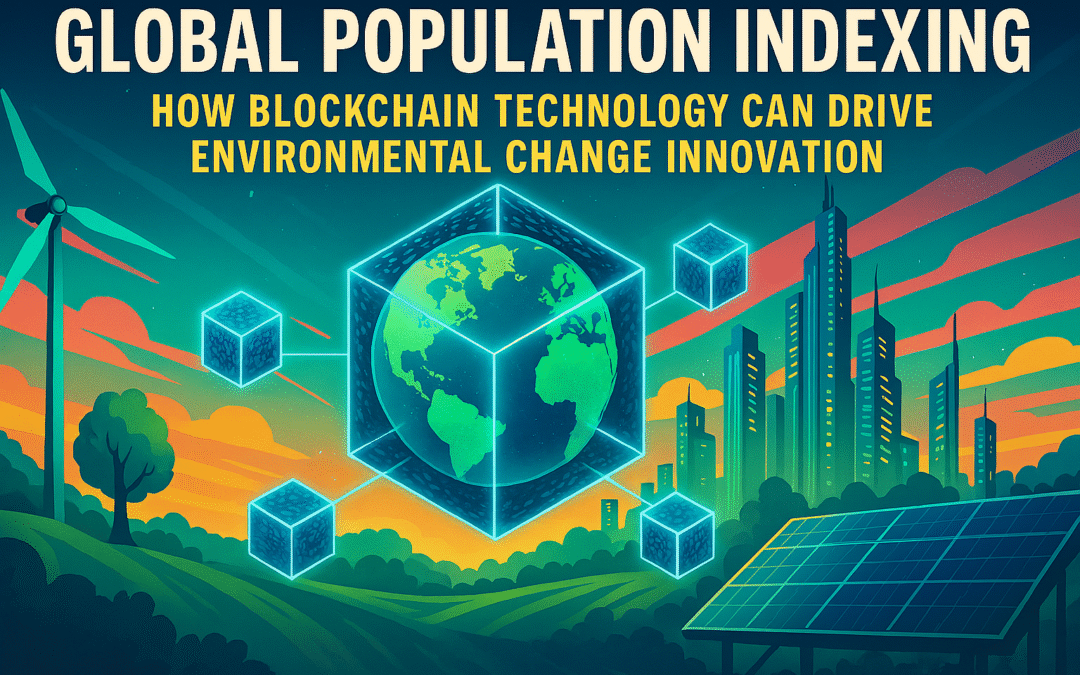
In an era where technology is rapidly transforming the landscape of various industries, one area that remains ripe for innovation is global population indexing. The planet’s population is rising at an unprecedented rate, leading to increased pressure on natural resources and the environment. Traditional methods of population tracking and management are often inefficient, inaccurate, and susceptible to manipulation. However, the advent of blockchain technology presents a revolutionary solution that can not only improve global population indexing but also drive significant environmental change.
The Current State of Global Population Indexing
Currently, most countries rely on centralized databases to track population data, which can be fraught with issues. These systems often suffer from data inaccuracies, lack of transparency, and susceptibility to fraud. Moreover, they frequently fail to account for transient populations, such as migrants and refugees, leading to incomplete and misleading statistics. The implications of these shortcomings are far-reaching, affecting everything from resource allocation to policy-making.
Challenges in Current Systems
- Data Inaccuracy: Centralized databases can become outdated or manipulated, leading to unreliable information.
- Lack of Transparency: The closed nature of these systems makes it difficult for stakeholders to verify data integrity.
- Exclusion of Marginalized Groups: Many systems fail to adequately capture transient or marginalized populations, skewing data and resource distribution.
What is Blockchain Technology?
Blockchain technology is best known as the backbone of cryptocurrencies like Bitcoin. However, its potential extends far beyond finance. A blockchain is a decentralized, distributed ledger that securely records transactions across multiple computers. This technology ensures that the data is immutable and transparent, making it an ideal solution for various applications, including global population indexing.
Key Features of Blockchain
- Decentralization: No single entity controls the blockchain, reducing the risk of manipulation and increasing trust.
- Transparency: All transactions are visible to participants, allowing for greater accountability.
- Immutability: Once data is recorded on the blockchain, it cannot be altered, ensuring a reliable historical record.
Revolutionizing Population Indexing with Blockchain
Blockchain technology can fundamentally change how we index and manage population data. By creating a decentralized and transparent system, we can overcome the shortcomings of traditional methods and provide accurate, real-time data that can inform policy decisions and environmental strategies.
Decentralized Identity Verification
One of the primary challenges in population indexing is verifying the identity of individuals. Blockchain can facilitate a secure, decentralized identity verification system that allows individuals to maintain control over their personal information. This system can be particularly beneficial for marginalized groups, such as refugees and migrants, who often lack formal identification.
Real-Time Data Collection
With blockchain, data can be collected in real time through various channels, such as mobile applications and IoT devices. This immediacy allows for more accurate tracking of population dynamics, including migration patterns, birth rates, and even environmental impacts. Governments and organizations can access up-to-date information that can be critical in crisis situations, such as natural disasters or pandemics.
Enabling Environmental Change
Accurate population data is essential for understanding human impact on the environment. With more reliable data, policymakers can devise targeted strategies to address environmental issues. For example, data on population density can help identify areas most at risk of deforestation or pollution, allowing for more effective conservation efforts.
Case Studies: Successful Blockchain Implementations
Several initiatives around the world have begun to explore the use of blockchain for population indexing and environmental management. These case studies highlight the potential of this technology to drive meaningful change.
1. Estonia’s e-Residency Program
Estonia has become a pioneer in digital governance, introducing an e-Residency program that allows global citizens to establish and manage businesses online. This program leverages blockchain technology to provide secure identity verification and transaction records. By creating a digital identity system, Estonia has improved its ability to track population dynamics and economic activities, ultimately driving sustainable development.
2. The UN’s ID2020 Initiative
The United Nations’ ID2020 initiative aims to provide a digital identity for every individual, particularly in developing countries. By utilizing blockchain technology, ID2020 seeks to create a secure and portable identity system that can be used for accessing essential services. This initiative not only helps in accurate population indexing but also empowers marginalized communities by giving them a voice in society.
Challenges and Considerations
While the potential for blockchain in population indexing and environmental change is significant, several challenges must be addressed to ensure successful implementation.
Data Privacy Concerns
As blockchain systems collect vast amounts of personal data, ensuring the privacy and security of that information is paramount. Solutions must be developed to allow individuals to control their data and decide what information is shared and with whom.
Technological Barriers
Implementing blockchain technology requires a robust technological infrastructure. Many developing countries may lack the necessary resources and expertise to adopt such systems, creating a digital divide that could exacerbate existing inequalities.
Regulatory Frameworks
Governments and regulatory bodies must establish clear guidelines for the use of blockchain in population indexing. This includes addressing issues related to data ownership, privacy, and interoperability with existing systems.
Future Prospects
The future of global population indexing lies in the successful integration of blockchain technology. As more governments, organizations, and communities recognize the potential of this innovative solution, we may see a shift in how population data is managed and utilized.
Collaborative Efforts
Collaboration among governments, NGOs, and tech companies will be crucial in advancing blockchain initiatives. By pooling resources and expertise, stakeholders can create a more efficient and inclusive system that benefits everyone.
Local Engagement and Empowerment
For blockchain systems to be effective, local communities must be engaged in the process. Educating individuals about the technology and its benefits will foster trust and encourage participation, ultimately leading to a more accurate and comprehensive population index.
Conclusion
As the world grapples with the challenges of a growing population and environmental degradation, it is essential to explore innovative solutions. Blockchain technology holds the potential to revolutionize global population indexing, driving accurate data collection and enabling effective environmental change. By embracing this technology and working collaboratively, we can build a more sustainable future for all.
FAQs
What is blockchain technology?
Blockchain technology is a decentralized, distributed ledger that securely records transactions across multiple computers, ensuring data immutability and transparency.
How can blockchain improve population indexing?
Blockchain can enhance population indexing by providing a decentralized identity verification system, real-time data collection, and greater transparency in data management.
What are the environmental benefits of accurate population data?
Accurate population data helps policymakers identify areas most at risk of environmental degradation, allowing for targeted conservation efforts and sustainable resource management.
What challenges does blockchain face in population indexing?
Challenges include data privacy concerns, technological barriers, and the need for regulatory frameworks to ensure the responsible use of blockchain technology.
Are there any real-world examples of blockchain being used for population indexing?
Yes, initiatives like Estonia’s e-Residency program and the UN’s ID2020 initiative are examples of how blockchain is being used to improve identity verification and population data management.
System Ent Corp Spotify Music Playlists:
https://systementcorp.com/matchfy
Other Websites:
https://discord.gg/4KeKwkqeeF
https://opensea.io/eyeofunity/galleries
https://rarible.com/eyeofunity
https://magiceden.io/u/eyeofunity
https://suno.com/@eyeofunity
https://oncyber.io/eyeofunity
https://meteyeverse.com
https://00arcade.com
https://0arcade.com